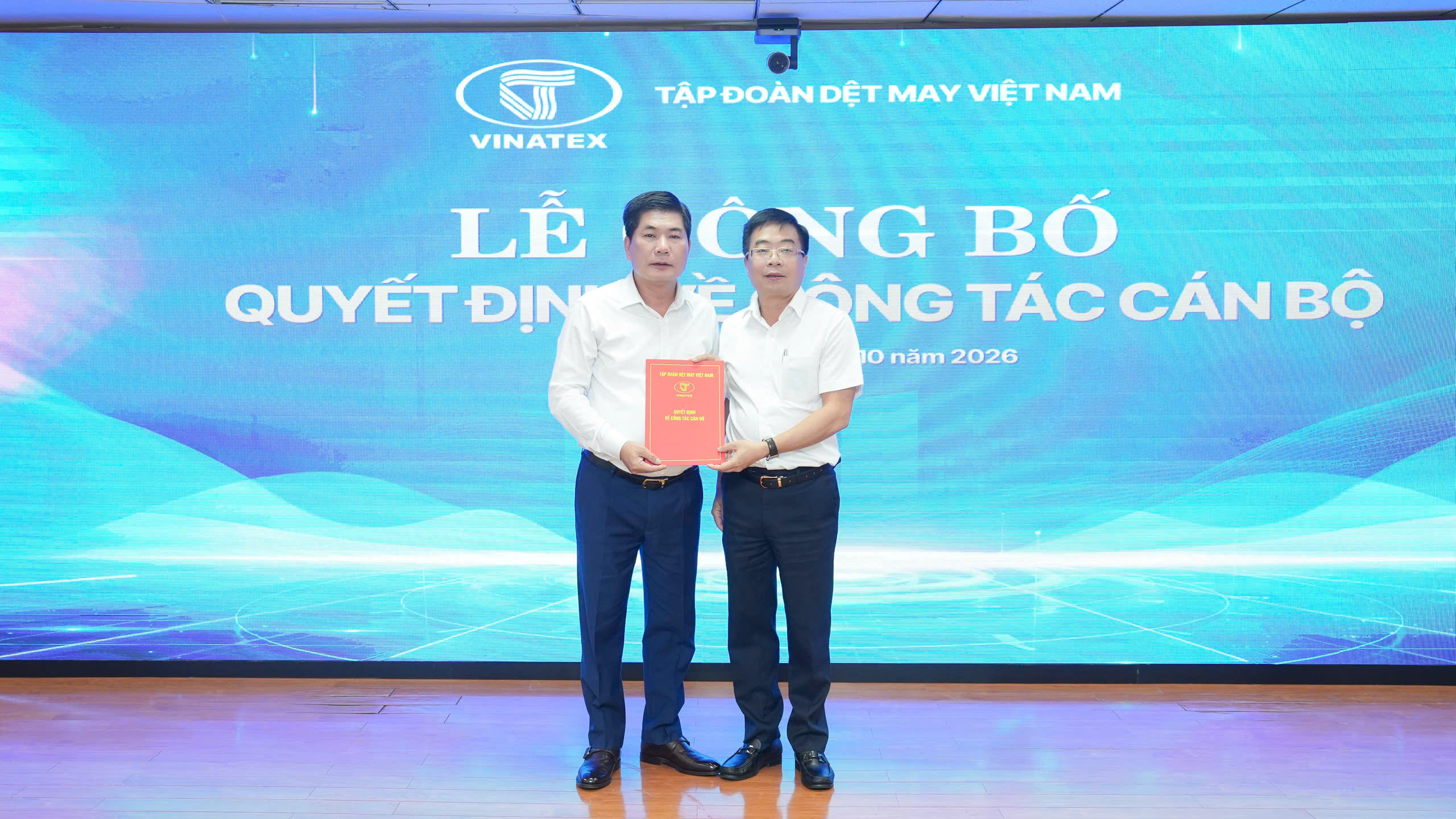

Geopolitical volatility, the global energy crisis, and ongoing shifts in supply chains continue to place the textile and garment industry under unprecedented pressure. In this context, Vinatex still recorded positive business results in the first quarter of 2026, while proactively implementing response measures to maintain its growth momentum throughout 2026. General Director of Vinatex, Mr. Cao Huu Hieu shared detailed insights into these results.
Vietnam’s economy in the first quarter of 2026 experienced many complex global fluctuations, but still achieved impressive results with GDP growth reaching 7.83% year-on-year – the highest level since 2011. In this context, how did Vinatex perform in its production and business operations, sir?
In the first quarter of 2026, amid a mix of opportunities and challenges, Vinatex recorded positive consolidated results, with estimated revenue reaching VND 4.554 trillion, fulfilling 23% of the annual plan and up 2% year-on-year. Estimated profit reached VND 355 billion, achieving 27% of the annual target and increasing by 31% year-on-year compared to 2025. Total export turnover was estimated at USD 468 million, reaching 24.3% of the annual plan and equivalent to 106.3% of the same period in 2025, with the United States remaining the Group’s largest export market. The Parent Company recorded revenue of VND 459 billion, achieving 16% of the annual plan and down 23% year-on-year , while estimated profit reached VND 34.4 billion, accounting for 13% of the annual target and increasing by 29% compared to the same period in 2025. The first-quarter results demonstrate that the Group’s production and business operations remain aligned with its strategic direction of focusing on growth quality rather than expanding scale, given the limitations in market demand.
The yarn sector recorded estimated profit of VND 57 billion, achieving 26% of the annual plan and increasing by 76% compared to the same period in 2025. The yarn sector delivered strong performance by capitalizing on the recovery in selling prices alongside improving market demand.
Order coverage remained relatively stable during the early months of the year, mainly because customers placed orders in advance ahead of the Lunar New Year holiday due to concerns over potential supply disruptions from yarn factories. Demand for cotton yarn imports from China also increased. However, this has been assessed as a short-term growth wave, with insufficient evidence to confirm a comprehensive and sustainable growth trend in the coming quarters.
The garment sector recorded estimated profit of VND 198 billion, achieving 26% of the annual plan and equivalent to 104% compared to the same period in 2025. Selling prices continued to remain favorable from late 2025, while orders stayed stable throughout the first quarter, with many units already securing orders through the end of the second quarter. Many enterprises proactively expanded into new markets and accelerated production and delivery schedules to take advantage of the “buffer period” before the United States imposed an additional 10% tariff.
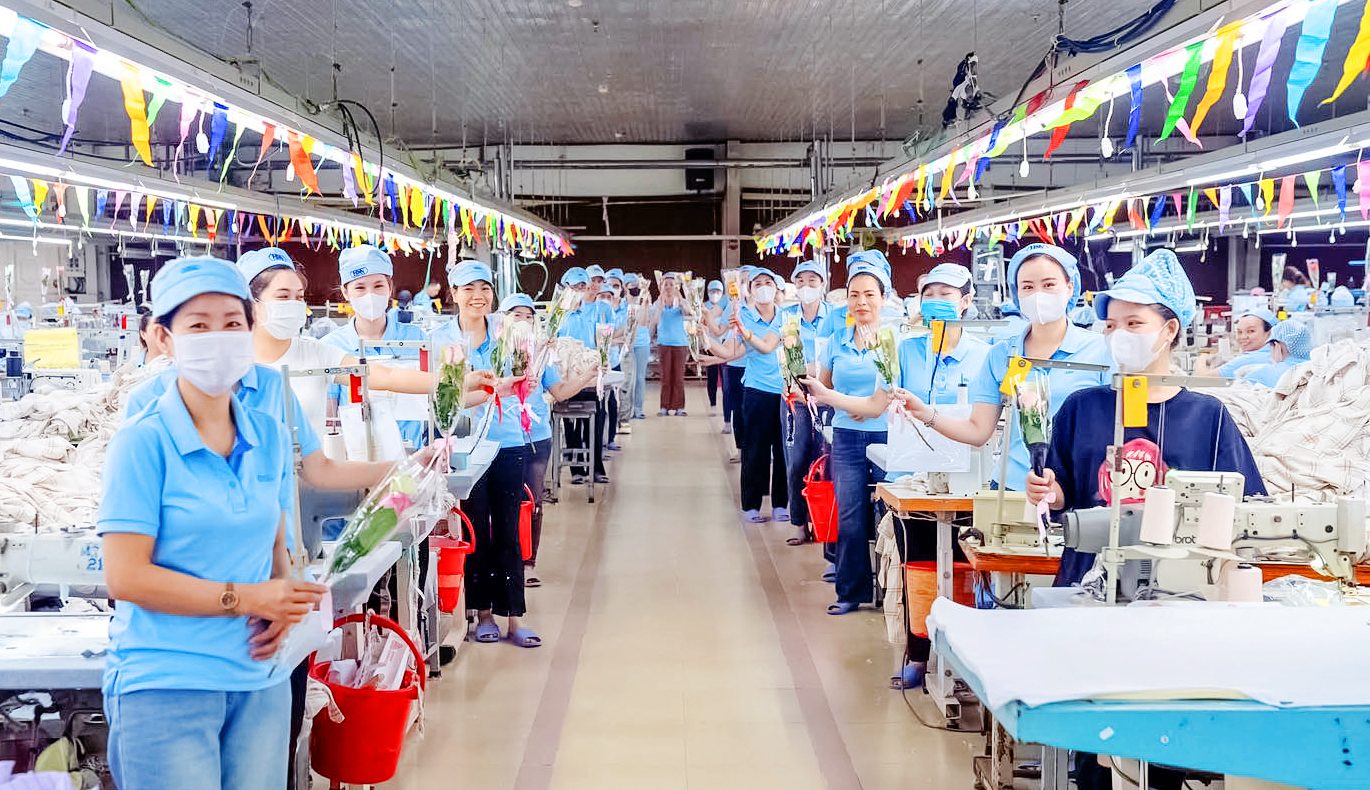
In the first quarter of 2026, the labor situation remained stable, with workforce fluctuations labor turnover decreased by 60% year-on-year . The rate of employees returning to work after the Lunar New Year holiday reached 99%, with some units achieving 100%. This is considered a positive indicator, helping enterprises stabilize production and accelerate order fulfillment from the beginning of 2026. Employment and workers’ incomes were maintained, with the average monthly income across the system reaching nearly VND 13 million per employee, up 9.8% year-on-year compared to 2025.
To achieve these results, what key solutions and measures has the entire system focused on, sir?
Building on the foundation established through successive periods of global economic volatility, Vinatex has implemented its 2026 business plan with a spirit of decisive action, accompanied by synchronized, practical, and effective solutions.
Vinatex has identified 2026 as the “Year of Efficiency.” Therefore, from the very first quarter, management efforts have been strengthened toward improving overall governance efficiency, including enhancing production and business performance at key units, improving management capacity at the Parent Company, optimizing credit resources, accelerating digital transformation, improving workforce quality, and strengthening risk control and governance across the Group.
In particular, the Garment Production and Business Division focused on improving the efficiency of resource utilization across markets, human resources, and investment activities. Special emphasis was placed on optimizing production management to handle small-volume orders requiring stringent quality standards and short delivery times. Meanwhile, the Yarn Production and Business Division quickly captured market opportunities in the first quarter while simultaneously expanding markets, diversifying product lines, and optimizing working capitalefficiency while improving cost savings.
In addition, the Group proactively monitored market developments, issued early assessments of potential impacts in order to develop appropriate response scenarios, and strengthened information exchange and forecasting activities through both in-person and online seminars.
The fact that nearly all employees returned to work after the Lunar New Year holiday of the Year of the Horse, with the return rate reaching 99%, also reflects workers’ strong commitment to their enterprises. At the same time, it demonstrates the effectiveness of the policies implemented by the Group’s units in recent years to improve employee welfare, living conditions, and maintain a stable working environment.

The escalating conflict in the Middle East is placing tremendous pressure on global security, triggering sharp fluctuations in energy prices, supply chain disruptions, and increasing inflationary pressure. At the same time, uncertainties in trade policies are also directly affecting businesses. How do you assess this “dual crisis” for the textile and garment industry in the second quarter and the quarters ahead, sir?
The year 2026 continues to present numerous uncertainties related to tariffs, geopolitics, exchange rates, interest rates, and rising costs; particularly due to the latest developments in the Middle East conflict. These factors are creating direct risks in logistics, driving up raw material prices, extending delivery times, and altering consumer behavior in many countries (including the two major markets of the United States and Europe). In this context, the global economy is forecast to experience slower growth, while inflation pressures are expected to re-emerge, especially in the U.S. market due to the impact of tariff policies. Bank interest rates are also expected to remain high and may continue to rise further.
Adverse developments during the early months of 2026, especially the conflict in the Middle East, have prompted the World Trade Organization to revise its global trade growth forecast downward to around 1.9%, compared to the 2.6% projection made at the end of 2025. With such modest growth, the likelihood of global textile and garment demand maintaining the expected 3% growth rate is considered low. Meanwhile, product prices are unlikely to improve and may even decline, as brands increasingly require manufacturers to share additional costs arising from tariffs, transportation, and raw materials, significantly narrowing profit margins.
Besides, competitive pressure from other textile and garment exporting countries is intensifying significantly. China and India are aggressively implementing support policies to regain market share lost in 2025, which may reduce order volumes for Vietnam’s textile and garment industry. Competition with lower-cost countries such as Bangladesh, India, and Cambodia is also becoming increasingly difficult as domestic costs continue to rise due to adjustments in wages, electricity prices, fuel costs, and labor competition.
Notably, the Office of the United States Trade Representative has launched an investigation under Section 301 of the Trade Act of 1974, placing Vietnam in what can be described as a “dual challenge”: increasing tariff risks for Vietnamese exports, potentially causing textile and garment exports to decline sharply compared to 2025. Therefore, the possibility cannot be ruled out that the U.S. government may impose additional tariff measures from July 2026 onward after the temporary 10% supplementary tariff under Section 122 expires.
Could you please share Vinatex’s key strategic directions for responding to these unpredictable fluctuations?
In this context, Vinatex and its member enterprises have prepared various response scenarios and solutions.
For the Garment sector, the priority is to accelerate shipments to the U.S. market in order to take advantage of the 150-day period during which the additional 10% tariff remains in effect. Enterprises are also focusing on maximizing productivity and shortening production lead times to offset delivery schedules, while ensuring labor productivity and workforce efficiency remain stable in order to maintain effective production management.
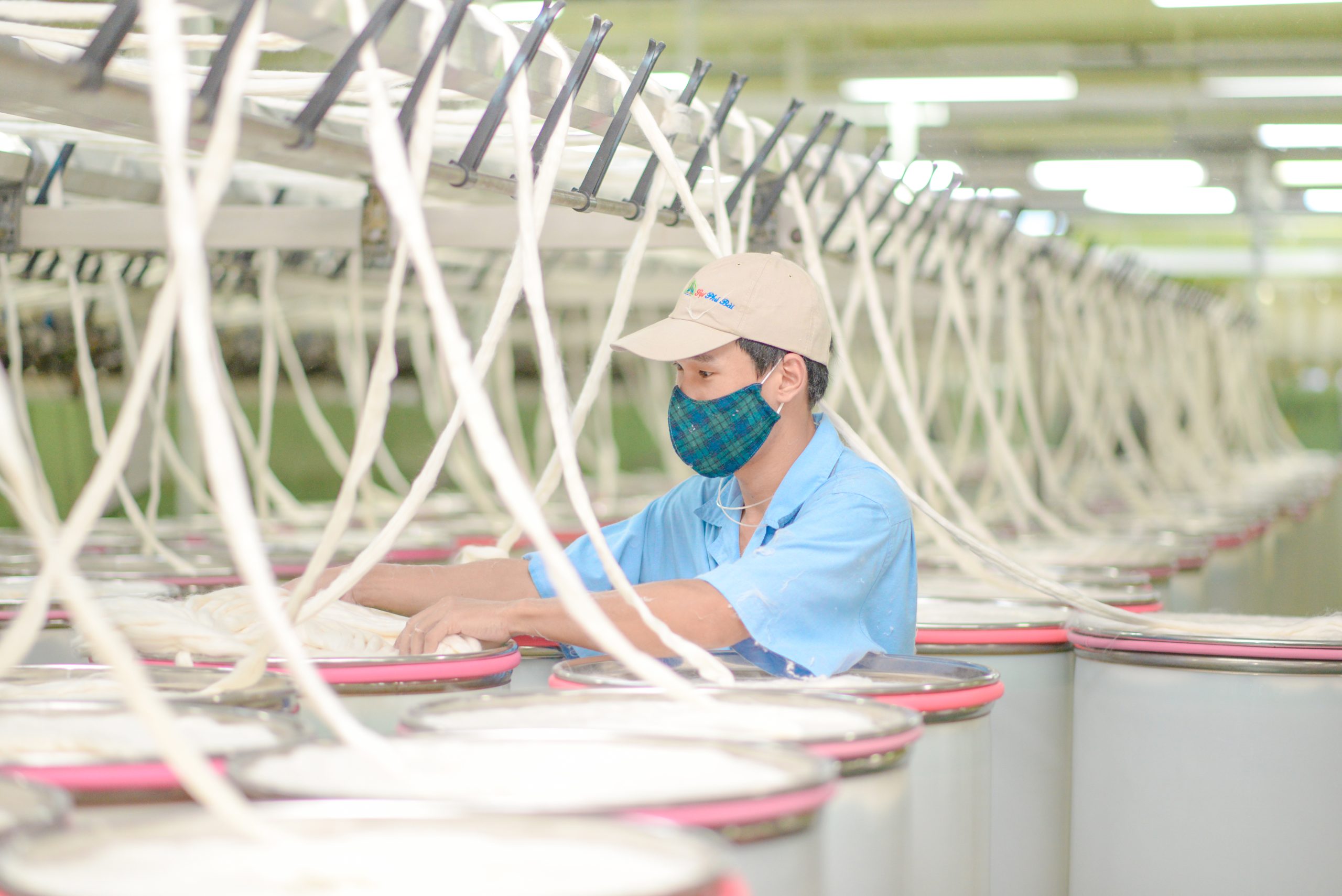
For the Yarn sector, enterprises need to closely monitor market developments to maintain proactive control over pricing and proactively manage raw material costs. Raw material purchasing strategies must follow a cautious, flexible, and phased approach. At the same time, inventory levels need to be tightly controlled, with production balanced according to market signals in order to avoid the risk of shrinking profit margins. In parallel, the Group is reviewing and improving solutions aimed at saving costs, reducing material consumption, and lowering expenses across all stages of the production process. Transportation methods are also being diversified to ensure operational stability and supply chain security.
In the second quarter of 2026, the Group will continue to focus on two key pillars: governance and markets.
From a governance perspective, the Group is strengthening management and closely monitoring the implementation progress of its 2026 production and business plans. The entire system must make every effort to maximize profits in the second in preparation for a highly uncertain second half of the year. The most important solutions are to maximize productivity, reduce costs, and utilize all resources efficiently in order to improve profit margins.
For the Yarn sector, priority will be given to rapidly implementing activities aimed at improving governance and operational systems, while also preparing contingency plans for the last six months of the year should market conditions deteriorate.
For the Garment sector, management will focus on increasing productivity across the entire system, optimizing all available resources to enable flexible operations, reduce costs, and enhance competitiveness in both pricing and quality. Meanwhile, the Human Resources Division will concentrate on solutions to maximize the efficiency of the existing workforce in support of the Group’s overall production and business objectives.
Regarding market activities, the entire system is closely monitoring developments related to the Middle East conflict, tariff policies, trade defense measures, rules of origin, and green standards in key markets such as the United States and the European Union. The Group is assessing potential impacts in order to implement timely response measures. At the same time, efforts are being intensified to diversify export markets, expand market share in potential regions, and reduce dependence on any single market area. Enterprises are also strengthening customer diversification within the same markets to minimize concentration risks, while leveraging competitive advantages in the U.S. market (including supply capability, product quality, and compliance with ESG standards).
In addition, the Group continues to strengthen risk control at the Parent Company and key subsidiaries. Digital transformation initiatives are being implemented according to roadmap plans across the Parent Company and member units, including the development of a centralized Group-wide data system to support governance and data-driven decision-making. The Group is also developing training and workforce development plans to ensure a capable talent pool that can meet future growth requirements.
In response to increasingly complex market fluctuations, the Party Committee of Vinatex issued a directive on strengthening cost-saving measures in production, controlling working capital and receivables, and proactively responding to changes in markets, customers, and capital sources.
The Party Committee requires member units to closely monitor market developments, customer conditions, order volumes, delivery schedules, payment capabilities, and the risks of delayed, postponed, or canceled orders in order to promptly develop appropriate response plans; closely track labor conditions, employment, income, and employees’ concerns and aspirations, while promptly identifying and resolving emerging issues to avoid disruptions or unexpected situations that could negatively affect production stability and labor relations.
At the same time, the Vietnam National Textile and Garment Group and Trade Union continue to promote various practical activities and workforce engagement initiatives aimed at ensuring the best possible benefits for employees while maximizing labor productivity across the entire system.
Thank you very much!