
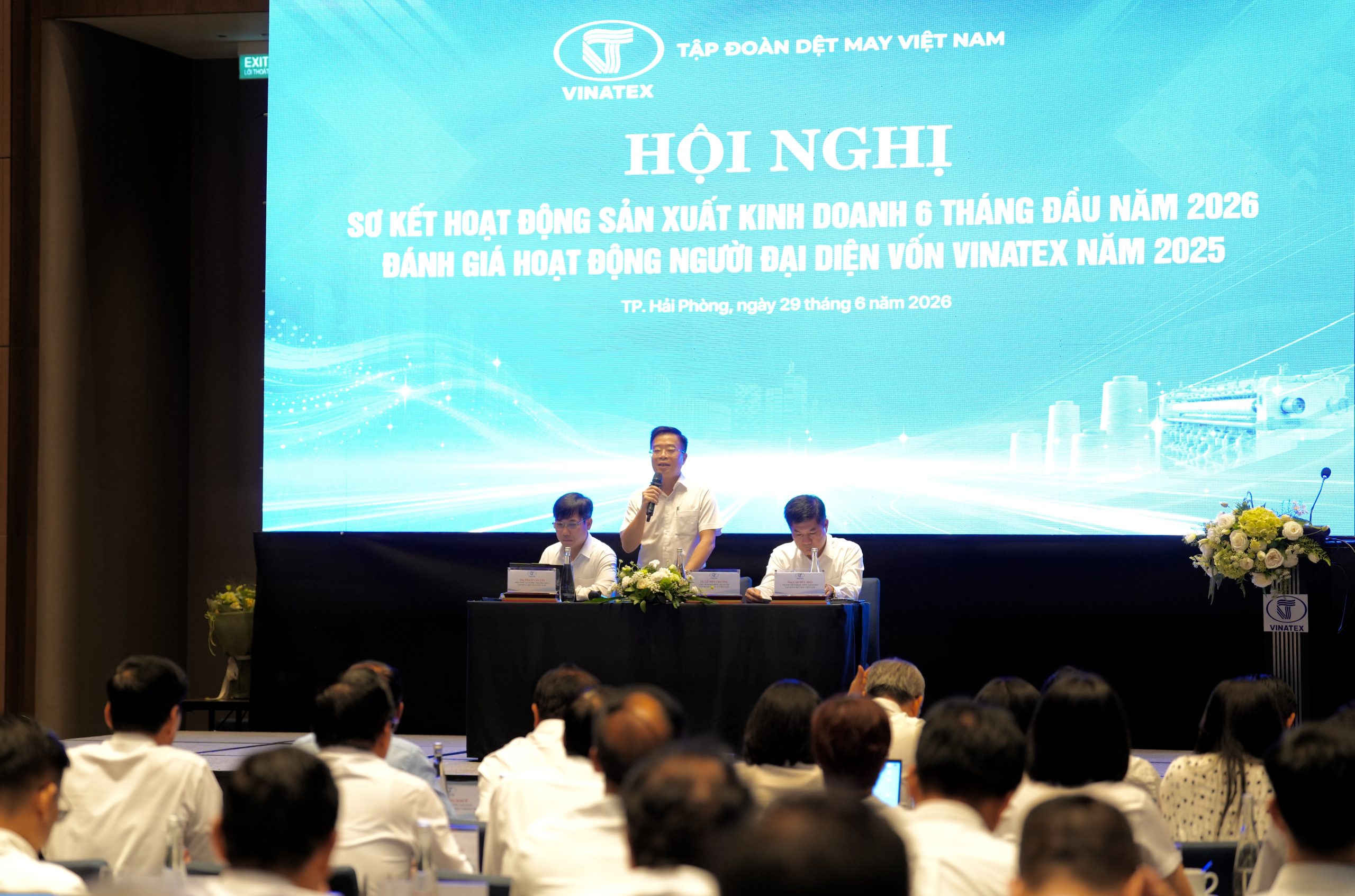
Vinatex has recently concluded 15 years of reforming its capital representative evaluation system and is now entering the 2026–2030 phase with a new set of criteria, including Return on Capital Employed (ROCE), the Quick Ratio, and the Deployment Rate of Trained Successor Personnel. How will this shift from a traditional financial management approach to a modern governance framework, which places greater emphasis on cash flow management, human resources — reshape capital governance across the Group’s member enterprises?
Mr. Nguyen Ngoc Binh, General Director of Hoa Tho Textile and Garment Joint Stock Corporation
Vinatex’s shift from a traditional financial management approach to a modern governance framework has brought about a fundamental change in the way member enterprises manage capital. Whereas the primary focus in the past was on revenue and profit, enterprises are now expected to pay greater attention to capital efficiency, financial resilience, and the development of managerial talent. For Hoa Tho Textile and Garment Joint Stock Corporation (Hoa Tho), this transformation has fostered a more proactive and sustainable approach to corporate governance. It has encouraged the company to optimize capital utilization, strengthen cash flow management, improve asset efficiency, and place greater emphasis on developing a strong pipeline of successor managers and future leaders.
In an increasingly volatile market environment, Vinatex’s current capital representative evaluation framework provides a strong foundation for capital representatives to become more proactive, agile, and decisive in their management decisions. As the evaluation criteria increasingly focus on capital efficiency, governance quality, and long-term sustainability, capital representatives are better equipped to make timely and flexible decisions that capture market opportunities, rather than focusing solely on short-term performance targets.
For Hoa Tho, rapid changes in trade policies require a high degree of adaptability. When capital representatives are entrusted with greater authority alongside clear responsibility, and are evaluated based on the real effectiveness of their decisions, they will be better motivated to take initiative, embrace calculated risks, and make decisions that safeguard the long-term interests of both the enterprise and the Group.
In my view, the KPIs system can only achieve its full effectiveness when it ensures both consistency across the Group and respect for the unique characteristics of each member enterprise. Vinatex should establish a set of core KPIs applicable to all subsidiaries to provide a common management direction and strengthen the Group’s overall capabilities, while allowing an appropriate proportion of company-specific indicators tailored to each enterprise’s scale, business activities, and strategic development objectives.
With its first-half 2026 performance reaching 52% of the annual revenue target and 55% of the annual profit target, Hoa Tho has established a solid foundation for achieving its 2026 business objectives. In addition, Hoa Tho will continue to closely monitor market developments to proactively secure orders, improve production efficiency, strengthen cost control, and optimize capital utilization. At the same time, the company will further accelerate its digital transformation initiatives, expand the application of AI in both management and manufacturing, develop new markets, diversify its customer base, and enhance its overall competitiveness, with the goal of achieving the highest possible level of performance against its 2026 business targets.
Mr. Duong Khue, General Director of Phong Phu Joint Stock Corporation
Vinatex’s capital representative evaluation system has been continuously refined to more closely align with enterprise performance, drawing on both financial results and human resource indicators to reflect the key operational activities of each enterprise during the fiscal year. Enterprises that take a proactive approach and develop multiple solutions to address emerging challenges generally have greater advantages. In addition, diversifying revenue across multiple export markets helps significantly reduce the negative impact that disruptions in any single market may have on overall business performance.
The Group has also established specialized functional divisions, such as the Yarn production and Business Divisions and the Garment production and Business Divisions which provide valuable benchmarks and facilitate the sharing of best practices among member enterprises. At present, Phong Phu Corporation is closely managing its operations in line with its resource plans for the second half of the year. The Corporation is targeting VND 500 billion in consolidated profit in 2026, while aiming to achieve double-digit growth compared with its annual business plan.
Ms. Nguyen Hong Lien, General Director of Hue Textile and Garment Joint Stock Corporation
As Vinatex enters a new phase of development, the introduction of new performance indicators into the Group’s capital representative evaluation framework will enable member enterprises to build a more effective governance model, thereby reshaping capital governance across three fundamental dimensions:
– From capital utilization to capital efficiency optimization (ROCE): Capital management is about ensuring that every unit of capital employed generates the highest possible return. This requires us to rigorously review our operations, eliminate hidden costs, and optimize production capacity.
– Financial resilience as the lifeblood of the enterprise (Quick Ratio): This requires enterprises to exercise tighter cash flow management and maintain an optimal balance between short-term liabilities and highly liquid assets, thereby safeguarding financial stability amid an increasingly uncertain business environment.
– Investing in human capital development: Capital representatives are expected to take responsibility for developing future leaders by providing structured training, assigning high-potential personnel to challenging operational roles, and ensuring that succession candidates are effectively utilized, given opportunities for career advancement, and able to make meaningful contributions to the enterprise’s long-term growth.
In my view, Vinatex’s current capital representative evaluation framework is far more than a simple performance scorecard. It enables capital representatives across member enterprises to: proactively monitor market developments, identify risks and opportunities at an early stage, and adjust their strategies in response to changing market conditions. Built on a foundation of objective and data-driven performance indicators, the framework establishes a transparent mechanism for evaluating management decisions. Short-term operational flexibility is assessed against tangible outcomes, including cash flow performance and the long-term health of key financial indicators. This ensures that timely and adaptive decisions remain aligned with sustainable financial performance. In other words, Vinatex’s evaluation model has enabled member enterprises, including Hue Textile and Garment Joint Stock Corporation to make faster and more informed decisions, take calculated risks where appropriate, capitalize on policy uncertainty to realign supply chains and restructure costs, and ultimately protect or even expand their profit margins during periods of market disruption and economic uncertainty.
In practice, some of our garment enterprises maintain strong cash flows, while others are facing considerable pressure as profit margins continue to narrow. If a single, rigid evaluation formula is applied across all member enterprises, it could inadvertently undermine the motivation of businesses operating under different conditions and business models.
To strike the right balance between “standardization” and “tailored evaluation”, I believe the Group should embrace the management philosophy articulated by the Chairman of the Board of Directors: “A single tiger cannot defeat a pack of foxes.” In other words, the collective strength of the Group lies in the coordinated performance of its member enterprises.
– From the perspective of “standardization”: The Group should continue to maintain a set of core indicators that are critical to every enterprise, including financial health (Z-score), the Quick Ratio, and Return on Capital Employed (ROCE). These common indicators provide a consistent framework for safeguarding the financial soundness of the entire system, ensuring that no individual enterprise becomes a weak link capable of creating financial risks or adversely affecting the Group’s consolidated performance.
– From the perspective of “tailored” evaluation: The Group should classify its member enterprises into strategic categories based on their industry characteristics and stage of development. For example, in the case of Hue Textile and Garment JSC, focus on the localization rate of the internal supply chain for garment orders and the optimization of value creation across the entire value chain.
– The KPIs system should not become barriers that isolate the objectives of individual member enterprises. Instead, the Group should establish an interconnected KPI framework that maximizes collaboration and system-wide synergies. Enterprises with strong cash flow, market access, or operational capabilities should receive appropriate recognition for supporting other member companies —whether they encounter difficulties. Such a mechanism would encourage and institutionalize the Group’s philosophy of supporting one another before a crisis occurs, thereby strengthening the resilience and competitiveness of the entire Vinatex system.
In the first six months of 2026, Hue Textile and Garment JSC remain on track with its implementation schedule, with profits exceeding 50% of the full-year plan. Although the revenue did not reach 50% of the plan, we have implemented solutions to improve quality in the coming months:
Managing market risks and supply chain flexibility to adapt to the US tariff policy response (applicable after July 24, 2026). Strengthening market and customer diversification. Speeding up digital transformation and the synchronized operation of the 3-story Garment Factory (phase 1) under the smart manufacturing model.
Spinning Division: Increase the share of recycled yarn production (CVC GRS, TC GRS) to 50% of total output. Manage raw material sources according to the strategy of “purchase enough – purchase properly – purchase by order.” Implement cost-saving measures, especially in electricity consumption.
Weaving, Dyeing and Garment Division: Focus on seeking and finalizing large orders early to fill production capacity, especially by urgently finding dyeing orders for the remaining production capacity in Q4/2026 and Q1/2027. Prioritize relocating the production workforce of Garment Plant 1 and Garment Plant 2 to the new factory buildings to fully utilize capacity in August 2026.
Hue Textile and Garment also implement solutions to retain employees after consolidating the garment production area. Cash flow management will be strengthened, with the goal of reducing the cash conversion cycle (CCC) to below 100 days for the Spinning Division and below 70 days for the Garment Division.
Mr. Than Duc Viet – General Director of Garco 10 Corporation – Joint Stock Company
In the 2026–2030 period, instead of focusing only on purely financial indicators such as revenue, profit, or ROE (return on equity), the Group’s new evaluation model adds modern metrics such as ROCE (return on capital employed), CCC (cash conversion cycle), TFP (total factor productivity), and the deployment rate of trained succession candidates. This adjustment requires capital representatives to focus more on profit quality, the efficiency of financial leverage, the speed of working capital turnover, and the ability to control liquidity risk. Linking the training rate of nominated personnel with the results of their actual deployment will help enterprises proactively prepare a successor team with sufficient practical management capability.
At the same time, the KPI evaluation model will provide strategic direction for enterprises to proactively adapt, including restructuring the customer portfolio, investing in traceability, digital transformation, and greening the supply chain. As a result, enterprises will not only protect profit margins but also build a solid foundation for sustainable development amid changes in the global business environment.
In my view, Vinatex has conducted thorough research in developing a modern KPI system tailored to the characteristics of each business sector. However, to enhance scientific rigor, establish standardized practices across the Group, while maintaining sound risk controls and providing sufficient flexibility for capital representatives to leverage their unique strengths, the Group should consider developing a comprehensive KPI evaluation handbook, grouped by mandatory performance indicators and supplementary indicators that can be adjusted to reflect actual operating conditions. For each indicator group, the handbook should clearly define the concept, purpose, calculation methodology, data source, timing of data collection, and risk warning thresholds. The handbook should be issued at the beginning of each year, accompanied by implementation guidelines for member companies, enabling capital representatives to proactively apply, monitor, and evaluate these indicators in the course of the enterprise’s day-to-day operations.
At the same time, the Group should continue studying and benchmarking domestic and international best practices to further enhance its evaluation framework, thereby guiding member companies in strengthening corporate governance, internal control, and risk management. Only then can the new evaluation model truly become an integrated management tool that enables enterprises to operate with greater flexibility and efficiency.
Against the backdrop of numerous challenges in the second half of 2026, Garco 10 has set the strategic direction of maintaining stable business operations, prioritizing the quality of growth, improving resource utilization efficiency, strengthening competitiveness, and preserving a sound financial foundation to support sustainable growth. The Corporation’s 2026 revenue target is VND 5,150 billion. Revenue for the first six months of 2026 is estimated at VND 2,552 billion, representing a year-on-year increase of 2.65%. For the second half of the year, the Corporation aims to achieve VND 2,602 billion in revenue, bringing the full-year total to an estimated VND 5,154 billion, equivalent to 100.09% of the annual plan and 100.43% of the 2025 result.
Mr. Nguyen Quang Minh – General Director of Viet Thang Corporation – Joint Stock Company
The shift from traditional financial management thinking to modern governance indicators, with a focus on the quality of cash flow utilization and human capital, has transformed capital governance across member enterprises: Managers gain clearer visibility into how capital is deployed and circulates throughout the business, identify bottlenecks that constrain capital utilization, when intervention is needed to unlock capital, and when capital must be preserved; they can also balance accounts payable and accounts receivable, and manage short-term and long-term debt in line with plan. This helps management assess the enterprise’s liquidity position and improve governance efficiency, especially short-term liquidity, thereby avoiding disruptions to business operations. Human resource training is extremely important, as it helps enterprises proactively manage staffing and ensures continuous, sustainable operations. However, if training is not properly managed, it can lead to wasted resources, while the cost of such programs is high.
The Group’s current capital representative evaluation model will serve as a foundation for managers to implement strategic responses, enabling capital representatives to make timely and decisive decisions and seize opportunities to protect profit margins. The Group needs to clearly understand the strengths, weaknesses, capabilities, culture, and other characteristics of each enterprise in order to develop separate KPIs that are suitable for each company, ensuring a distinct degree of flexibility for each capital representative rather than applying a single formula across all units.
For Viet Thang, the second half of the year will be a relatively challenging period, mainly due to external factors that negatively affect business operations and production. To achieve the planned targets, the Corporation will continue to steadfastly implement the key tasks set out at the beginning of the year and further emphasize several important points, such as: controlling raw material costs amid constantly fluctuating cotton fiber prices and carrying out comprehensive cost savings; maximizing machine capacity to ensure on-time delivery; further promoting export activities to secure foreign exchange balance; enhancing efficient governance through the application of digital transformation within the enterprise; flexibly adjusting the product mix in line with the trend of green development and recycled materials to meet export market standards; focusing on product lines with high profit margins while reducing commodity products with low margins; investing in deep technological innovation to improve productivity and quality, reduce labor costs, and strengthen the competitiveness of products in the market; and expanding to new customers and new markets to avoid dependence on only a few specific partners or clients.

Ms. Nguyen Thi To Trang – General Director of Vinatex Phu Hung Joint Stock Company
In my view, the most significant change in the capital representative evaluation system for the 2026–2030 period is the shift from assessing financial performance to evaluating governance quality and the capability to deliver sustainable results. In particular, the introduction of indicators such as ROCE (Return on Capital Employed) and the Quick Ratio has strengthened the governance framework by placing greater emphasis on the quality of capital utilization and operational excellence. When capital efficiency becomes a key performance criterion, business leaders can no longer focus solely on increasing revenue or profit. Instead, they must re-evaluate their business model, product portfolio, competitive advantages, and the way the enterprise creates value. Only by improving these underlying fundamentals can an enterprise both enhance capital efficiency and achieve sustainable growth.
In addition to financial indicators, incorporating the proportion of succession candidates who are trained and subsequently appointed into the evaluation system clearly reflects Vinatex’s evolving management philosophy. Succession planning is no longer assessed merely by the preparation of plans or the completion of training programs, but by the organization’s ability to transform its talent pipeline into an effective leadership team. This approach encourages capital representatives to proactively identify high-potential employees, provide targeted training, assign meaningful responsibilities, create opportunities for practical development, and confidently appoint capable personnel, thereby building a strong leadership pipeline capable of driving the enterprise’s long-term sustainable development.
It can be said that by placing indicators related to capital efficiency, cash flow quality, and team development within the same evaluation framework, Vinatex is sending a very clear message: a good capital representative is not only someone who generates profit, but also someone who knows how to use resources efficiently, develop the team, and create a foundation for the enterprise’s sustainable growth.
Alongside volatility are the policy “gray areas.” These gray areas come not only from the policy itself, but also from market reactions and supply chain responses. What managers can change is not the policy, but the way they respond to it. In times when policy still contains many uncertainties, the hardest thing is not finding the right answer, but having the courage to make a decision before all the answers are available. A good governance system does not eliminate risk, but it helps leaders understand their own business well enough to act with confidence. That is the difference between a risky decision and a well-judged one.
With nearly 30 member enterprises that differ greatly in scale, technological level, production capacity, markets, and stage of development, Vinatex’s effort to build a KPIs system that is both scientifically sound and standardized across the Group, while still leaving enough flexibility for each enterprise, is not merely about designing an evaluation framework. It is also about building a governance system capable of balancing standardization and flexibility. The essence of this challenge lies not in creating multiple KPI frameworks, but in unifying objectives while allowing flexibility in implementation, thereby giving each unit enough room to maximize its own strengths in pursuit of the Group’s common goals.
Another point I also consider very important is that the KPIs system itself must be continuously refined in line with the enterprise’s development. Business units are constantly changing in scale, technology, market conditions, and business models, so the evaluation system must also be regularly updated to accurately reflect that reality. In particular, as performance measurement becomes increasingly data-driven and quantitative, the requirements for measurement scales and evaluation thresholds also become more demanding. In my view, this is also a very natural process in the development of any governance system.