
In the first six months of 2026, the textile and garment industry continued to be buffeted by complex geopolitical fluctuations and stringent tariff barriers, especially as the temporary supplemental tariff period came to an end on July 24, 2026, raising concerns about a potential U.S. Section 301 investigation. Against a cloud of uncertainty hanging over the market, the Party Committee of the Vietnam National Textile and Garment Group (Vinatex) affirmed its role as the political core, maintaining comprehensive leadership capacity. By closely linking Party building with the implementation of political tasks, Vinatex has not only stood firm amid the requirements of restructuring its operating model but also achieved remarkable breakthroughs in business and production.
Party building efforts aligned with the common development orientation of the entire system
The first half of 2026 was an exceptionally challenging period for the Party Committee of Vinatex as it carried out its tasks amid extraordinary circumstances. The Group not only had to withstand severe market shocks but also implement the restructuring and transformation of its Party organizational model. During this period, Vinatex completed the transfer of all 12 affiliated Party organizations to local Party committees; reorganized the Party Committee of the Group’s Executive Office into a sub-Party committee comprising 7 subordinate Party cells; and concluded the operations of 4 specialized Party departments in order to operate under the grassroots Party organization model directly affiliated with the Party Committee of the Ministry of Finance.
In the face of these changes, the Group’s Party Committee reaffirmed that organizational restructuring must not weaken the Party, but rather serve as an opportunity to streamline the apparatus and enhance the leadership capacity and combativeness of the Party organization.
Thanks to maintaining stable business operations and closely monitoring public opinion, the ideological sentiment across the entire system has remained stable without any emerging hotspots. This political steadfastness has been the key enabling executive management to flexibly adapt to market risks.
Comrade Le Tien Truong, Secretary of the Party Committee and Chairman of the Board of Directors of Vinatex, noted that due to the specific organizational structure of the Vietnam National Textile and Garment Group’s Party Committee, grassroots Party committees at member units have been transferred to operate under local authorities. Therefore, to obtain a comprehensive picture of the entire system’s business performance in the first half of the year, the Standing Committee of the Group’s Party Committee worked directly with major Party committees and corporations — the core contributors to the Group’s overall business results.
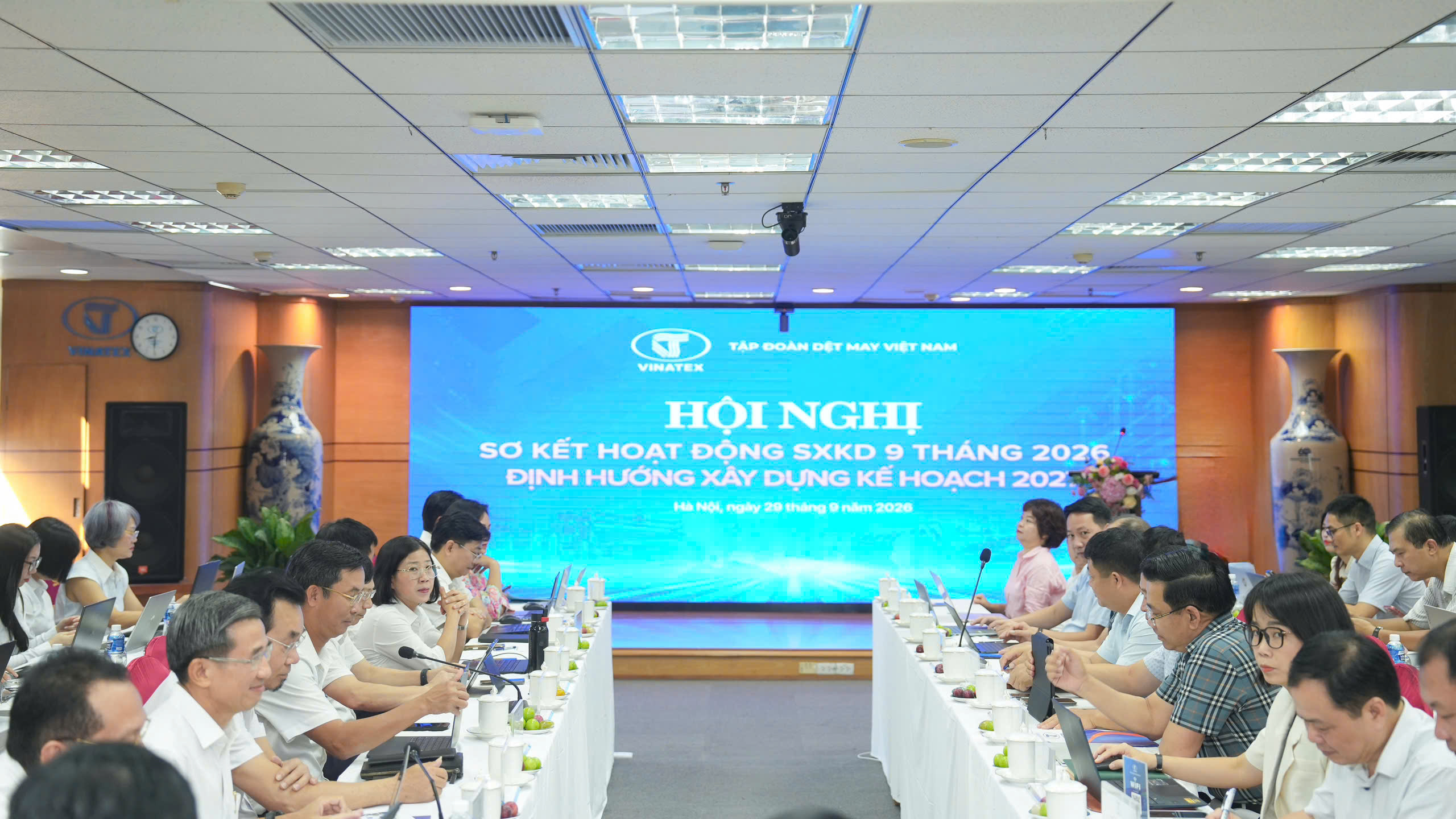
On June 29, 2026, Vinatex held a conference to review the performance of tasks in the first six months, define goals and solutions for the second half of the year, identify upcoming market developments, and evaluate the role of the Group’s capital representatives at member units in 2025 based on audited financial statements and the results of the 2026 Annual General Meeting of Shareholders completed before June 20.
In practice, the Vinatex Party Committee organization at the Parent Company is not directly engaged in production and business operations, contributing only about 10% to the Group’s overall results. Therefore, organizing preliminary review conferences at member units to fully assess their performance is essential to provide the Executive Committee of the Party Committee with a solid foundation for issuing leadership and directional resolutions.
Comrade Le Tien Truong emphasized that this is the first time the Group’s 6-month performance review conference was held without immediately issuing conclusions or resolutions, as the official resolution will be discussed and passed by the Executive Committee of the Group’s Party Committee at the mid-year Party building conference. This is also a distinct feature of the Group Party Committee’s leadership under the new organizational model, as it must simultaneously exercise comprehensive leadership over the Party organization and direct the operations of enterprises with capital investment from the Group. The resolution passed by the Executive Committee at the conference applies not only within the scope of the Vinatex Party Committee, but also serves to guide and lead all corporate entities in which the Group holds equity. Therefore, the responsibility of the Executive Committee is not limited to Party building work, but is closely tied to guiding the overall development of the entire system.
Political Resolve in the Face of “Dual” Pressures
Comrade Cao Huu Hieu – Deputy Secretary of the Party Committee, Member of the Board of Directors, and CEO of Vinatex remarked that the textile and garment market during the first six months experienced continuous volatility, with the global economy remaining fragmented and consumer demand showing no clear recovery. Pressures stemmed from green and digital transformation mandates alongside fierce competition for orders. While Vietnam maintained a relatively better growth momentum compared to several competing nations, price pressures remained substantial. Major textile import markets diverged sharply across regions; Vietnam’s textile and garment exports reached $18.7 billion in the first five months (up 5.4% year-on-year). Notably policy risks associated with a potential U.S. Section 301 investigation into Vietnam’s legal framework governing products made with forced labor, which Vietnamese goods face a proposed 12.5% tariff; alongside surging ocean freight rates and unfavorable exchange rates relative to competitors, are critical factors that must be proactively incorporated into operational, business, and export strategy scenarios.
Against the backdrop of ongoing volatility in the global textile and garment market, the Group’s Party Committee has guided the Board of Directors, executive management, capital representatives, and member units to closely adhere to the 2026 plan, manage operations flexibly, control risks, reduce costs, and maintain stable production, employment, and worker incomes. Estimated consolidated revenue for the first six months reached VND 10,049 billion, up 9.6% year-on-year, completing 46.9% of the annual plan and surpassing the H1 target benchmark of 45%. Estimated consolidated pre-tax profit reached VND 883 billion, up 32.4% year-on-year, fulfilling 64% of the annual target. The average workforce in the first half of 2026 reached 56,372 employees, equivalent to 104.9% of the same period in 2025 and 104.2% of the 2026 plan. The average monthly income in H1 2026 reached VND 12.254 million per person, standing at 112.2% compared to the same period in 2025 and 107.4% of the 2026 plan. Overall, the labor and employment situation in the first six months remained fundamentally stable, with the workforce expanding year-on-year and exceeding targets, while employee incomes continued to be safeguarded, rising 12.2% over the same period.
CEO Cao Huu Hieu noted that during the first six months, the Vinatex Party Committee closely followed the strategic orientation of “Enhancing efficiency in effective operations,” while the Group’s new organizational model has been operating stably. All areas of work from production and business operations to Party building, inspection and supervision, and caring for employee welfare have registered positive progress, establishing a solid foundation for fulfilling the tasks for 2026.
Integrating Party Building into Corporate Governance
The practical experience at Vinatex in the first six months of 2026 serves as vivid proof that organizational restructuring does not weaken leadership capacity; rather, it provides an opportunity to renew and enhance the Party’s leadership capability. When Party resolutions are translated into sharp management tools—evidenced by impressive growth in revenue and profit as well as the stability of workers’ livelihoods, the central role of the Party within the enterprise is affirmed most strongly.
Comrade Le Tien Truong – Secretary of the Party Committee and Chairman of the Board of Directors of Vinatex, noted that the transfer of Party organizations to local management proceeded smoothly because Vinatex’s previous Party structure was primarily an “expanded Parent Company” model, concentrated in Hanoi and Ho Chi Minh City. This structure was largely aligned with the organizational framework under Decision No. 197-QD/TW regarding coordination mechanisms between the Party committees of state-owned groups, corporations, and commercial banks and local Party committees.
Alongside these efforts, the Vinatex Party Committee continues to maintain the effectiveness of its propaganda, education, and mass mobilization work. Although no longer directly leading grassroots Party organizations, the Party Committee still regularly compiles monthly Party cell meeting materials, providing content guidance for enterprises within the Group, including units no longer directly under the Group’s Party Committee. According to the Comrade, in the absence of finalized coordination regulations with local authorities following the transfer, maintaining these materials prevents Party organizations from becoming confused when organizing meetings, while ensuring that meeting topics remain closely tied to production and business operations, market forecasting, and strategic corporate development.
The Comrade also emphasized that Vinatex continues to closely link propaganda, education, and mass mobilization work with corporate culture development through its internal communications network, corporate culture assessment program, and cultural ranking criteria for member enterprises. Accordingly, the boundaries between Party building work and corporate governance are interconnected and mutually reinforcing to spread corporate culture and improve communication effectiveness among employees across all member units, regardless of their Party organizational structure. Following the organizational streamlining, the Party building units were reorganized to be lean and efficient: the Party Committee Office, propaganda, education, and mass mobilization functions operate alongside the Group Office; organizational work is aligned with the Human Resources Management Department; and the Inspection Commission collaborates with the organizational department. The transition from dedicated Party departments to a streamlined model was executed synchronously, ensuring no disruptions occurred and leadership and direction regarding Party building across the entire Group remained steadfast.
In the second half of the year, the Group has set key targets including: Revenue equivalent to the first six months; Consolidated profit reaching over 80% of the H1 figure; Maintaining the momentum of worker income improvement with a 10% increase for the full year 2026; Ensuring total factor productivity (TFP) growth across the entire Group exceeds 6%…
To achieve these targets, the Vinatex Party Committee will focus on leading and directing the entire system to execute key solutions:
- Build competitiveness around rapid order turnaround—adapting to sudden market fluctuations;
- Maintain financial stability focused on increasing working capital efficiency and improving profit margins;
- Stay close to strategic clients and maintain a strong position within the chain’s vendor base;
- Finalize the detailed feasibility study for the Group’s Pilot Smart Factory No. 1 and conduct preliminary research on investing in a smart logistics center;
- Sustain operational efficiency of the Yarn and Garment Business and production Divisions;
- Roll out specialized training programs on risk management tailored to each sector.
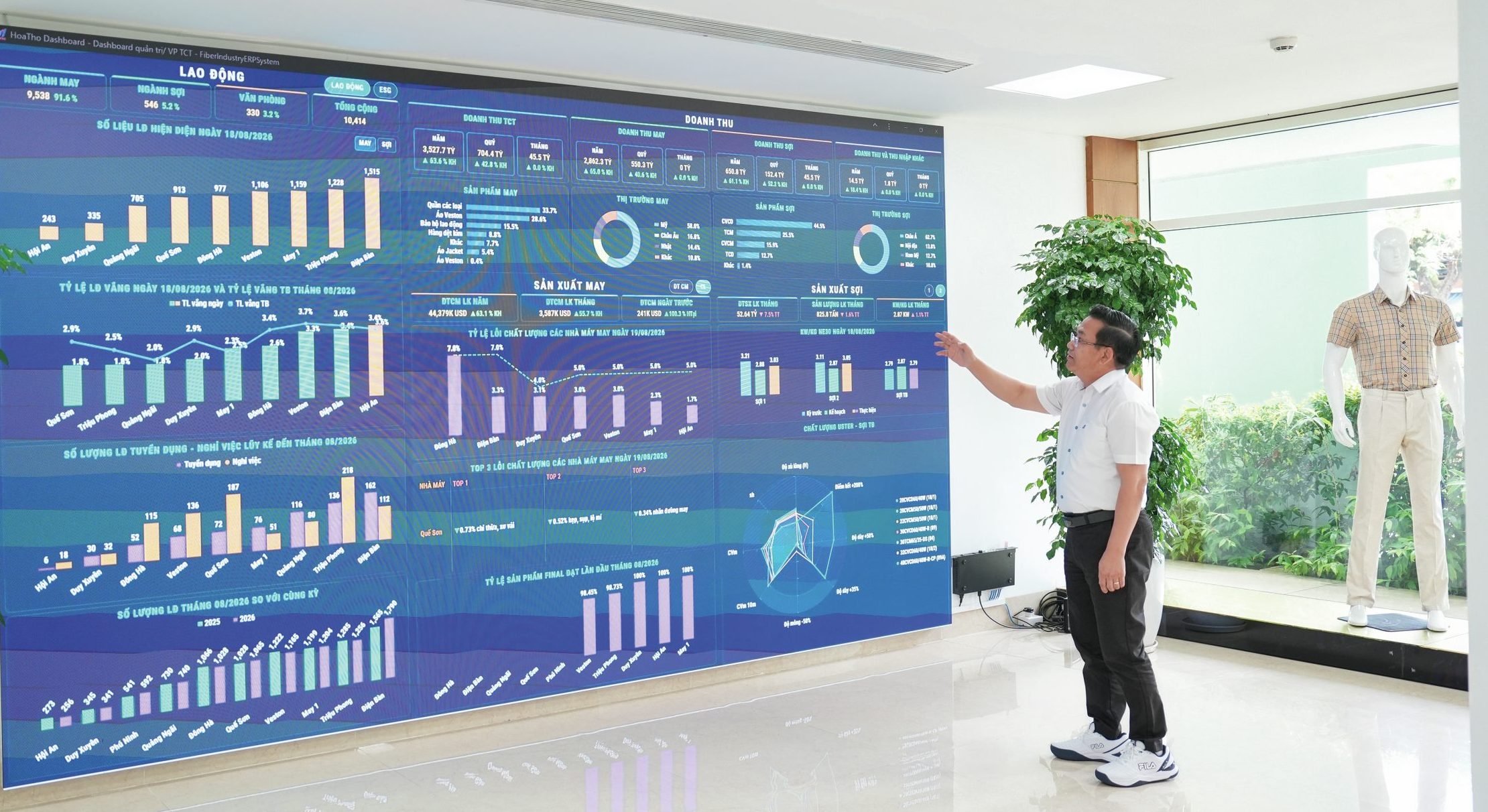
Attending the 2026 mid-year review conference on Party building work of the Vinatex Party Committee, Comrade Do Van Truong – Full-time Deputy Secretary of the Ministry of Finance Party Committee acknowledged, commended, and congratulated the Group’s Party Committee on its achievements in the first six months of 2026. He assessed that the Party Committee excellently fulfilled the goals and tasks set out for the first half of the year, demonstrating the effective leadership and guidance of the Group’s Party Committee leadership, as well as the dedicated efforts and solidarity of its subordinate Party organizations. The Group’s Party Committee proactively implemented the transformation toward a data-driven corporate governance model, aligning with central government directives on enhancing state-owned enterprise governance capacity, aiming for the 2030 target where state-owned groups and corporations strive to achieve average governance levels based on OECD standards. He suggested that the Group continue to accelerate the application of science and technology, digital transformation, and green transition across all production and business operations, while ensuring well-executed social welfare policies, safeguarding employment, and step-by-step boosting employee income. These efforts serve not only as solutions to enhance productivity and operational efficiency, but also as practical contributions to the nation’s double-digit economic growth target.
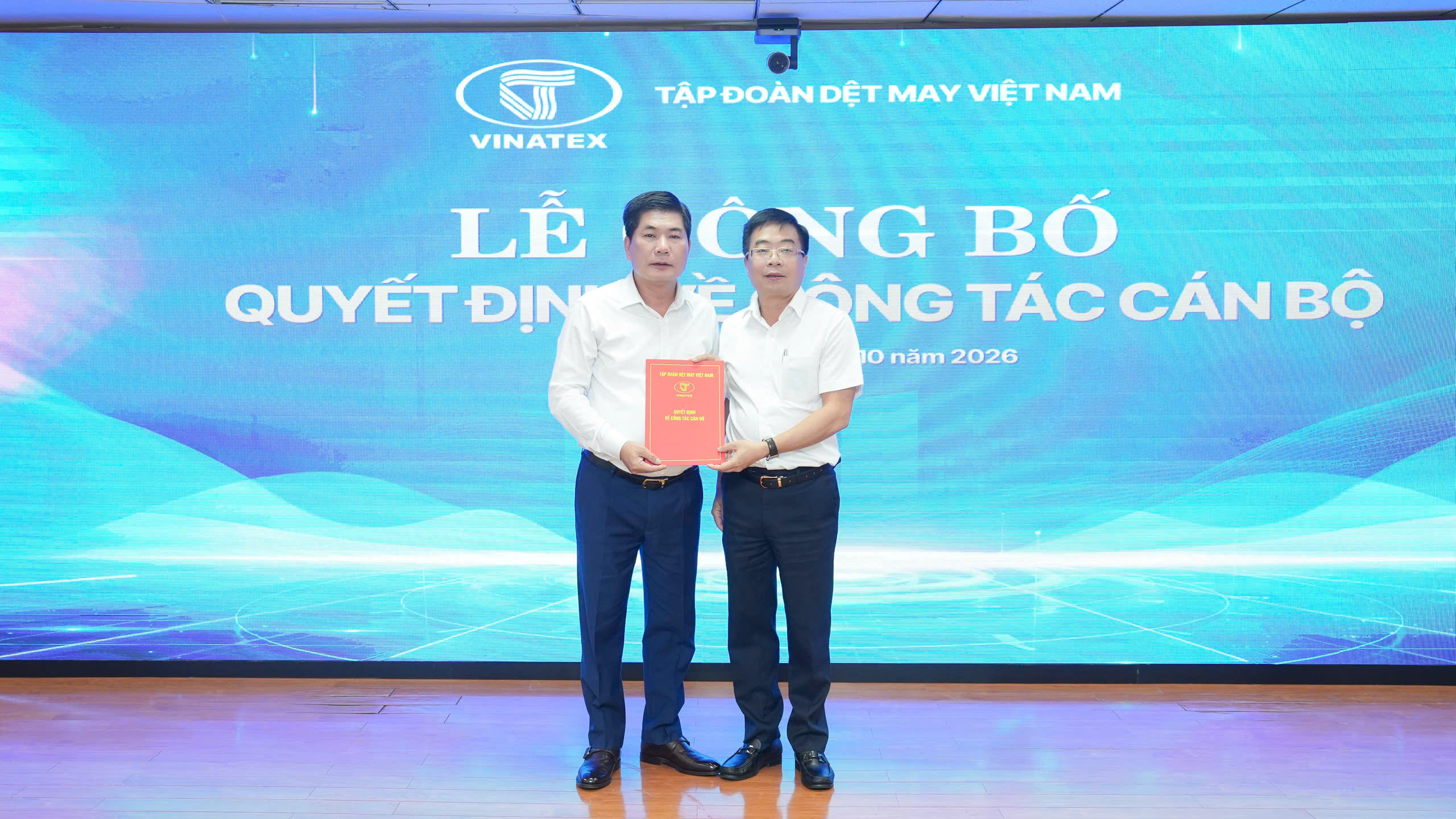
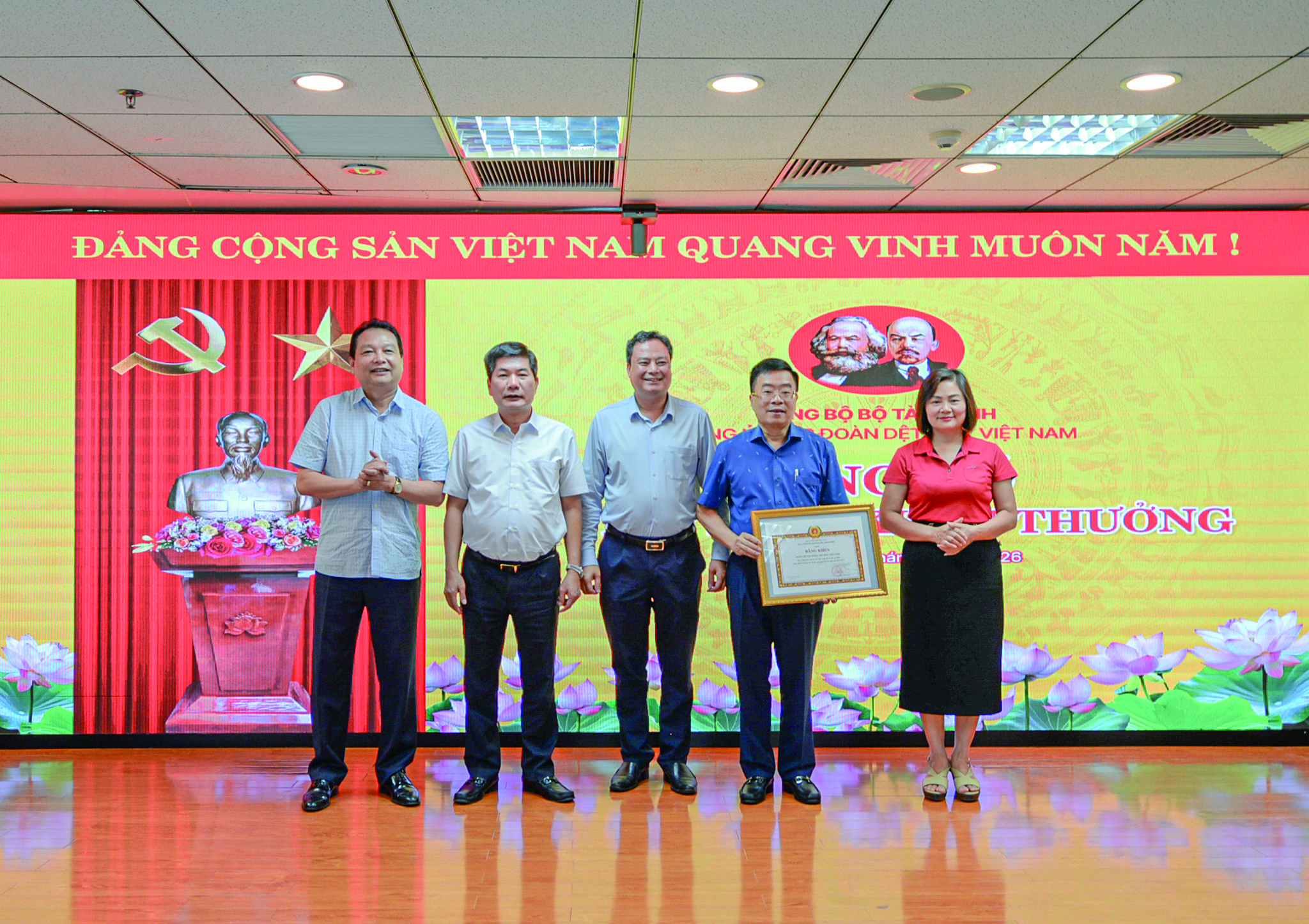
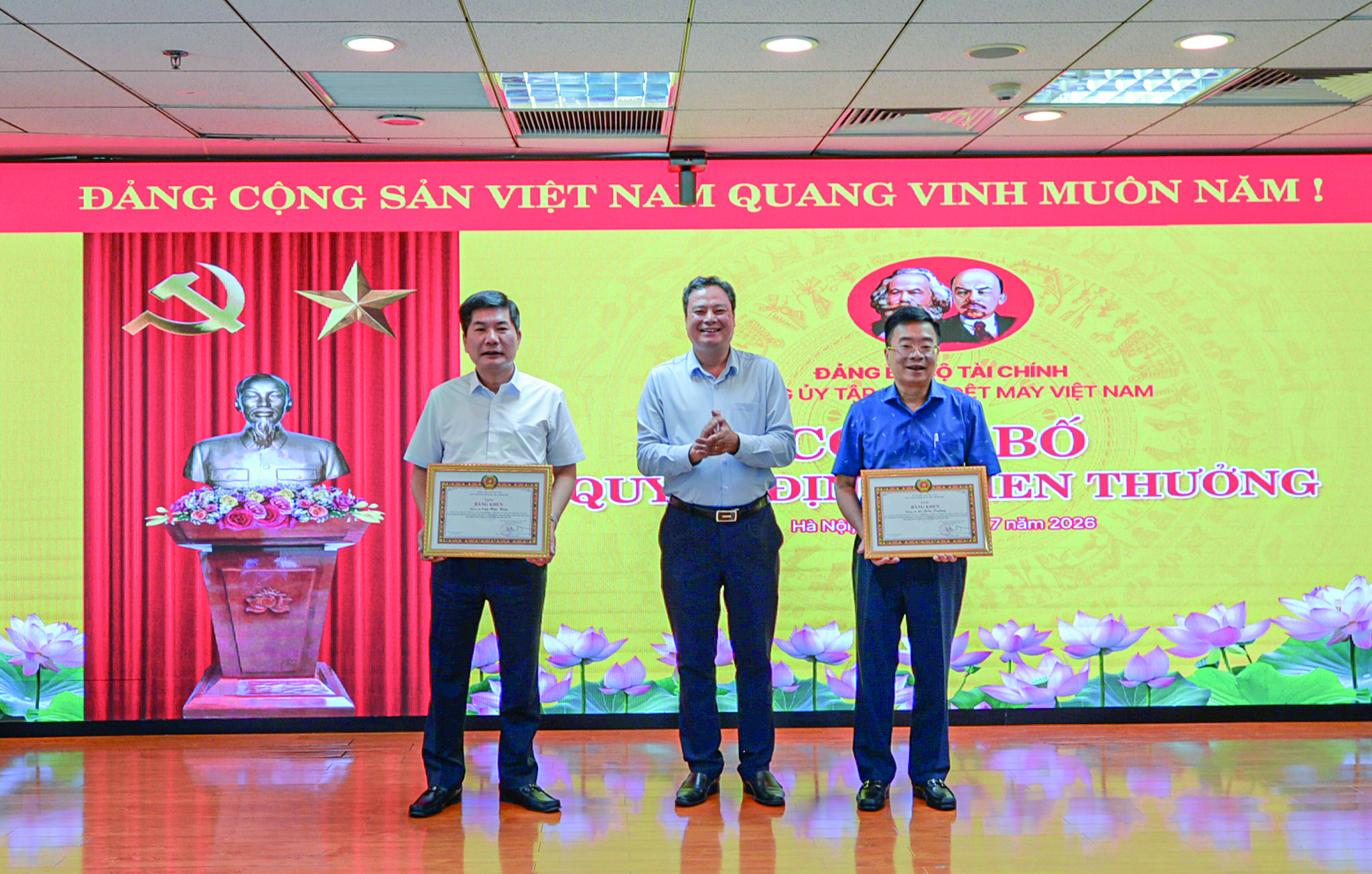
The conference announced and awarded commendation decisions from the Government Party Committee to exemplary collectives and individuals, including: The Party Committee of Vietnam National Textile and Garment Group (Vinatex), recognized for outstanding and exemplary achievements, exceeding the targets set forth in the Resolution of the Party Congress for the 2020–2025 tenure; Comrade Le Tien Truong, Secretary of the Party Committee and Chairman of the Board of Directors of Vinatex: Recognized for exceptional achievements in production and business operations during the 2022–2024 period, contributing to the cause of socialist construction and national defense; awarded the Third-Class Labor Order in 2025; Comrade Cao Huu Hieu, Deputy Secretary of the Party Committee, Member of the Board of Directors, and CEO of Vinatex: Recognized for outstanding work performance, contributing to the cause of socialist construction and national defense; awarded the Third-Class Labor Order in 2025.