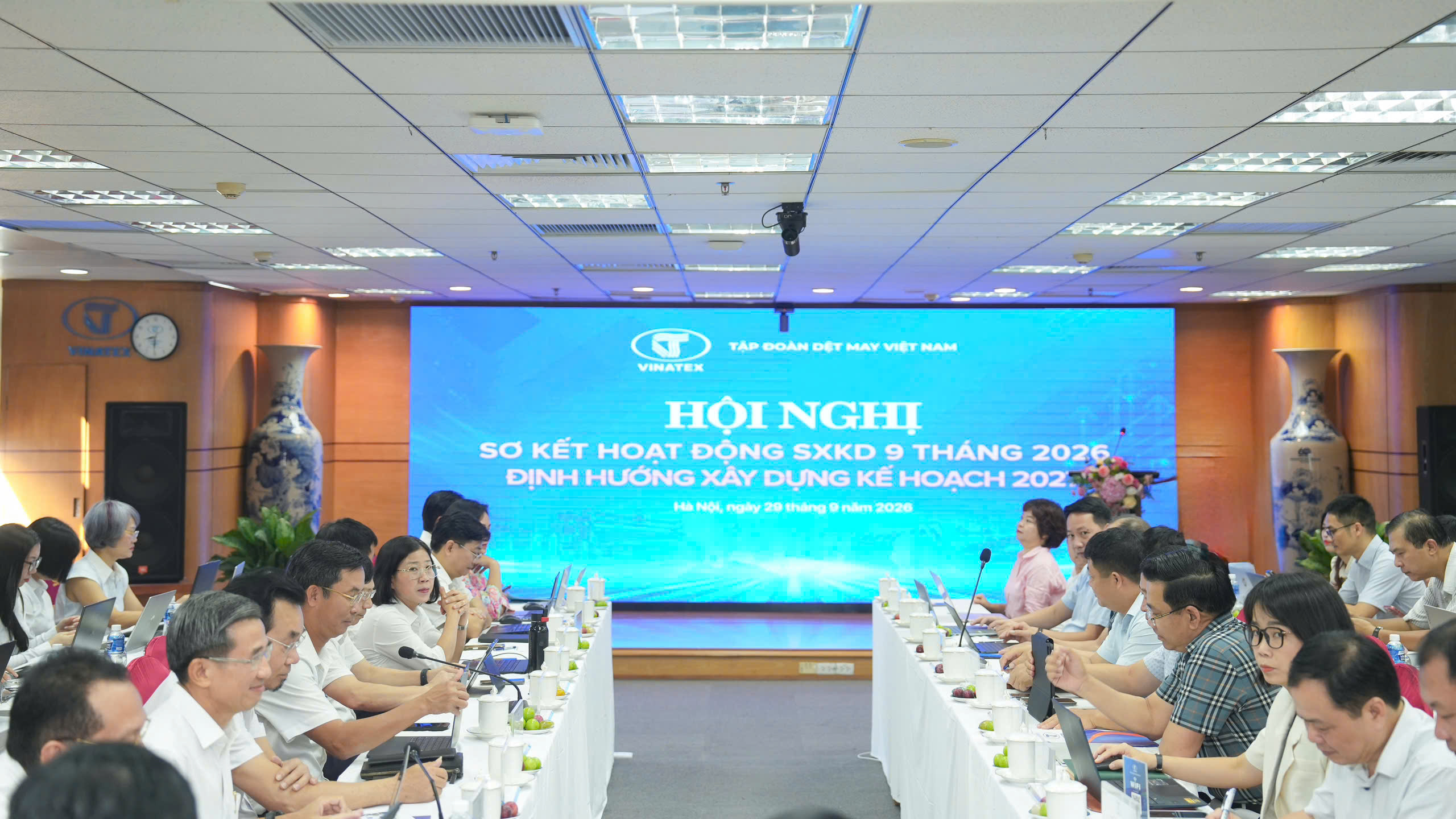

On June 29 in Hai Phong City, Vietnam National Textile and Garment Group (Vinatex) held a conference to review its business performance in the first six months of 2026, outline key tasks for the remaining six months of the year, and evaluate the performance of Vinatex’s capital representatives at its enterprises in 2025.
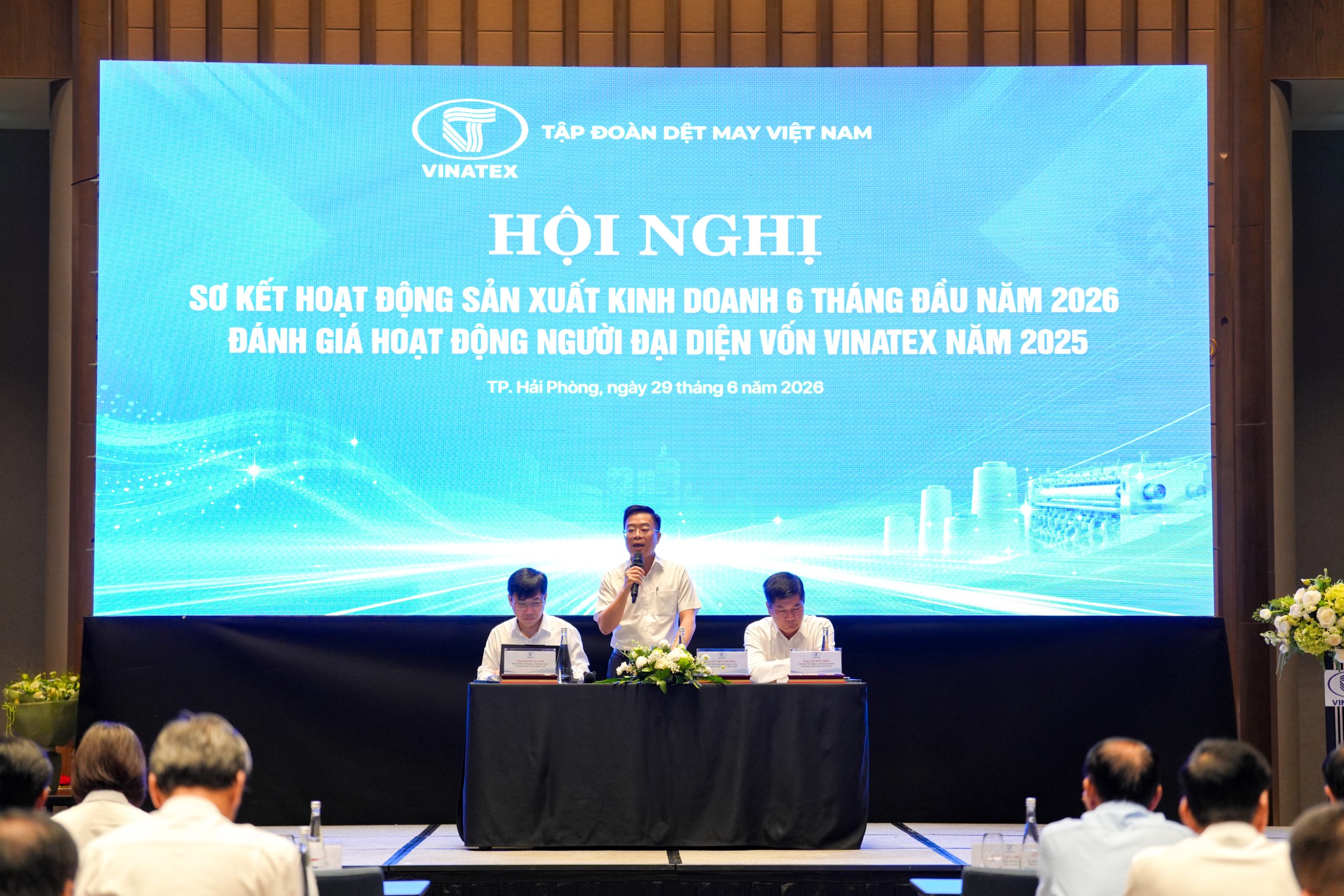
Reviewing the Group’s production and business performance in the first half of the year, General Director Cao Huu Hieu said that amid continued global economic uncertainties, weakening consumer demand in many key markets, and intensifying competitive pressures, Vinatex proactively adapted to the changing environment and maintained stable production across its operations. The Group’s consolidated revenue for the first six months of 2026 was estimated at VND 10,049 billion, equivalent to 46.9% of its full-year target and up 9.6% year-on-year. Consolidated pre-tax profit was estimated at VND 882.9 billion, reaching 64% of the full-year plan and increasing 32.4% compared with the same period in 2025. Across the Group, the workforce totaled 48,134 employees. Average monthly income reached VND 12.4 million per employee, up 8.9% year-on-year and approaching the full-year target of VND 12.6 million per employee per month.
According to General Director Cao Huu Hieu, the results achieved in the first half of the year reflected the collective efforts of the entire Vinatex system. In particular, the Yarn Production and Business Division and the Garment Production and Business Division continued to play a pivotal role in coordinating operations and supporting member companies in improving production and business efficiency.
For the second half of 2026, Vinatex aims to achieve its full-year revenue target. The Group targets consolidated pre-tax profit of approximately VND 1,400 billion, exceeding the annual plan by 2–3%, while the Parent Company is expected to outperform its profit target by 4%, reaching around VND 270 billion. Vinatex also targets a 10% increase in its annual import-export trade surplus, a 9–10% rise in average employee income, and the achievement of its annual targets for capital efficiency and total factor productivity (TFP).
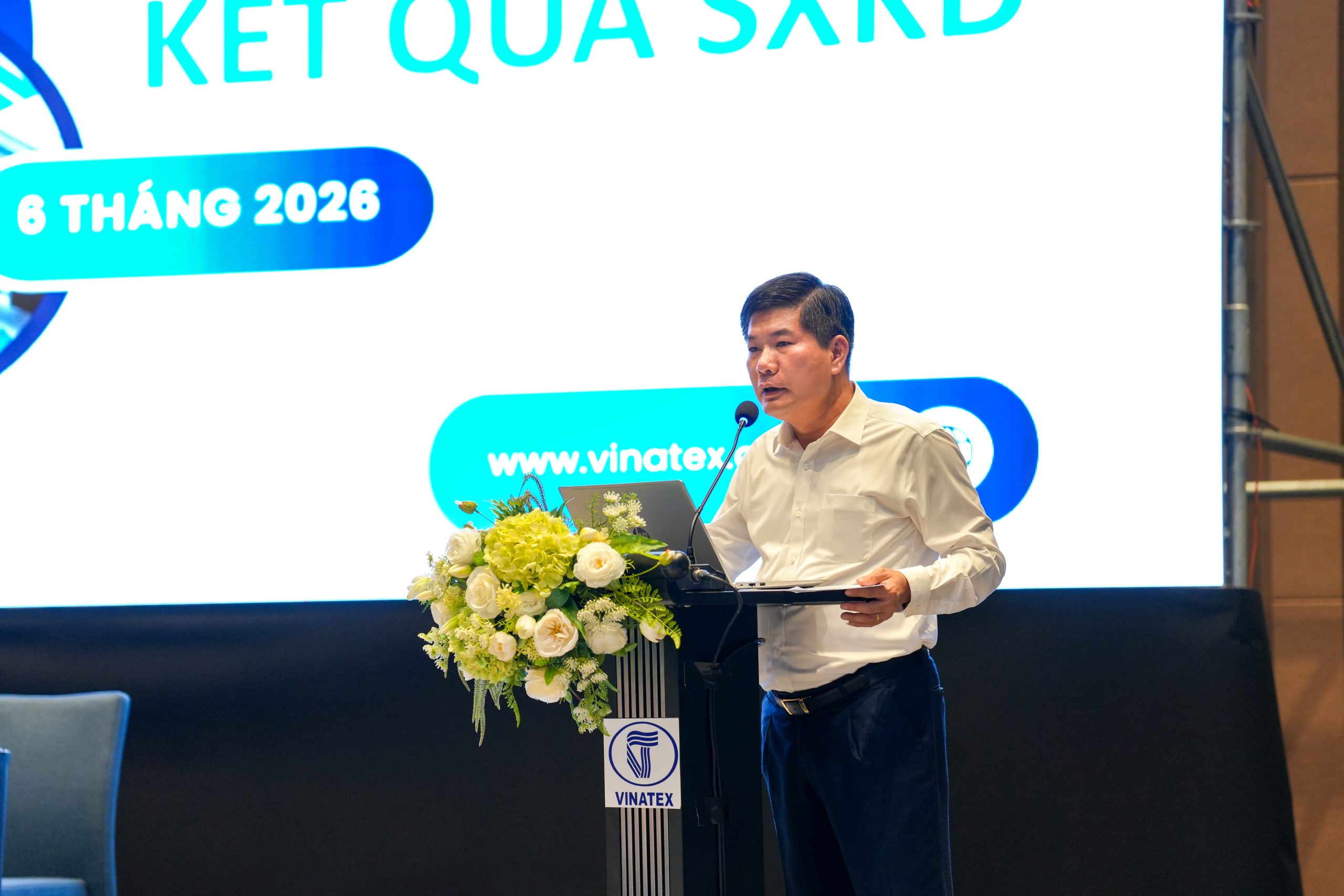
To achieve these objectives, General Director Cao Huu Hieu called on the entire Vinatex system to implement four key strategic of priorities in a coordinated manner:
First, secure orders and strengthen customer relationships by reviewing and optimizing the customer portfolio, with priority given to retaining strategic customers. The Garment Production and Business Division will continue assessing the competitiveness of the garment sector and guide product portfolio adjustments in line with each member company’s capabilities. Meanwhile, the Yarn Production and Business Division will focus on developing a product mix that better meets the demands of the Chinese market, FDI enterprises and the domestic market.
Second, protect profit margins by tightly controlling production costs, improving raw material management, optimizing cotton procurement, and implementing productivity improvement initiatives to achieve the Group’s Total Factor Productivity (TFP) growth target.
Third, strengthen cash flow management by reducing inventories of raw materials and finished goods, accelerating receivables collection, maximizing the utilization of idle assets, and expediting value-added tax refunds to supplement working capital for production and business operations.
Fourth, maintain competitiveness by accelerating digital transformation, enhancing management platforms, strengthening quality management and social responsibility systems, and tightening controls over product traceability and rules-of-origin verification to meet the increasingly stringent requirements of export markets.
At the conference, representatives of Vinatex’s Yarn Production and Business Division and Garment Production and Business Division presented an overview of market developments in the first half of 2026, shared their outlook for the remainder of the year, and proposed solutions to achieve the Group’s 2026 business targets.
A key highlight of the conference was the evaluation of the performance of Vinatex’s capital representatives at its affiliated enterprises. This marked the 15th year that the Group has conducted evaluations under its revised assessment framework. Over the years, particularly during the 2020–2025 period, the evaluation system has been continuously refined in terms of assessment criteria, methodology, and implementation.
Vinatex currently has nearly 30 member enterprises that vary significantly in scale, level of development, production conditions, and market orientation. As a result, a one-size-fits-all formula or strategy is neither practical nor effective. Instead, the Group applies a common management approach that is both systematic and flexible, enabling each enterprise to capitalize on its unique strengths while leveraging the collective advantages of the entire Vinatex system. This approach aims to enhance overall competitiveness and build Vinatex into a large-scale, efficient textile and garment manufacturing group that is increasingly adaptable to evolving market demands and emerging industry trends.
Summarizing 15 years of evaluating the performance of Vinatex’s capital representatives at affiliated enterprises, Dr. Le Tien Truong, Chairman of Vinatex, affirmed that the evaluation framework has laid an important foundation for improving the Group’s capital efficiency, strengthening corporate governance, and building a sustainable ecosystem of member enterprises.
Over the past 15 years, the 2009–2014 period laid the foundation for Vinatex’s capital representative evaluation system. The 2015–2020 period marked its expansion from a primary focus on financial performance to a broader assessment of enterprise development capabilities through a comprehensive overhaul of the evaluation framework.
During the 2021–2025 period, the evaluation system took a further step forward by shifting from outcome-based assessment to data-driven management. The KPI system evolved from being merely an evaluation tool into a management instrument for identifying issues, analyzing root causes, and recommending improvement measures tailored to each enterprise. In addition to traditional financial indicators, the framework incorporated a range of modern management metrics, including the Z-score to measure financial health, revenue and profit per employee, employee turnover rate, Total Factor Productivity (TFP), and the Cash Conversion Cycle (CCC). As a result, the evaluation system now provides a more comprehensive reflection of both the management performance of capital representatives and the competitiveness of member enterprises.
For the 2026–2030 period, Vinatex will continue to enhance the evaluation framework by introducing three additional indicators alongside the existing criteria: Return on Capital Employed (ROCE), the Quick Ratio, and the Deployment Rate of Tranined Successor Candidates.
The conference participants expressed strong support for and appreciation of the objectives and recent innovations in Vinatex’s evaluation framework for capital representatives at its affiliated enterprises.
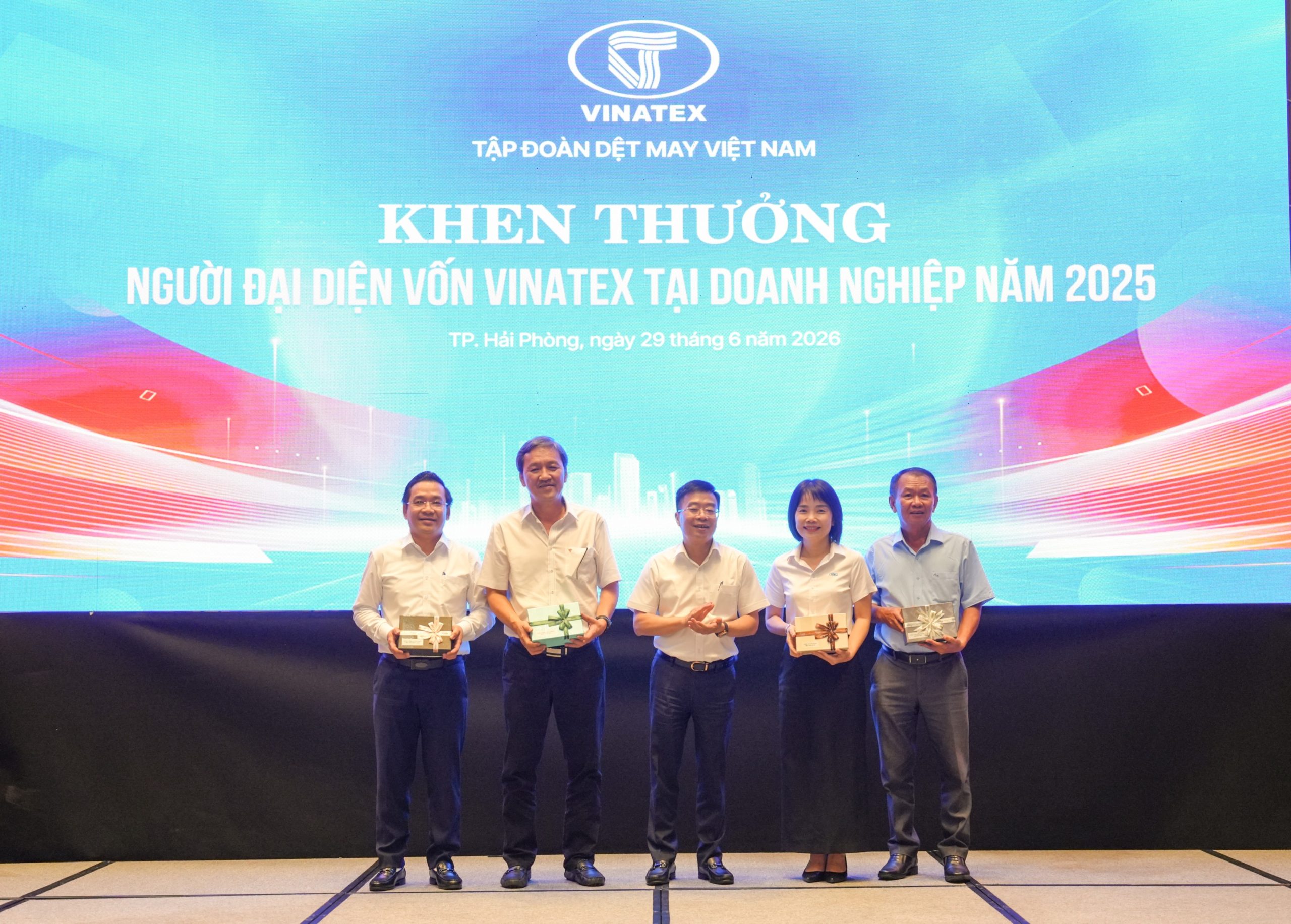
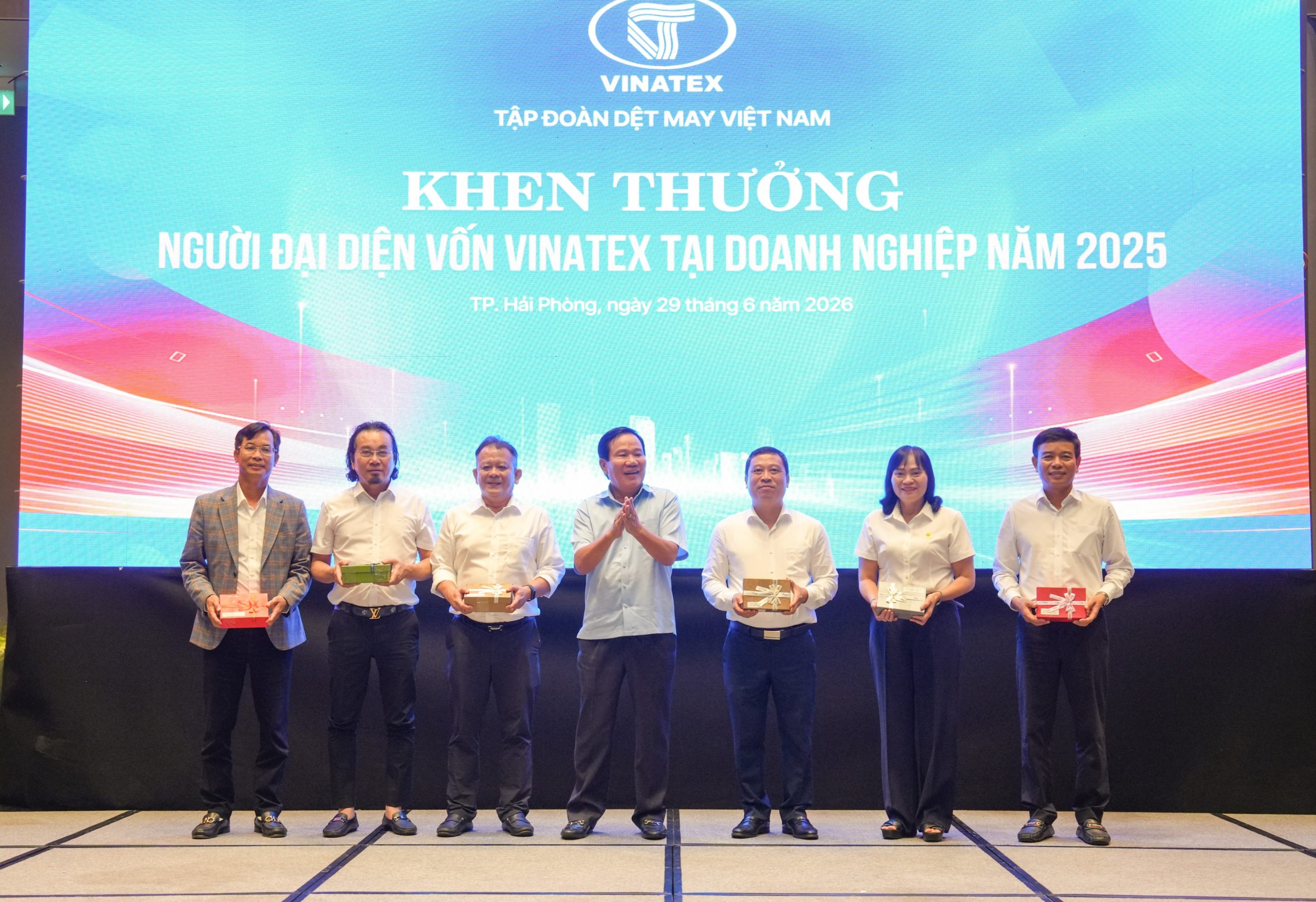
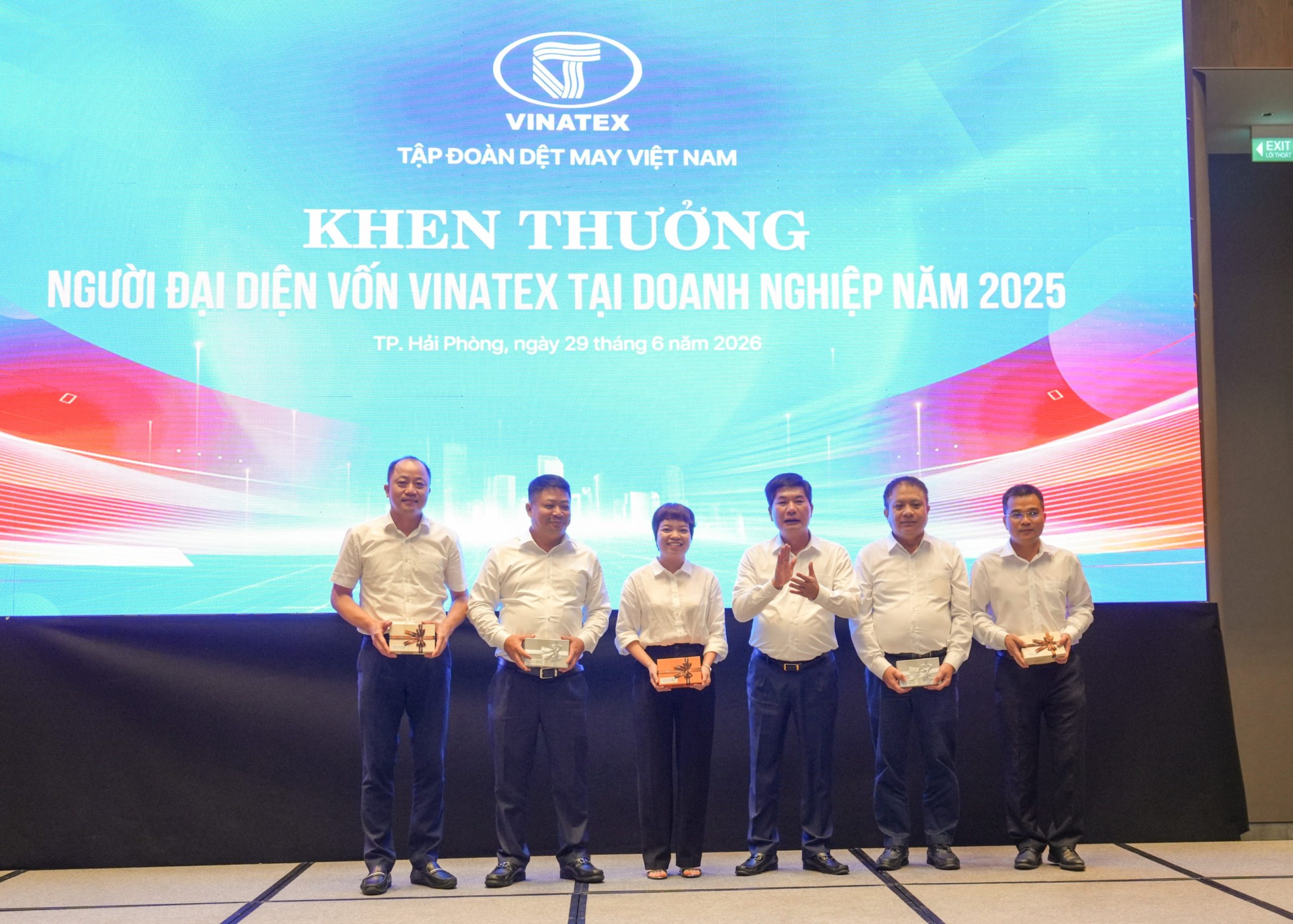
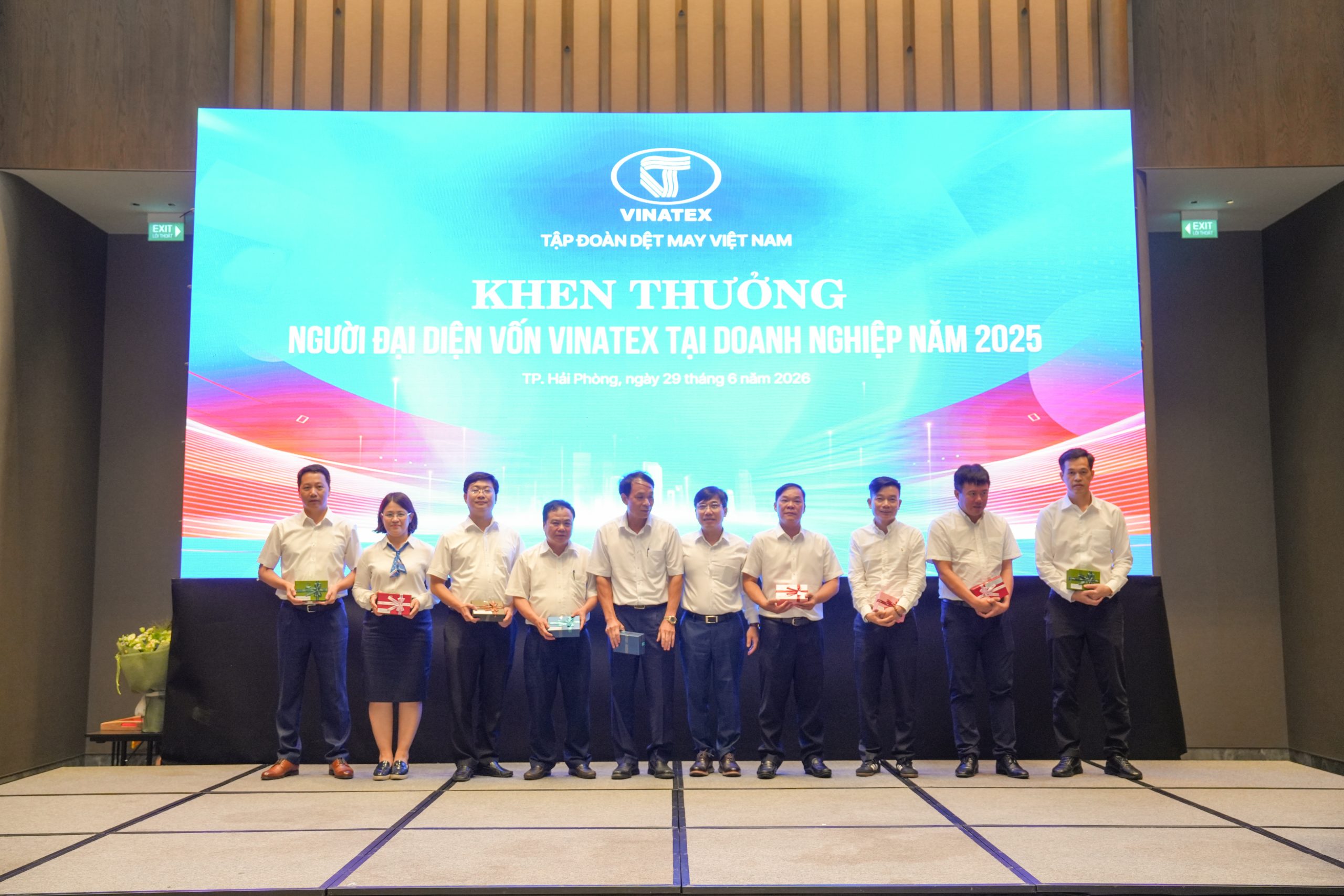
In recognition of the outstanding achievements recorded in 2025, Vinatex decided to allocate nearly VND 7 billion from the Parent Company’s Reward Fund to reward capital representatives at member enterprises. The Group particularly commended the exceptional performance of eight enterprises: Phong Phu Corporation, Hoa Tho Textile and Garment Corporation, Viet Thang Corporation, Hue Textile and Garment Joint Stock Corporation, Viet Tien Garment Corporation, Garco 10 Corporation, Nha Be Garment Corporation, and Hung Yen Garment Corporation.
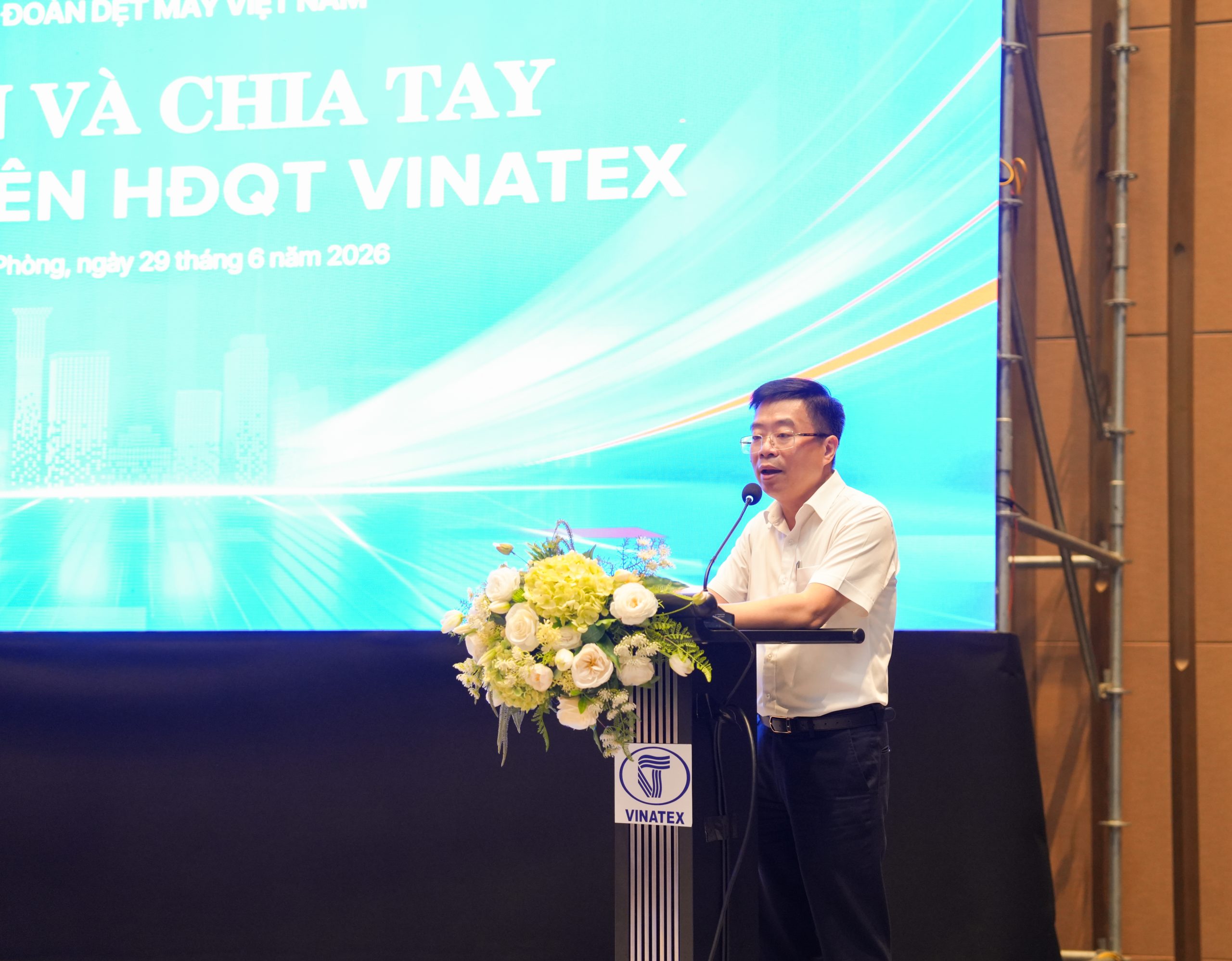
In his concluding remarks, Chairman Le Tien Truong emphasized that after July 24, 2026, the United States’ temporary additional tariff measures on Vietnam are likely to be replaced by new measures under Section 301. However, until now, there is still insufficient information regarding the extent of their impact on individual countries, as well as issues related to overcapacity, intellectual property, and labor standards. Vinatex and its member enterprises should therefore continue to closely monitor policy developments and take appropriate actions.
Regarding priorities for the second half of 2026, Vinatex should focus on three key areas:
First, the Group’s business results in the first half of 2026 reflected not merely growth in scale, but higher-quality growth. This was achieved through improved operational efficiency, higher productivity, and greater sustainability, while the Group’s asset base remained largely unchanged. These results demonstrate that the entire Vinatex system is progressing in line with the strategic direction set at the beginning of the year – driving growth through efficiency rather than expansion.
Second, member enterprises need to recognize that the second half of the year will present significant challenges, with uncertainty surrounding tariffs and international trade policies remaining the most critical. Profitability in the second half may not match the exceptionally strong performance recorded in the first six months. However, experience over the years has shown that periods of heightened market volatility and policy uncertainty often create the greatest opportunities for enterprises with strong adaptability. In 2021, amid the COVID-19 pandemic, in 2022 during geopolitical disruptions, and in 2025 amid major shifts in the global trade environment, Vinatex consistently delivered results that exceeded expectations. This demonstrates that periods of policy uncertainty provide opportunities for businesses that can identify challenges early, make timely decisions, and execute effectively. After years of continuous improvement, Vinatex has built strong adaptive capabilities, making agility an integral part of its management approach while maintaining discipline and unity across the Group. As a result, whenever the market becomes more volatile, Vinatex’s member enterprises should view such changes not as risks, but as opportunities to reinforce the competitive advantage.
Third, Vinatex expects second-half profit of 2026 to reach approximately 60–65% of the first-half result, enabling consolidated profit for the full year to exceed the level achieved in 2025. This target represents both the Group’s forecast and its confidence, while also serving as a shared objective for the entire Vinatex system. Alongside its profit target, Vinatex remains committed to increasing average employee income by more than 10% and further improving capital efficiency and cash flow management across all member enterprises.