
Dr. Hoang Manh Cam, Chief of the Board of Directors’ Office, noted that the new U.S. tariff policies, geopolitical volatility in the Middle East, and shifts in global financial–monetary trends are all exerting direct impacts on supply chains, export markets, and the production activities of industry enterprises. One of the most notable developments is that the United States initiated two investigations under Section 301 in March 2026, covering excess production capacity and forced labor. The scope of these investigations is broad, encompassing multiple countries, including Vietnam, and may lead to measures such as additional tariffs or import restrictions. Notably, based on the projected timeline, related decisions could be issued from mid- to late-2026, with the possibility of tariff measures being implemented as early as August 2026. This implies that the international trade environment will continue to face mounting pressure, particularly for industries closely tied to global supply chains such as textiles and garments.
In parallel, geopolitical factors remain highly unpredictable. The conflict in the Middle East, particularly tensions surrounding the Strait of Hormuz, has caused significant fluctuations in energy prices. Although there have been periods of temporary easing, the risk of disruptions to global energy supply chains persists, directly affecting production costs worldwide. According to the World Bank (report dated April 9, 2026), Vietnam is the ASEAN country most visibly impacted by external shocks, including geopolitical conflicts and rising trade barriers, leading to signs of slowing growth momentum.
Regarding export markets, the United States remains the key market but is showing a declining import trend. In the first two months of 2026, U.S. textile and garment imports were estimated at USD 15.57 billion, down approximately 14% year-on-year. Nevertheless, Vietnam continues to hold an important position, with a market share of around 19.3% in textiles overall and 22% in apparel, ranking among the largest suppliers. In the EU market, textile and garment imports in January 2026 reached USD 10.85 billion, down 14.7% compared to the same period last year. Vietnam ranked fifth among textile and garment suppliers to the EU with a 4.6% market share, and fourth in apparel with a 5.2% share, while China and Bangladesh continued to dominate.
On the positive side, several Asian markets have recorded strong growth. Japan saw textile and garment imports increase by 23.6% in February 2026 and by 6.3% in the first two months of the year; South Korea posted a modest recovery of 0.7% compared to the same period in 2025; and China achieved robust growth of 15.3% year-on-year over the same period. These trends provide additional room for Vietnamese enterprises to diversify their export markets.
Overall, Vietnam’s textile and garment exports in Q1 2026 were estimated at USD 10.54 billion, marking a modest increase of 2.3% year-on-year. However, this growth indicates that market demand has not yet made a strong recovery. Meanwhile, competitors such as China recorded robust growth, particularly in February 2026, when export turnover surged by as much as 73.1%. In contrast, Bangladesh and Indonesia both showed declining trends, highlighting a clear divergence in global competition.
Regarding the raw materials market, especially cotton, it continues to be influenced by supply–demand dynamics and geopolitical factors. According to forecasts by the International Cotton Advisory Committee, global cotton production may decline in the coming season due to low prices and weak demand, while consumption is expected to remain stable. Global cotton prices rebounded from late March 2026, surpassing 70 cents per pound—the highest level since the beginning of the year. This increase is mainly driven by rising energy costs, weather conditions, and geopolitical tensions. In addition, polyester staple fiber (PSF) prices have fluctuated significantly in line with oil prices, reflecting the close linkage between the textile raw materials market and the global energy market. Overall, in the short term, raw material prices are expected to remain highly volatile, requiring enterprises to adopt flexible strategies in managing input materials and costs.
The global financial environment is shifting from an easing expectation to a more cautious stance. Major central banks such as the Federal Reserve (FED), European Central Bank, Bank of England, and Bank of Japan have all kept interest rates unchanged in their most recent meetings, reflecting concerns about a potential resurgence of inflation driven by rising energy prices. In the United States, the Federal Reserve has maintained its policy rate at 3.5–3.75% while postponing plans for rate cuts. The U.S. dollar is expected to appreciate slightly in the short term, but not to exhibit a strong upward trend over the long term.
For Vietnam, the USD/VND exchange rate is projected to fluctuate within a 2–3% band in 2026, which is not considered a major risk. However, domestic interest rates are trending upward, with deposit rates commonly at 7–8% per year, putting pressure on corporate financing costs. This means that textile and garment enterprises will no longer benefit significantly from exchange rate movements or low capital costs, and will need to focus more on improving internal efficiency.
In addition to the factors above, logistics costs are showing an upward trend again. Ocean freight rates are currently fluctuating around USD 4,500–5,200 per 40-foot container, up nearly 30% compared to the period before the Middle East conflict.
Moreover, new U.S. trade policies such as the tax refund mechanism under the International Emergency Economic Powers Act and changes in import management regulations are expected to affect trade flows in the coming period.
From a long-term competitive perspective, China’s textile and garment industry development strategy in Xinjiang—aimed at building a fully integrated supply chain from raw materials to finished products—also poses significant pressure on exporting countries, including Vietnam.
Amid a highly volatile environment, the overarching message is that textile and garment enterprises need to proactively adapt rather than rely on favorable macroeconomic conditions. Enhancing productivity, optimizing costs, controlling cash flow, and improving product quality will be the key determinants of competitiveness.
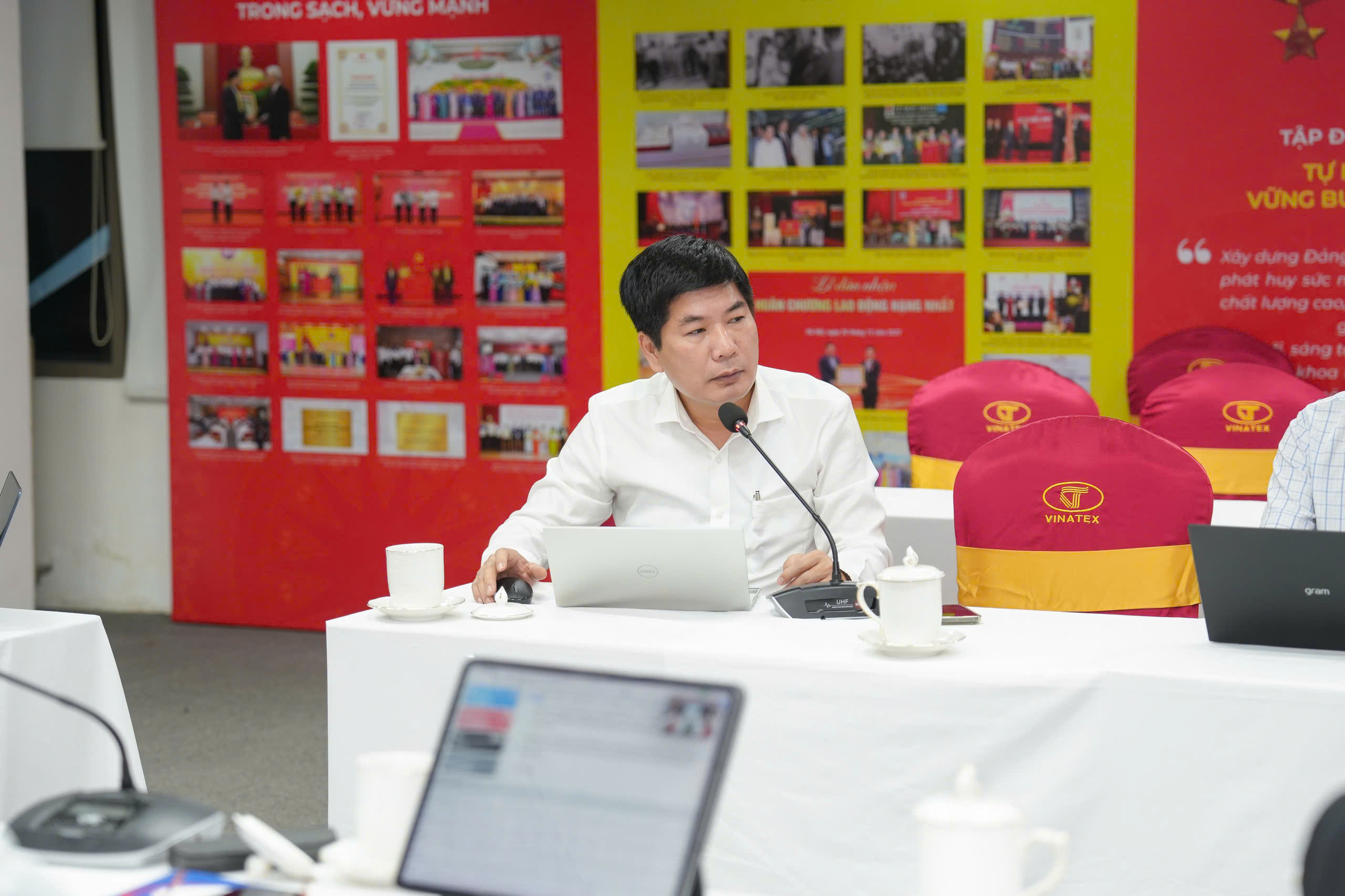
Vinatex CEO Cao Huu Hieu stated that Q1 2026 recorded encouraging business results for Vinatex, with consolidated profits higher than the same period last year. A highlight was the yarn segment: after a prolonged downturn, units such as Hoa Tho, Hue Textile Garment, and Nam Dinh Textile Garment all returned to profitability, with yarn selling prices increasing by 20–30%. However, this advantage is only short-term, as yarn demand has surged abnormally within a brief period. Therefore, Q3 and Q4 are expected to be a “stress test” phase, with rising electricity costs and persistent geopolitical risks. The Vinatex CEO requested that member units focus on the following key tasks:
(1)Supply chain and logistics risk management: In light of fluctuations stemming from the Middle East conflict, units must closely monitor oil prices and freight costs. A “proactive defense” approach is required—tracking market developments and working directly with each customer segment to respond flexibly to new tariff barriers (such as the U.S. Section 301 measures).
(2)Optimization of input materials: For the yarn segment, the key challenge is to purchase cotton cautiously yet flexibly—splitting purchases into smaller batches based on actual demand. At the same time, inventory of yarn and fabric must be tightly controlled to avoid risks from unfavorable movements in cotton and fiber prices, especially as electricity costs continue to rise.
(3)Efficiency transformation and strict cost-saving: The year 2026 is identified as the “Year of Efficiency.” Units are therefore required to intensify cost reduction across all production stages and improve labor productivity to offset increases in electricity prices and other input costs.
(4)“Quality is Honor” strategy: In a challenging market environment, brand credibility is the most valuable asset. Vinatex remains committed to not sacrificing quality for volume. Maintaining product consistency is crucial to retaining traditional customers and attracting new partners when the market recovers.
(5)Cash flow management and acceleration of deep investment: In the context of high deposit interest rates and limited access to capital, optimizing cash flow and maintaining strict financial management are top priorities. At the same time, units must actively and swiftly implement in-depth investment projects, avoiding delays and maximizing market opportunities.
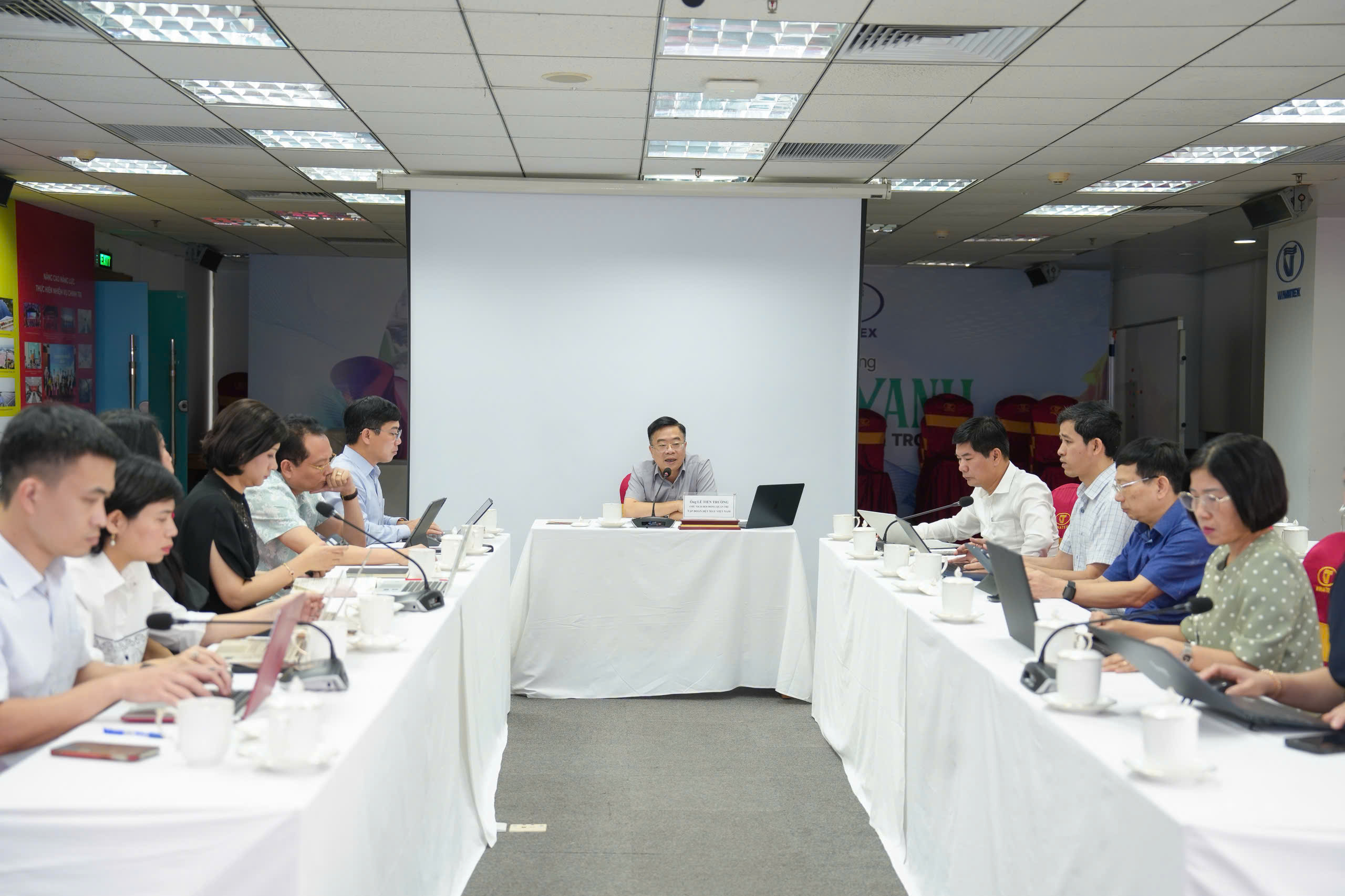
Concluding the workshop, Dr. Le Tien Truong, Chairman of Vinatex’s Board of Directors, emphasized that the context of 2026 is no longer a simple recovery phase but is entering a period of deep adjustment with numerous uncertainties. In this environment, textile and garment enterprises need to shift from a “waiting for the market” mindset to one of “proactive adaptation,” focusing on accelerating at the right time while maintaining disciplined control when slowing down.
According to Dr. Le Tien Truong, China is fully leveraging its tax policy advantages to boost production, thereby creating significant opportunities for Vietnam’s yarn sector. As China’s demand for imported raw materials increases, domestic enterprises need to quickly seize these opportunities. On the other hand, the garment segment will face more intense competitive pressure, particularly in the mid-range and upper mid-range segments. Accordingly, July 24, 2026 is identified as a critical milestone, when new U.S. tariff policies may begin to take effect.
The Chairman of Vinatex’s Board of Directors requested that enterprises across the system prepare multiple market scenarios and focus on key priorities:
For the yarn segment, the objective is to maximize output and expand markets, particularly China, while maintaining traditional markets such as Japan. In-depth investment projects must be accelerated to ensure early operation, taking advantage of the “window of opportunity” in Q2 2026—a period when raw material prices and electricity costs remain relatively stable. The entire yarn sector targets a minimum output growth of 5% in Q2 2026.
For the garment segment, the overarching direction is to optimize capacity utilization and maintain stable orders across the system. At this stage, there is no strict requirement to prioritize FOB orders; instead, enterprises should remain flexible in accepting CMT orders or those with medium value. The key objective is to ensure operational efficiency and fully capitalize on market opportunities while tariff levels remain relatively low.
n terms of financial management, the Group requires the entire system to reduce inventory and accounts receivable, while strictly controlling working capital. Units are expected to calculate capital turnover based on standard formulas, with the goal that by 2027, financially strong enterprises within the system will no longer rely on short-term working capital loans.
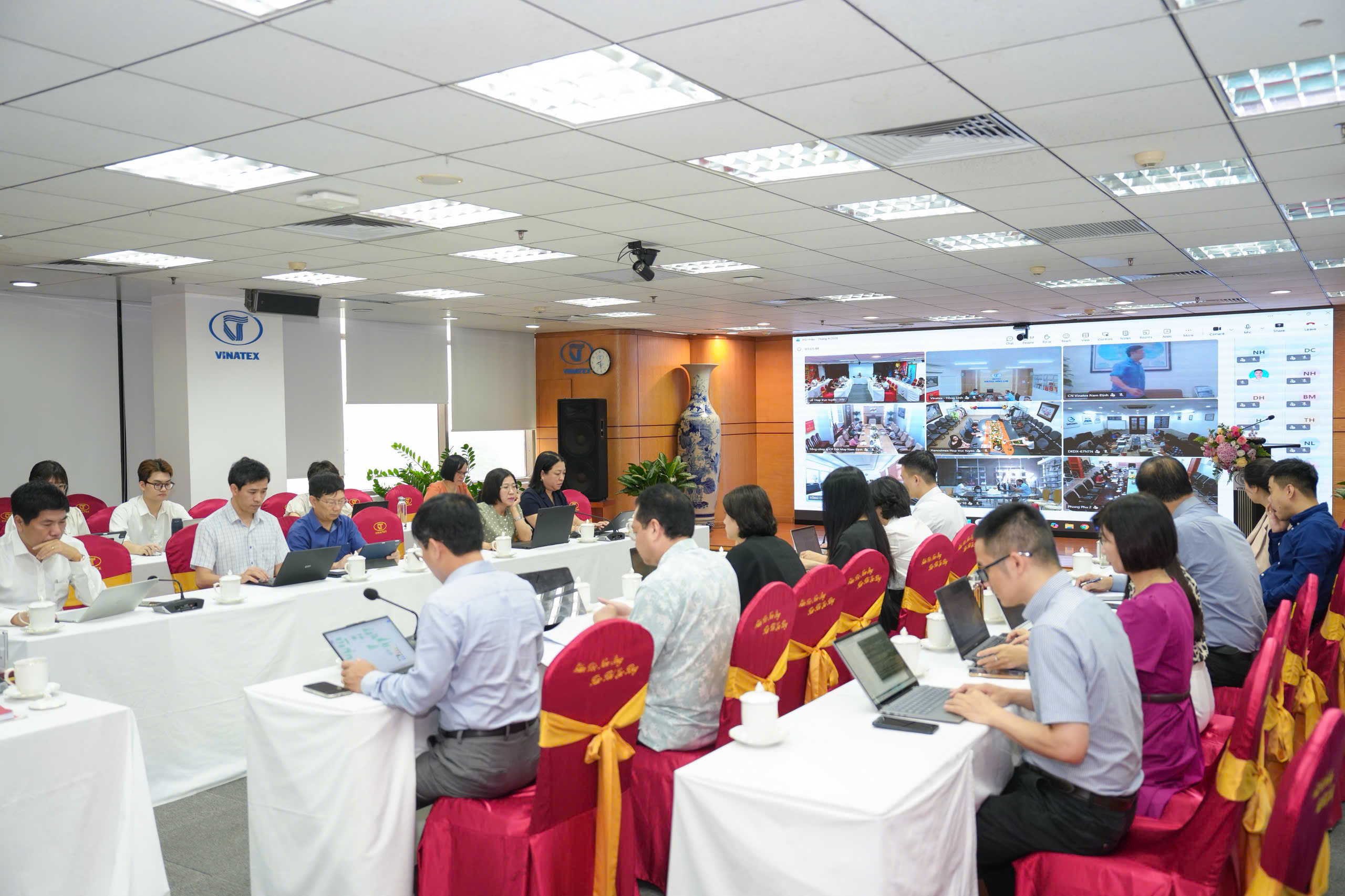
At the workshop, participating enterprises exchanged and updated the latest information on market fluctuations directly affecting their production and business activities; shared data on orders, customers, and markets; and discussed key solutions to address ongoing challenges in the period ahead.