
Smart Garment Factory (SGF) is a production model driven by data and digital technologies, replacing the traditional labor-intensive model in the Industry 4.0 era. This transformation has been driven by brands’ shift toward demand-driven production, characterized by smaller orders and shorter production cycles to reduce inventory risks. At the same time, rising labor costs, coupled with increasingly stringent sustainability and traceability requirements, are compelling enterprises to optimize their operations. The widespread adoption of breakthrough technologies such as IoT, AI, Big Data, and Digital Twins has provided a robust technological foundation for making this model a reality. As a result, the SGF has emerged as an increasingly essential path for garment manufacturers seeking to boost productivity, enhance flexibility, and build sustainable competitive advantages in the digital era.
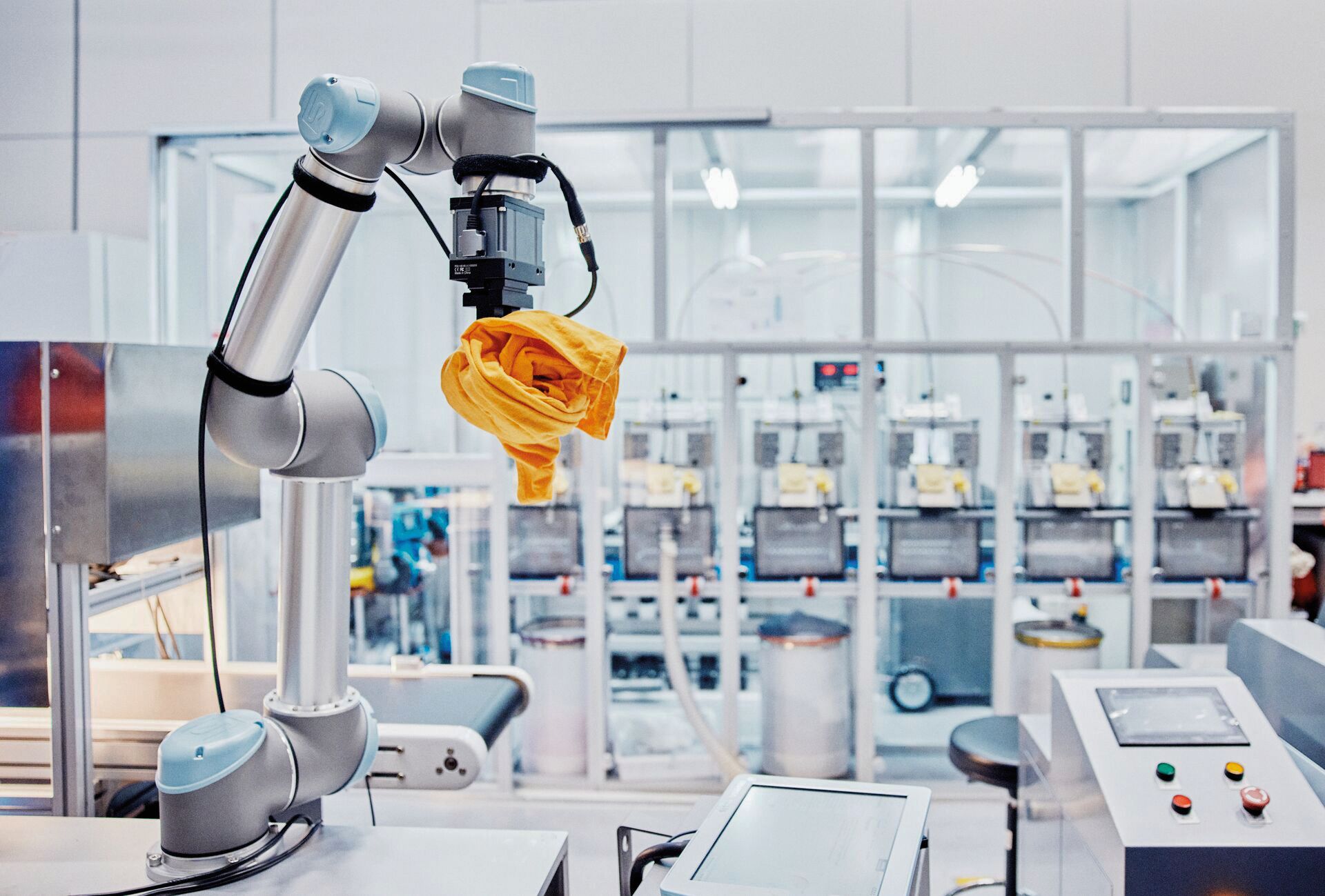
The SGF model
Concept:
A Smart Garment Factory (SGF) is a production model that applies Industry 4.0 technologies to connect people, equipment, data, and management systems within a unified digital manufacturing environment. Technologies such as Cyber-Physical Systems (CPS), the Industrial Internet of Things (IIoT), Artificial Intelligence (AI), Big Data, and Cloud Computing enable real-time data collection, analysis, and sharing, thereby optimizing production, accelerating decision-making, and enhancing flexibility. At an advanced level, an SGF can monitor and analyze its own operations, adapt to changing conditions, and progressively self-optimize its production processes.
Structure:
Smart Garment Factory (SGF) models generally share 5 layers of functional architecture, connecting production equipment with enterprise management and supply chain systems:
- Physical Production Layer: Includes fabric spreading and cutting machines, sewing machines, hanging production lines, packaging systems, robots, and automated vehicles. This is where production takes place and data is generated.
- Data Sensing & Acquisition Layer: Uses RFID, sensors, cameras, and IIoT to continuously capture equipment status, productivity, quality, and production progress in real time.
- Network & Connectivity Layer: Ensures stable, secure, low-latency data transmission between equipment and management systems through industrial networks, connectivity protocols, and cloud computing.
- MES & Operations Layer: MES, WMS, and APS systems support production planning, order tracking, work-in-process management, line balancing, quality control, and operational optimization.
- Enterprise & Supply Chain Layer: ERP, PLM, and SCM systems connect the entire value chain, from design and raw materials and accessories to production and delivery. They also support traceability, carbon emissions management, and the Digital Product Passport (DPP).
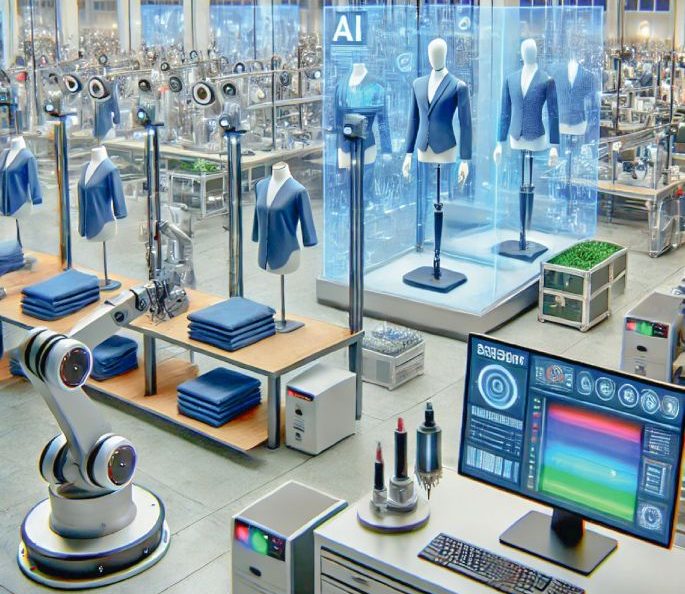
Differences Between the Traditional Model and the SGF Model
Management and decision making: From experience-based decisions and periodic reports → to data-driven decisions based on real-time data, AI, and predictive analytics.
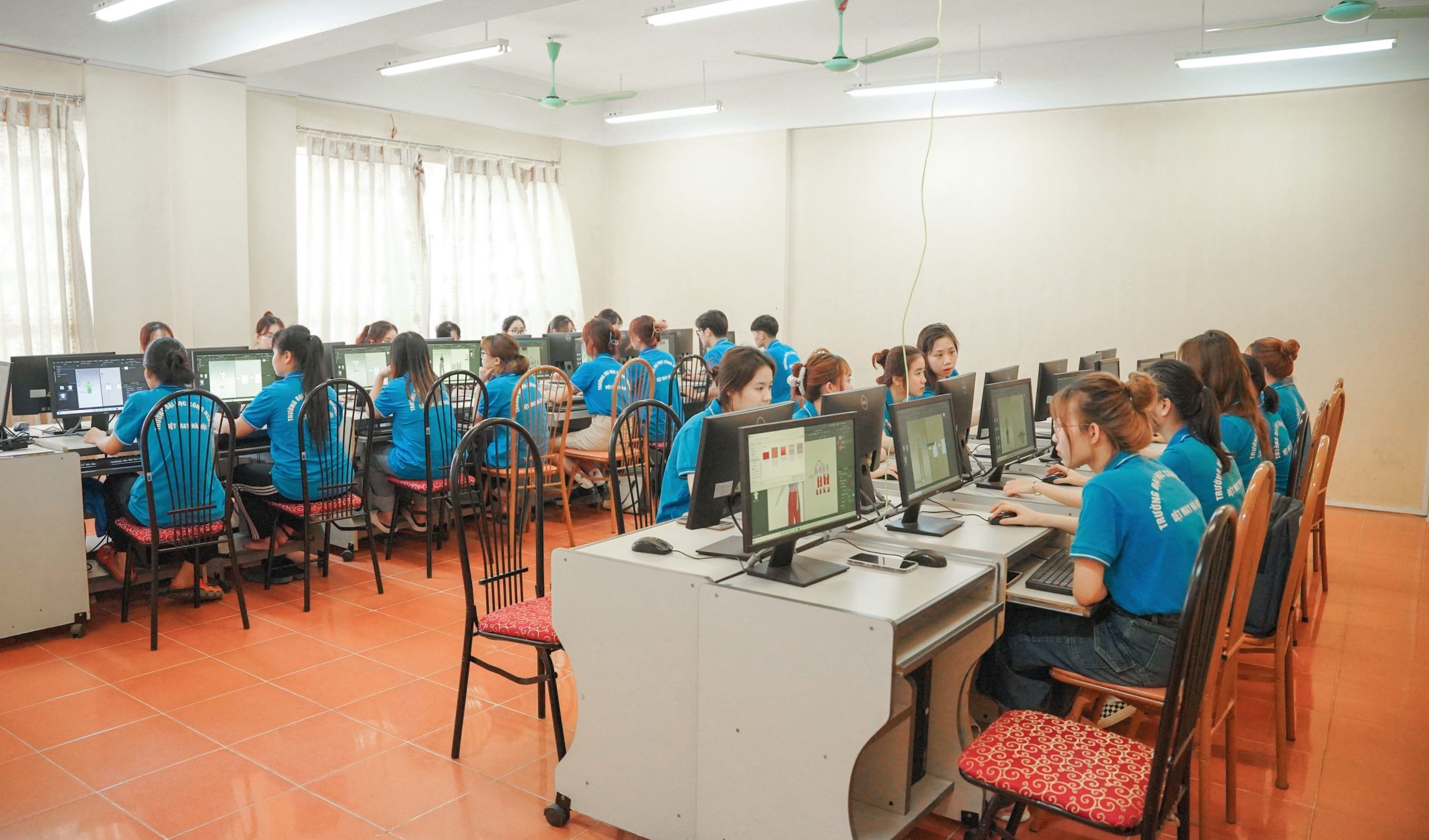
Product design and development: From repeated physical sample-making → to 3D design, simulation, and online sample approval.
Production & logistics: From manual material handling → to automation using hanging production lines, AGVs/AMRs.
Quality management: From manual inspection and late defect detection → to AI and Computer Vision for early defect detection and alerts.
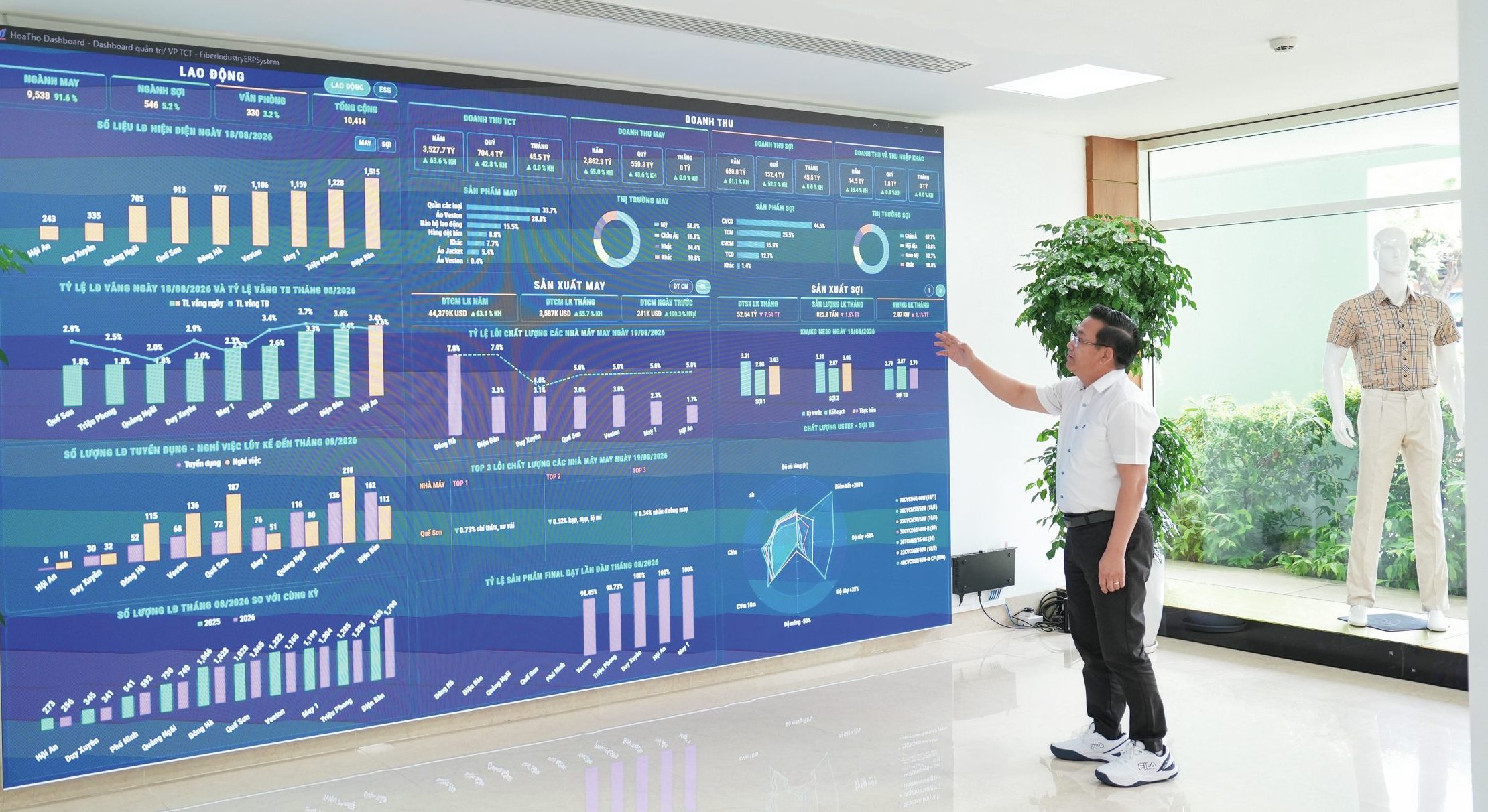
Data management and visualization: From manual record-keeping and fragmented data → to automated data collection through RFID, IIoT, and sensors, with real-time visualization on Dashboards, MES, and ERP systems.
Production line productivity: From heavy reliance on workers’ skills and operational experience → to optimized production flows, reduced waiting times, and improved line balancing.
Flexibility and adaptability: From being geared toward large orders with long changeover times → to rapidly adjusting production plans to accommodate smaller and more diverse orders.
Equipment maintenance: From breakdown-based repairs or scheduled maintenance → to predictive maintenance driven by sensor data.
Supply chain: From fragmented information exchange → to end-to-end data connectivity among suppliers, factories, and customers, enhancing traceability.
ESG and sustainability: From limited ability to measure resource consumption and emissions → to monitoring and optimizing resource use and providing data for ESG reporting and the Digital Product Passport (DPP).
Approach to SGF implementation
A Smart Garment Factory can be developed through two main approaches:
- Greenfield: Building a new factory with an integrated design covering the layout, equipment, production lines, digital infrastructure, and management systems such as ERP, MES, and PLM. This approach offers a high level of integration and automation, but requires substantial capital investment and is primarily suited to new projects.
- Brownfield: Transforming an existing factory through process standardization, data digitalization, technology investment, and step-by-step automation. Although integration is more complex, this approach leverages existing infrastructure and is better aligned with the financial capabilities of Vietnamese garment enterprises.
For most garment enterprises today, Brownfield is the more practical and feasible transformation approach, allowing implementation in phases rather than requiring simultaneous, large-scale investment.
The Right Roadmap Determines Success
The transformation roadmap from a traditional garment factory to SGF can be implemented in 4 stages over a period of approximately 3–5 years, depending on the enterprise’s level of readiness. This is not simply a technology investment process; it requires coordinated preparation across management, processes, data, people, infrastructure, and financial resources.
Key prerequisites include:
- Leadership: Strong commitment, a long-term vision, and a clearly defined roadmap.
- Processes & Data: Standardize and streamline processes and data before digitalization.
- Digital Infrastructure: Build a connectivity platform linking equipment, production lines, and management systems.
- People: Develop digital skills, strengthen management capabilities, and enable workers to proactively adapt to change.
- Finance: Invest in phases, prioritizing high-impact initiatives that are scalable and aligned with the enterprise’s level of readiness.
SGF transformation is a full process in which technology can only deliver its full potential when built on a foundation of effective management, standardized processes, high-quality data, capable people, and appropriate financial resources.
The path forward for Vietnam’s garment enterprises
A 2019 Vinatex survey found that most Vietnamese garment enterprises were still operating at approximately Industry 2.0–2.5 maturity. While some had adopted automated equipment and management software, their ability to connect and integrate data remained limited. Given uneven financial and human resources, large-scale investment or comprehensive robot-based automation is not yet suitable for most enterprises.
The current trend is toward building “human-centered smart factories”, where technology supports people rather than completely replacing them. Vietnamese garment enterprises should therefore focus on optimizing production efficiency through the integration of people – processes – technology, prioritizing solutions with clear and measurable returns on investment.
Implementation roadmap:
- Initial stage: Standardize processes and data; implement digital 3D design and automated cutting; collect productivity data through IIoT; and manage production lines using MES.
- Next stage: Adopt selective automation, such as smart hanging production lines, RFID/QR Codes, AGVs/AMRs, and AI Vision, depending on the products, scale, and specific conditions of each factory.
- Long-term goal: Progress from standardization → connectivity → integration → selective automation → intelligent operations.
A Smart Garment Factory should not be measured by the number of robots or how advanced its equipment is, but by its ability to connect people, equipment, and data to monitor production in real time, make faster decisions, and continuously optimize operations. Technology is a tool, not the destination.