
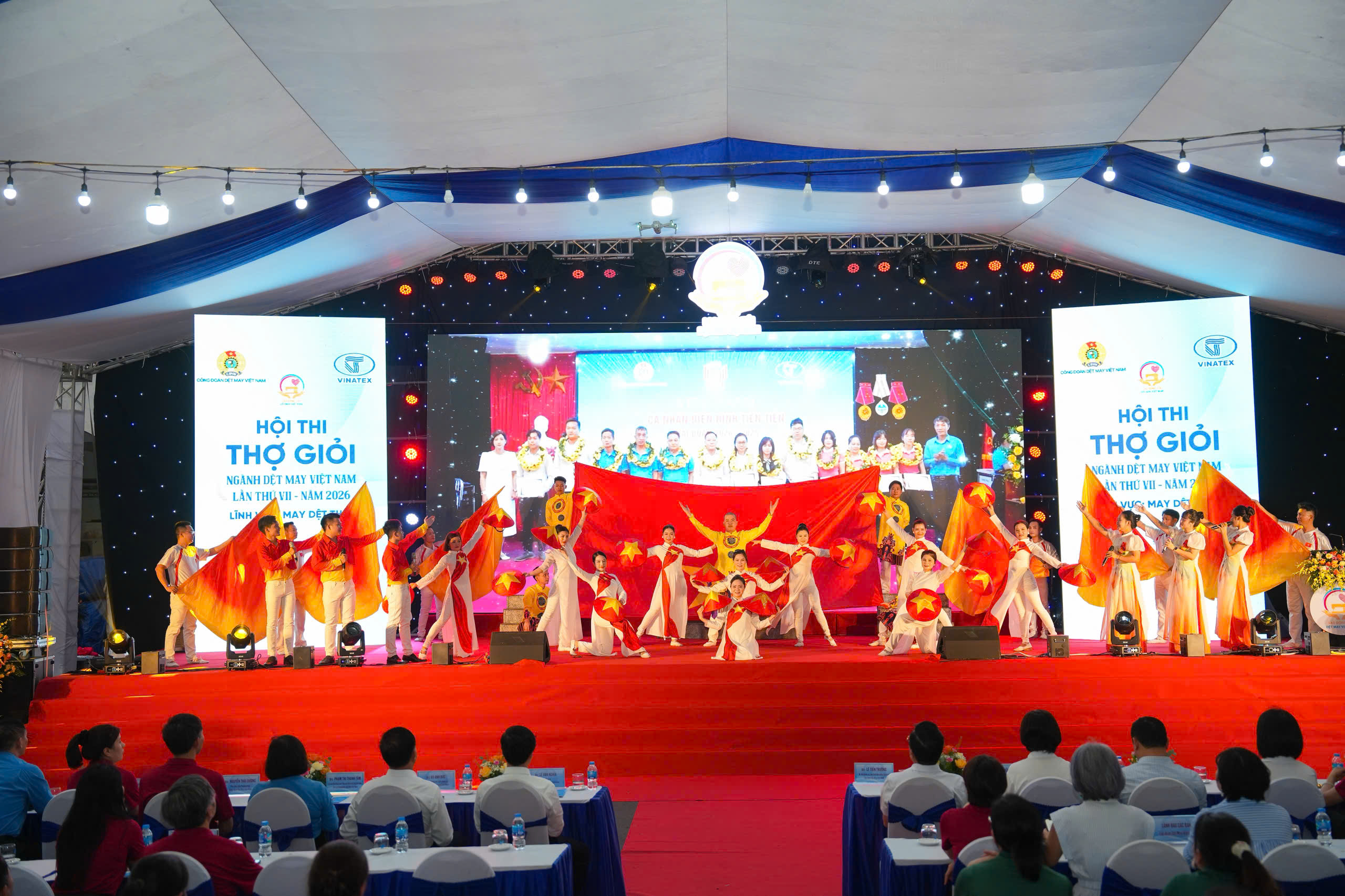
A key new feature this year was the introduction, for the first time, of a circular and recycled product-making category under the theme “Green Textiles and Garments – Sustainable development.” Participating units in Hue and Hanoi demonstrated their ability to repurpose fabric scraps, used garments, and surplus materials, turning the principles of the circular economy, waste reduction, and green production into practical initiatives.
The competition was also designed to better reflect real-world market requirements, with workers required to produce different garment products with varying specifications, including polo shirts and sports shorts. This demanded not only a high level of technical skill, but also the ability to switch between products, organize workflows, and coordinate production tasks flexibly. As a result, the competition evaluated not only individual craftsmanship but also the production organization capabilities of participating enterprises.
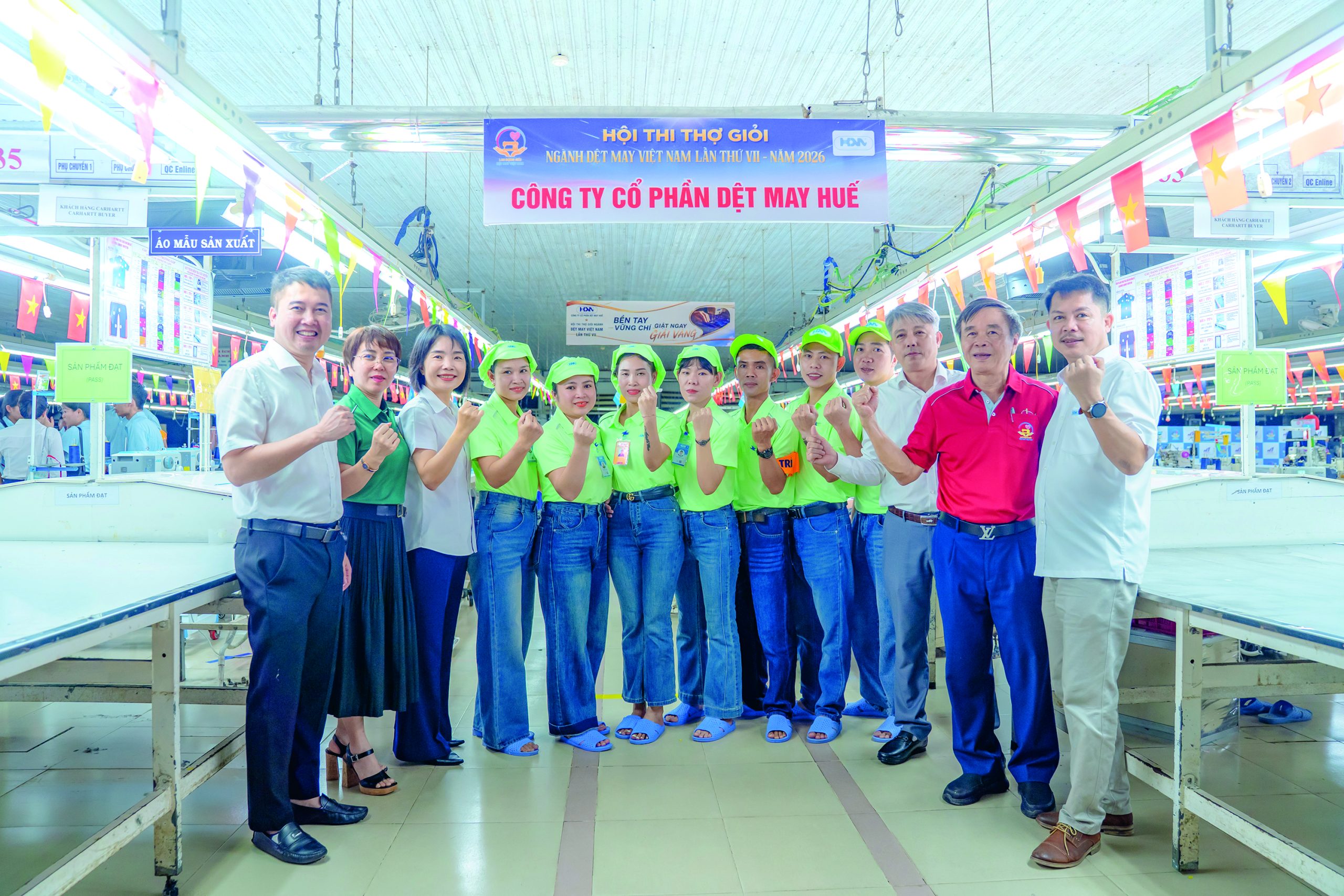
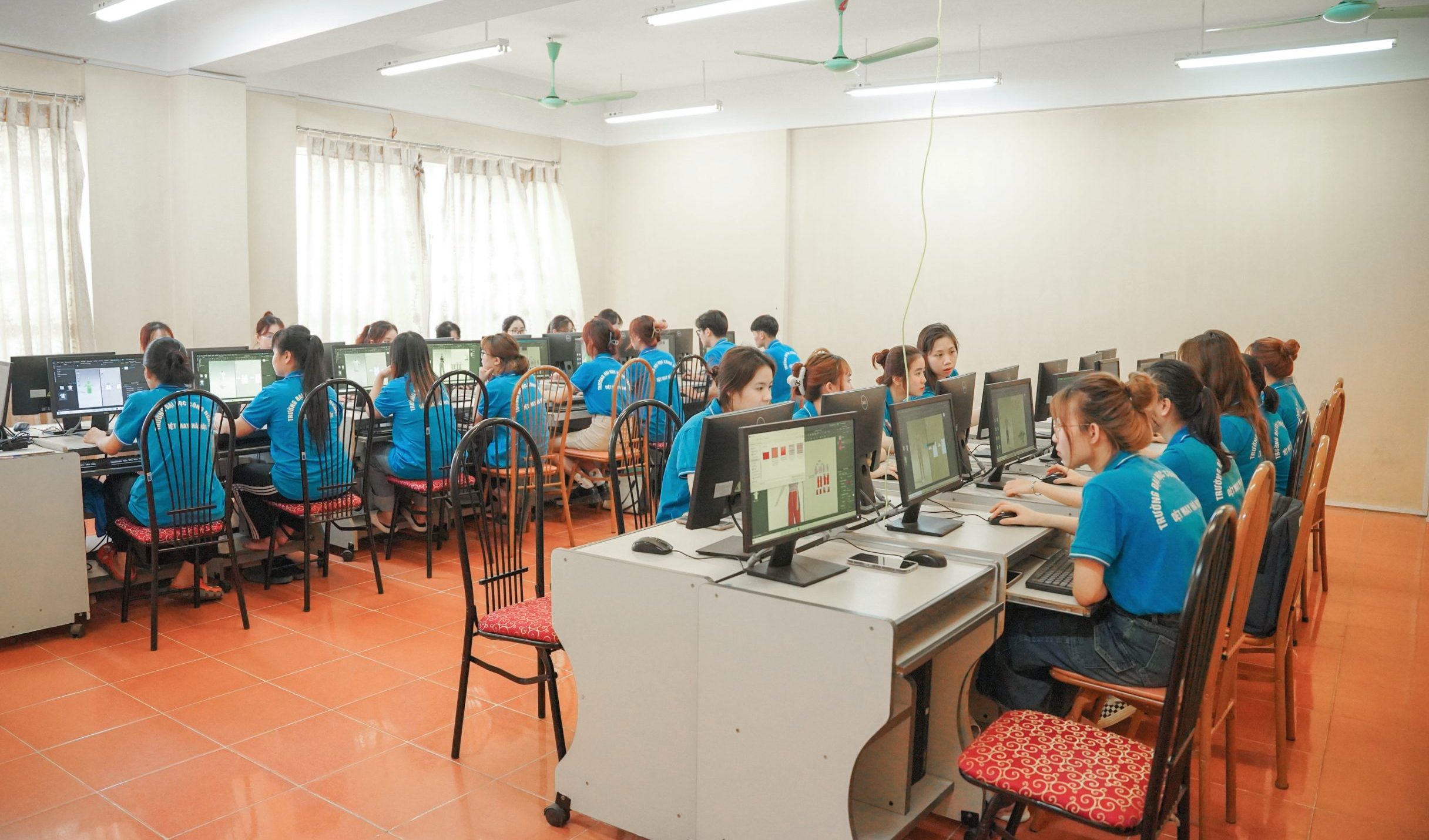
Entering the 2026–2030 period, the “Skilled Workers, Higher Productivity, Better Incomes” movement is becoming an important development direction, linking workers’ skills with productivity, quality, and income. Following the competition, enterprises are encouraged to continue investing in training, standardizing work practices, improving production processes, and sharing and scaling up effective practices and innovations.
In this way, the Skilled Workers Competition is more than a platform to honor highly skilled workers. It is also becoming a driving force for strengthening workforce capabilities, advancing the green transition, promoting production innovation, and enhancing the competitiveness of Vietnam’s Textile and Garment industry.