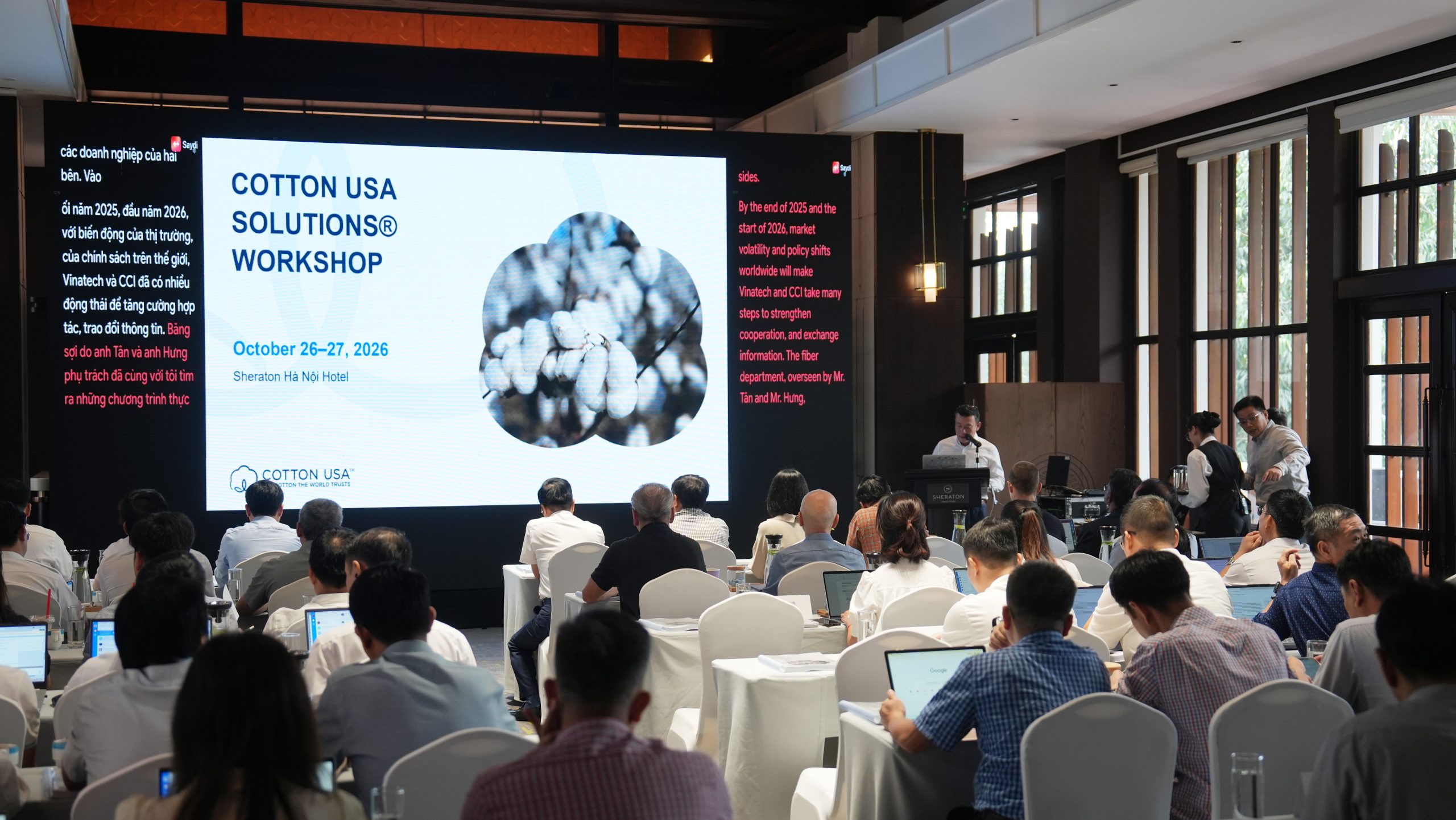

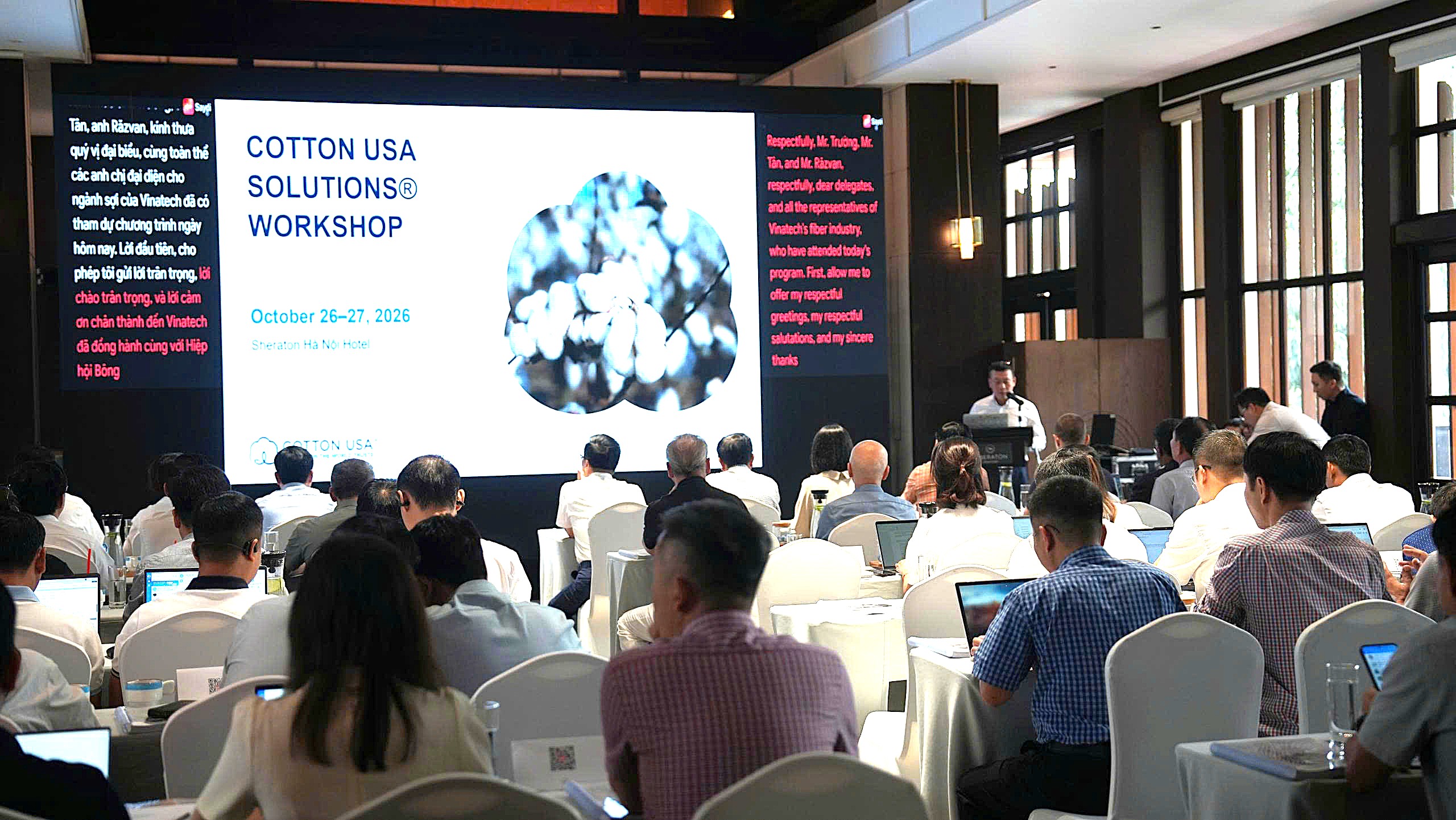
On October 26-27 in Hanoi, the Vietnam National Textile and Garment Group (Vinatex) and Cotton Council International (CCI) jointly organized the Cotton USA Solutions training program. The program covered the global cotton supply outlook for the 2026/2027 crop year, contract and market management, and ways to optimize yarn production using U.S. cotton. Dr. Le Tien Truong, Chairman of Vinatex’s Board of Directors, attended and delivered the opening remarks.
The program brought together 54 participants, including senior executives, sales department heads, and specialists in production management and raw-material quality control from Vinatex member companies.
Strengthening strategic cooperation between Vinatex and CCI
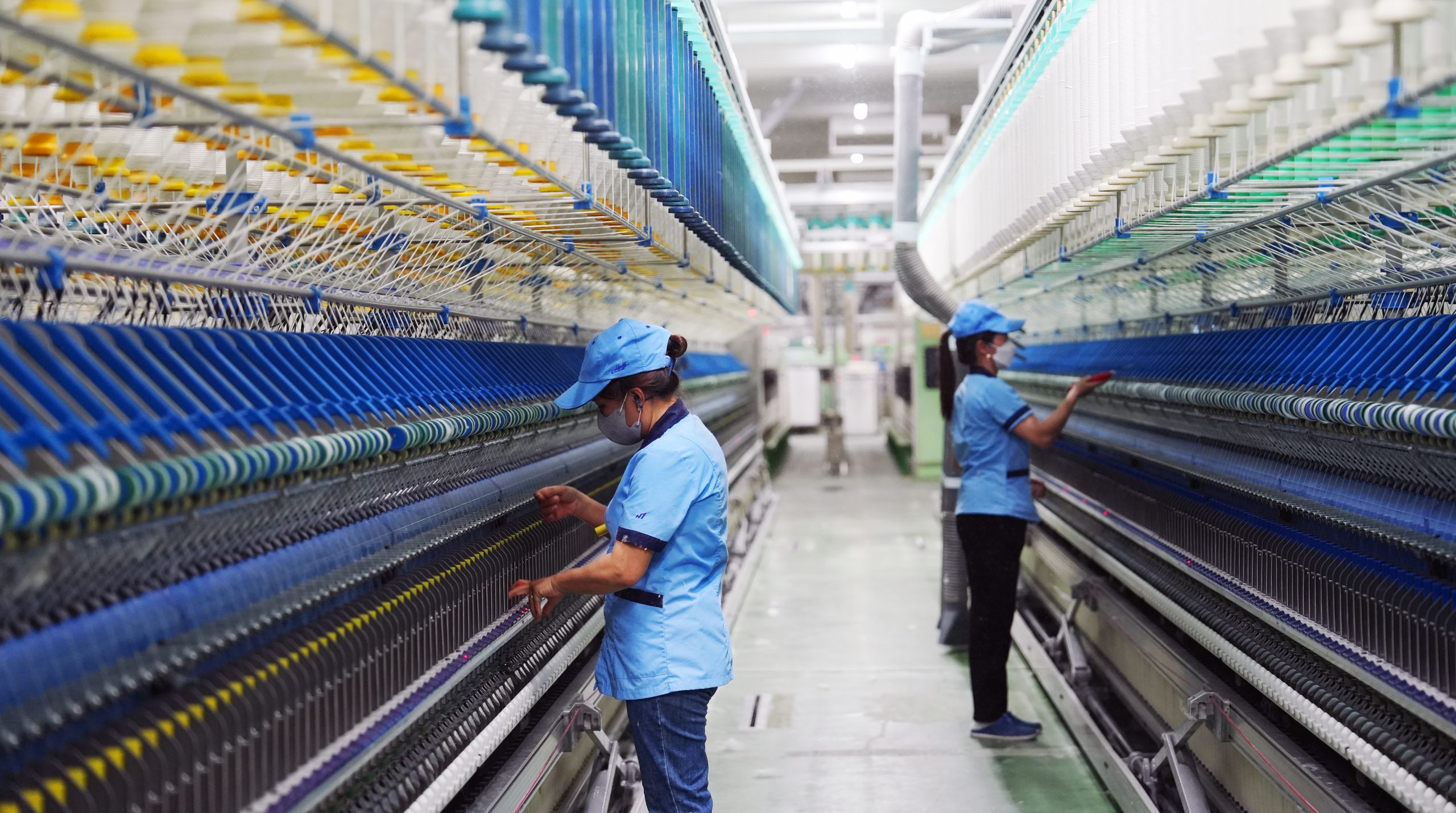
Speaking at the program, Dr. Le Tien Truong said Vinatex currently operates a spinning system with approximately 1 million spindles, including those of its affiliated companies. Its main products are 100% cotton and cotton-blend yarns. In 2025, Vinatex produced approximately 140,000 tons of yarn, with output projected to reach 160,000 tons in 2026. The Group imported around 190,000 tons of raw materials in 2025, including approximately 120,000 tons of cotton. Vinatex is Vietnam’s largest cotton importer, accounting for around 45% of the textile and garment industry’s total cotton imports. U.S. cotton accounts for approximately 25% of the Group’s cotton imports, helping meet requirements for raw-material quality, traceability and sustainable production.

Expanding the use of U.S. cotton enables member companies to optimize spinning processes while ensuring traceability. It also helps them meet increasingly stringent sustainability and green production requirements in international markets. Dr. Le Tien Truong emphasized that CCI had designed the program specifically for Vinatex’s network of companies, reflecting its commitment to working with a major U.S. cotton customer in Vietnam. Unlike training programs typically organized for industry associations, this course focuses directly on practical business needs, from contract management and raw-material supply to production management and yarn quality control. He noted that, given the program’s in-depth content and two-day duration, its effectiveness depends largely on participants’ active engagement. Staff, particularly company leaders, are encouraged to contribute to discussions, raise operational challenges, and share both successful practices and lessons learned from past difficulties. This can help experts provide advice tailored more closely to actual production conditions and enable companies to use U.S. cotton more efficiently.
The global cotton market and tools for managing cotton supply
The training featured leading international experts, including Mr. Tim North, former President of both the American Cotton Shippers Association (ACSA) and the International Cotton Association (ICA), and an ICA arbitrator since 1990, alongside technical and market specialists from CCI. Discussing global export supply and import demand for the 2026/2027 cotton season, Mr. Tim North highlighted Vietnamas the world’s second-largest buyer of U.S. cotton, accounting for 26% of U.S. cotton trade by volume. In 2025, the United States exported approximately US$1.3 billion worth of cotton to Vietnam, a 122% increase from the previous year. Meanwhile, the United States remains the largest export market for Vietnam’s textile and garment products. These trade flows highlight the close links between the two countries in the textile and garment supply chain. To help businesses capitalize on this relationship and respond flexibly to market developments, the program focused on key aspects of trade finance and contract management.
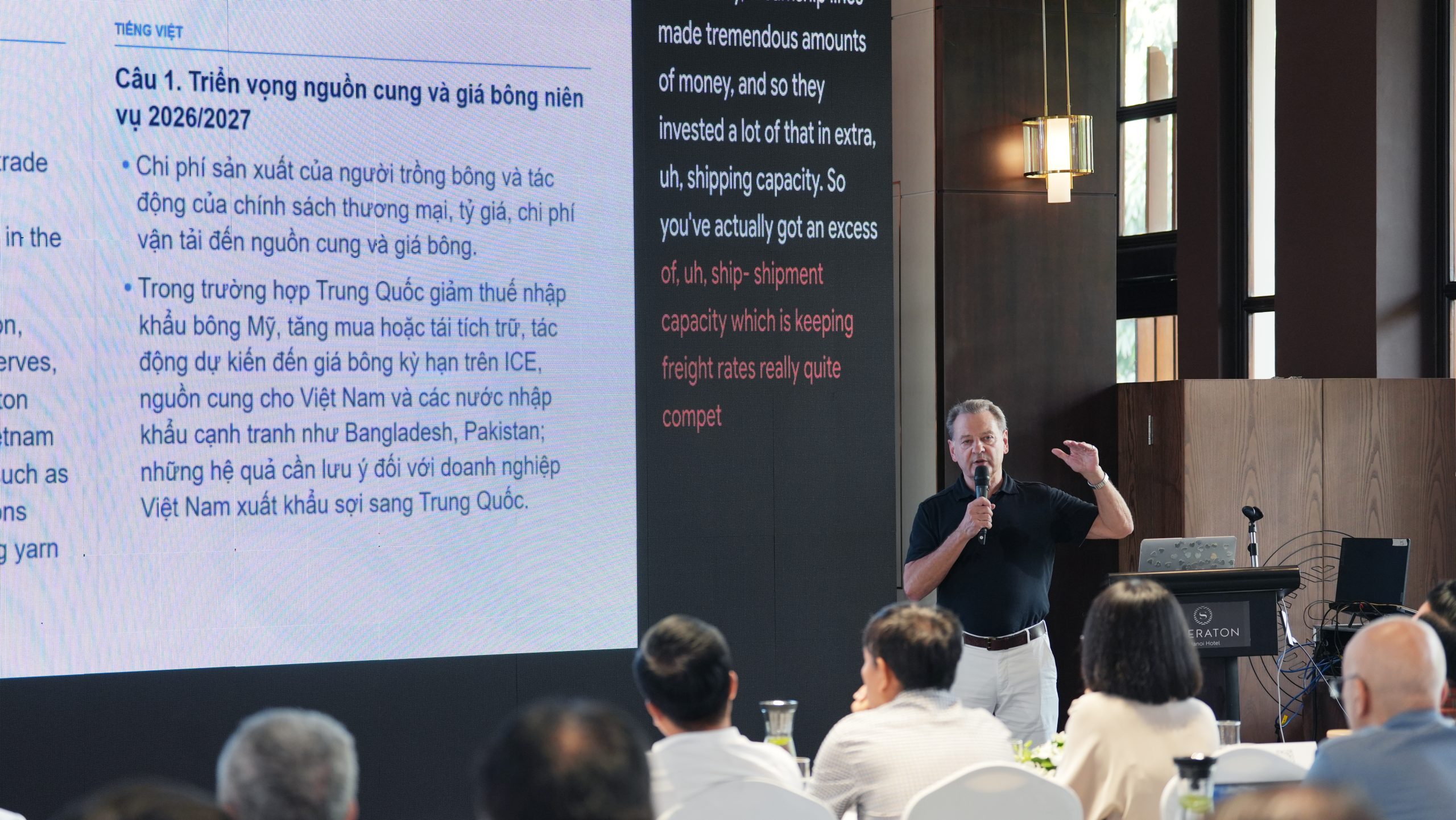
The sessions examined how the operations of the Intercontinental Exchange (ICE) futures market and how futures and options contracts are used. Contract management topics included the International Cotton Association’s (ICA) rules, contractual exemption clauses, dispute resolution, and logistics management. The sessions also addressed cotton origin and quality specifications,including EMOT, MOT, GC and USDA standards. Amid volatile global cotton prices, this knowledge can help Vinatex member companies manage raw-material price risks, strengthen their negotiating positions, and reduce legal risks and additional costs associated with importing cotton.

U.S. cotton and techniques for optimizing fiber quality
On the technical and production side, CCI experts shared insights into the quality characteristics of U.S. cotton fiber, factors affecting cotton quality, methods for evaluating cotton using HVI (High Volume Instrument) measurements, and effective bale management.
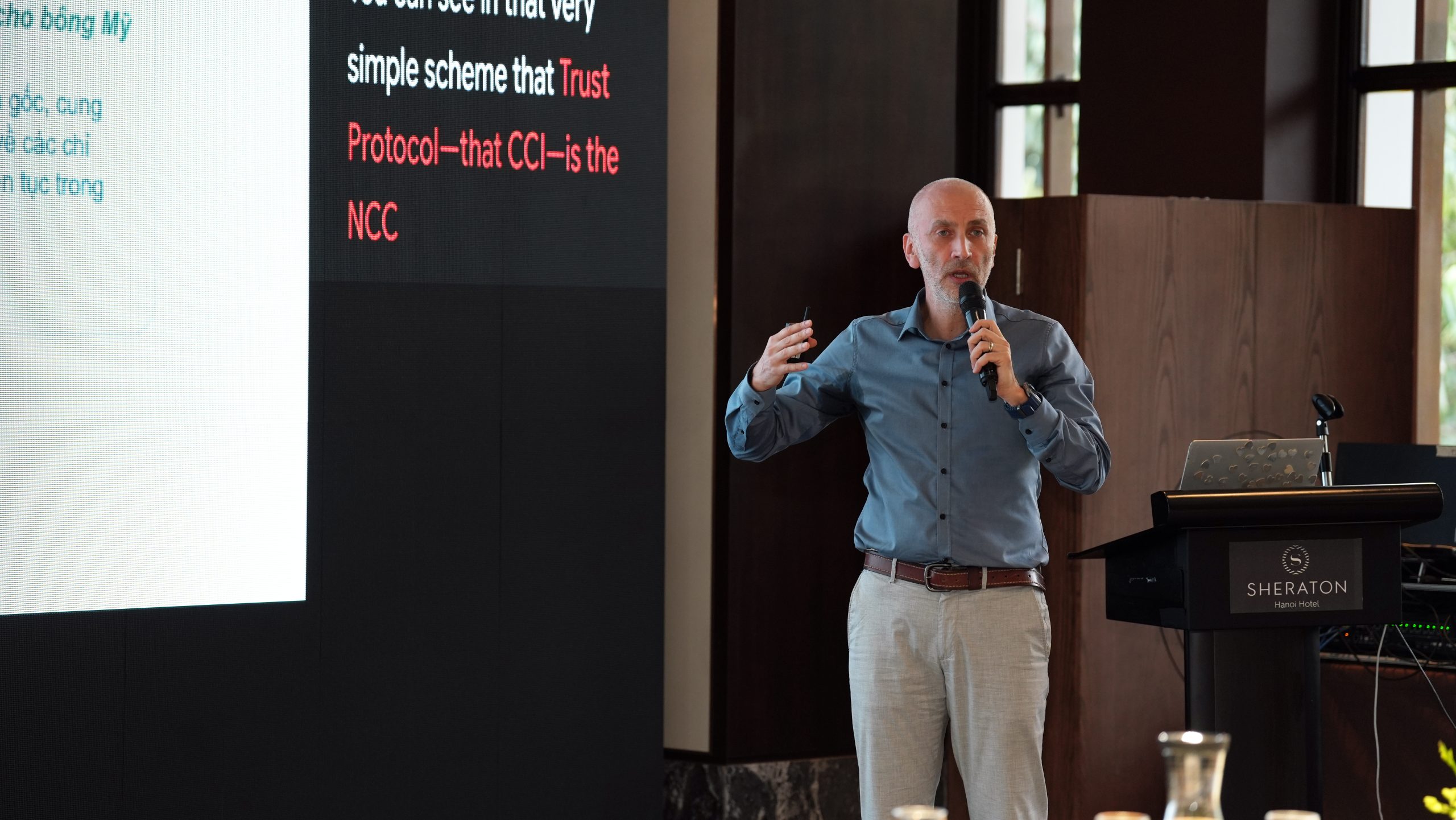

The program also featured practical case studies from Vietnam and explored the use of digital tools for raw-material blending. Technical staff and spinning mill managers discussed with the experts how to blend U.S. cotton with other fibers to optimize costs while maintaining yarn strength, evenness and consistency. The experts also addressed technical challenges encountered in production and provided specific recommendations.
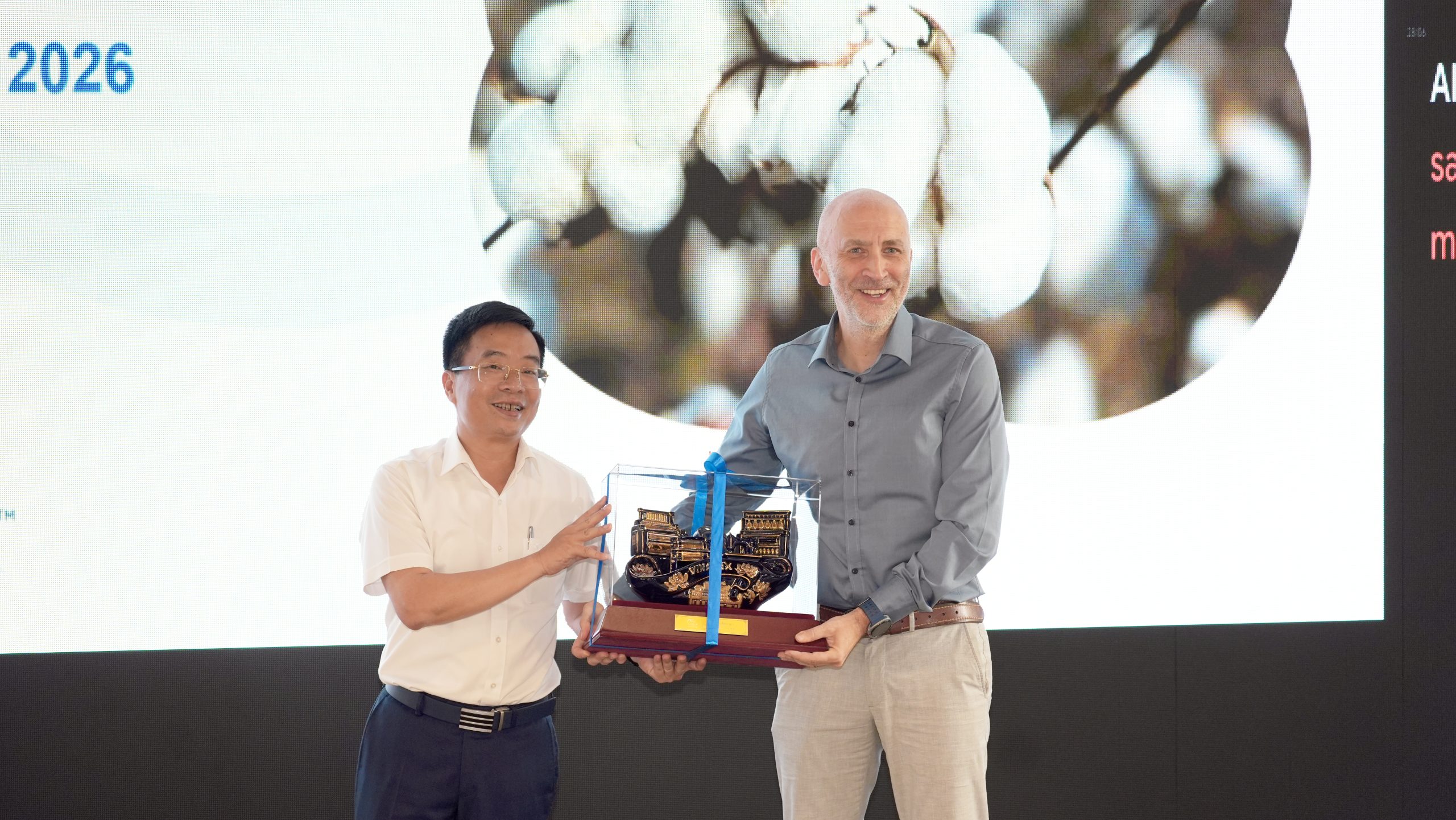
Combining technical knowledge with interactive discussions, the course provided a forum for exchange among business leaders, technical teams and international experts. The knowledge gained in trade finance and cotton-processing techniques is expected to help Vinatex member companies improve operational efficiency, reduce raw-material consumption per unit of output and strengthen Vietnam’s position in the global textile and garment supply chain.