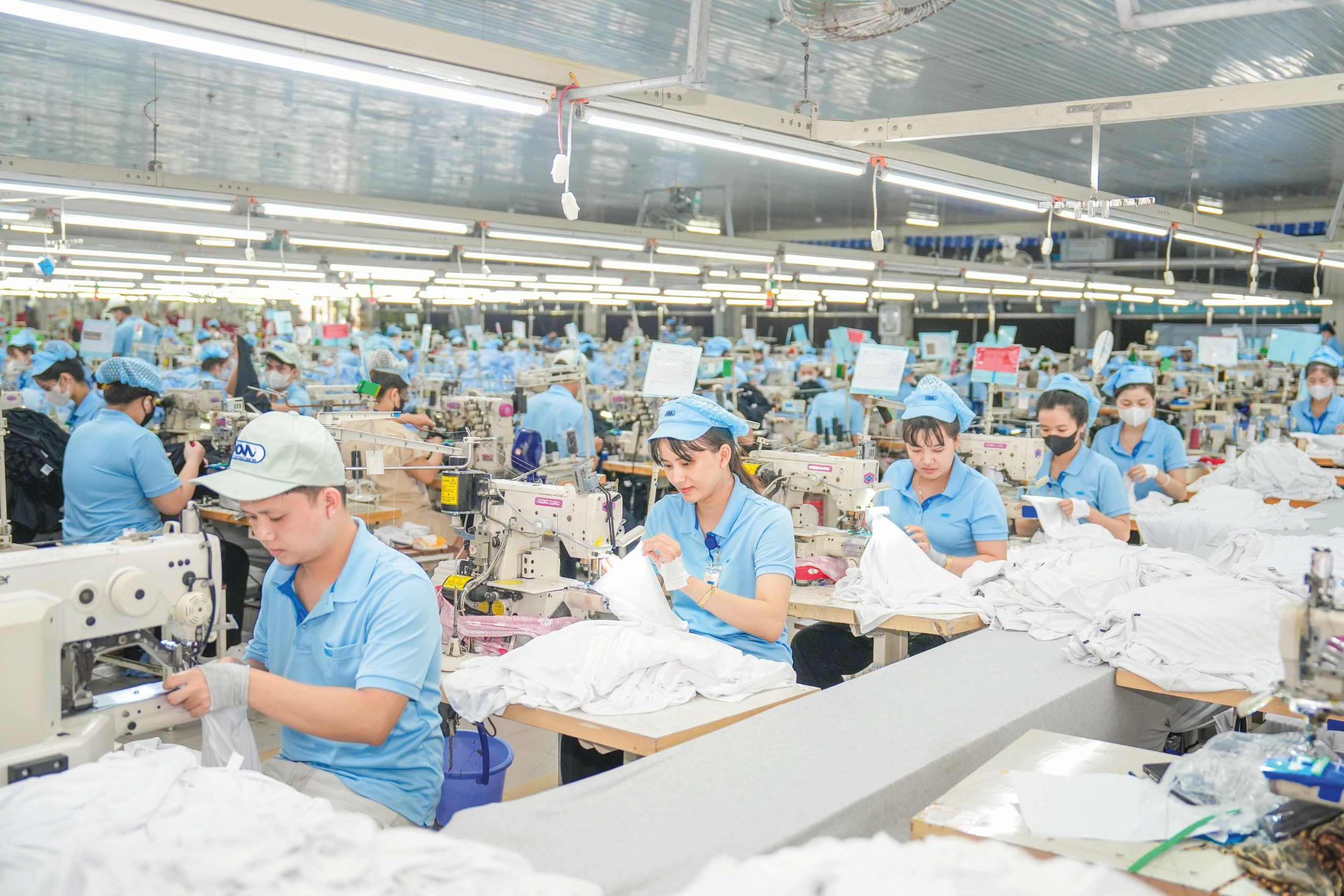

The fundamental difference between the Smart Garment Factory (SGF) and a traditional garment factory lies in its ability to connect people, equipment and data within a unified production system, thereby helping improve labor productivity, management quality and human decision-making.
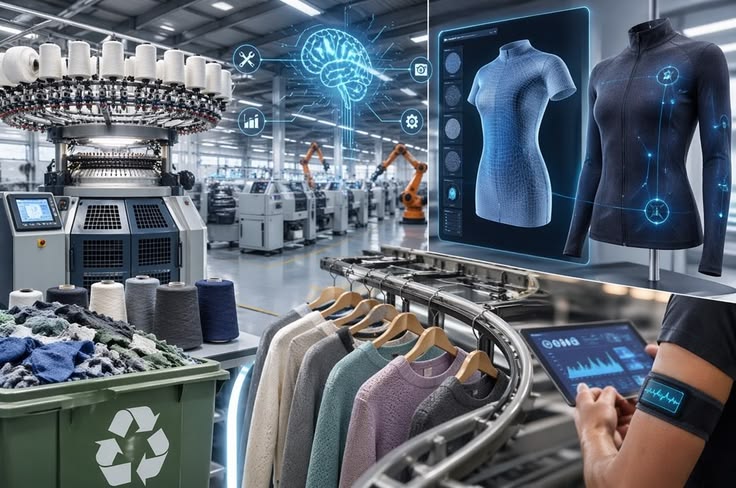
From digitizing individual operations to connecting the entire production process
Digital transformation in garment enterprises is shifting from the isolated digitalization of individual operations toward end-to-end data integration across the entire production process. Although many factories have adopted CAD/CAM, automated cutting machines, accounting software, warehouse management systems and ERP, data across departments may still remain fragmented, require repeated manual entry, and lead to information discrepancies and delays in operational management. Therefore, the core requirement of a smart garment factory is to establish an integrated data flow that enables enterprises to monitor production, detect anomalies and make timely decisions.
Three data layers in the smart garment factory
Layer 1 – Digitalization of product and technical data covers patterns, technical specifications, material consumption norms, manufacturing processes and Standard Allowed Minutes (SAM). CAD/CAM tools, 3D design software and Product Lifecycle Management (PLM) systems help standardize, centrally manage and share technical data across departments.
Layer 2 – Real-time production data collection is enabled through Barcode/QR Code, RFID, Industrial Internet of Things (IIoT), sensors and shop-floor terminals installed along production lines. These technologies capture data on output, production progress, quality, work-in-progress status, equipment conditions and energy consumption, providing a basis for closely monitoring shop-floor operations.
Layer 3 – Data integration and production management involves ERP, APS, MES and management Dashboard systems. Among these, MES plays a particularly important role in connecting production plans with actual operational data. It enables comparisons of production progress, output, quality and line efficiency, helping identify deviations and make timely adjustments.
Together, these three data layers form a data flow linking technical information, production plans and actual production performance. This enables enterprises to reduce duplicate data entry, improve planning accuracy, optimize resource utilization, address production bottlenecks and enhance traceability. Most importantly, it marks a shift from management based primarily on experience and historical reports to proactive, data-driven management grounded in actual operating conditions.
Hypothetical model: Digitalization and data integration at an export-oriented garment factory
Consider a hypothetical digitalization roadmap for an export-oriented garment factory with 1,000 employees and 20 sewing lines, specializing in jacket production under the FOB model. The factory already has CAD systems and automated cutting equipment but still relies primarily on Excel for production planning, manual output recording and disconnected data systems. The proposed roadmap consists of three stages: first, standardizing and integrating technical data; second, collecting shop-floor data through QR Codes, terminals and essential MES functions; and third, integrating MES with order management, materials management and accounting systems, before adding ERP, APS and Dashboard capabilities as needed.
Implementation effectiveness should be evaluated through specific indicators across four categories: system operational efficiency, productivity, costs and management performance. Key performance indicators (KPIs) include the proportion of output recorded in MES, line efficiency, work-in-progress inventory on production lines, rework rates, fabric consumption variances against standard norms, costing turnaround time, production plan fulfillment rates and on-time delivery rates.
To ensure successful implementation, enterprises need to standardize foundational data and processes, develop an overall investment roadmap, ensure system interoperability, select solutions suited to actual operating conditions, conduct pilot projects before scaling up and secure strong leadership commitment. The key principle is to maximize the use of existing infrastructure, investing in additional functions only when they are genuinely necessary and deliver measurable benefits.
Data integration provides the foundation for garment factories to transition toward modern management practices and generates greater value from the same production resources. It also lays the groundwork for subsequent developments, including automation, artificial intelligence applications and operational optimization across the entire system.