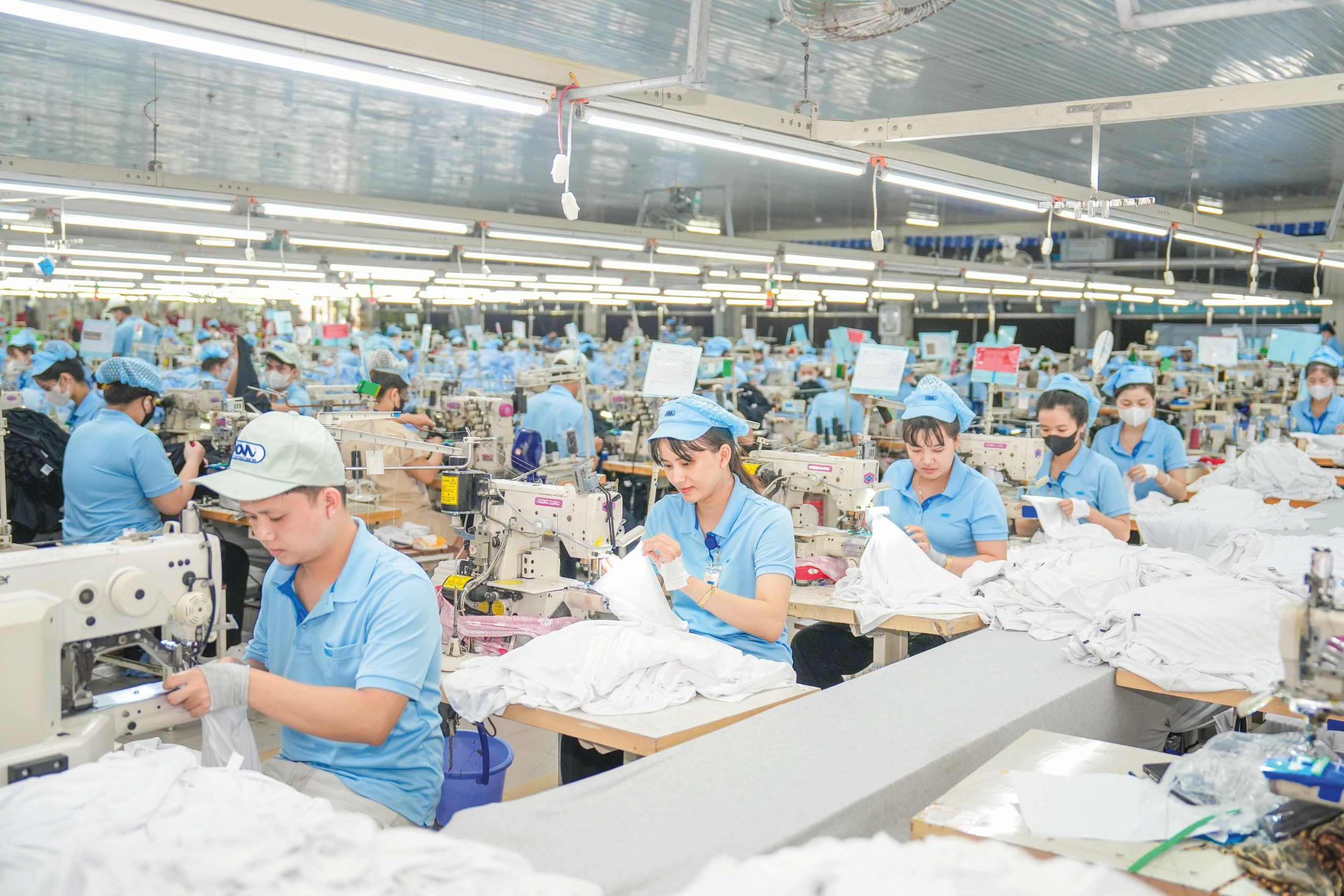

At the end of the first nine months of 2026, the Vietnam National Textile and Garment Group (Vinatex) continued to deliver positive production and business results, with consolidated profit before tax reaching nearly VND 1,473 billion, up 41% year on year and 6.7% above the full-year 2026 profit-before-tax target approved by the General Meeting of Shareholders. Notably, profit growth continued to significantly outpace revenue growth, reflecting clear improvements in business performance, cost management and capital utilization. Amid continued volatility in the textile and garment market, these results demonstrate that the Group’s growth drivers are delivering tangible results, providing an important foundation for achieving its 2026 targets.

Profit growth momentum sustained in the third quarter
In the third quarter of 2026, Vinatex recorded consolidated net revenue of VND 5,296 billion, up 4.8% year on year. Notably, gross profit reached VND 780 billion, an increase of 30.8%; profit before tax amounted to VND 540 billion, up 43%; and profit after tax reached VND 454 billion, up 26.4%. This marked the second consecutive quarter in which the Group’s profit before tax exceeded VND 500 billion.
For the first nine months, consolidated net revenue totaled VND 14,797 billion, up 7.6%. Meanwhile, the cost of goods sold increased by just 5.5%, enabling gross profit to reach VND 2,157.1 billion, up 21.4%, equivalent to an increase of nearly VND 381 billion year on year. The gross profit margin improved from 12.9% to 14.6%, an increase of 1.66 percentage points.
Notably, the nearly VND 381 billion increase in gross profit made a significant contribution to the approximately VND 428 billion increase in profit before tax. This demonstrates that the positive results were driven not only by revenue expansion but also by improvements in production and business efficiency.
Improved Financial Balance and Cost Management
During the first nine months, finance income reached VND 285.1 billion, up 17.9%, while finance costs fell from VND 328.5 billion to VND 263.4 billion, a decrease of nearly 19.9%. As a result, the net balance of finance income and expenses shifted from a deficit of VND 86.8 billion to a surplus of VND 21.7 billion, representing an improvement of nearly VND 109 billion year on year.
Selling and general and administrative expenses totaled VND 1,189.8 billion, an increase of approximately 4.8%, below the rate of revenue growth. These expenses as a proportion of net revenue declined from 8.26% to 8.04%. Of the two categories, selling expenses increased by 8.2%, while general and administrative expenses rose by approximately 3.1%. This indicates that the Group continued to maintain effective cost controls, particularly over administrative expenses, while expanding its operations.
With contributions from production and business operations as well as an improved financial balance, operating profit reached VND 1,442.9 billion in the first nine months, up 40.5%. This underscores the central role of the Group’s core business activities in driving profit growth.
Spinning sector makes a breakthrough, while Garment sector remains the main profit contributor
Among the Group’s core production segments, the Spinning sector continued to stand out. Revenue for the first nine months reached VND 6,661 billion, up 15.9%, equivalent to 78.1% of the full-year target. Profit amounted to VND 381.8 billion, up 168.1%, reaching 152.1% of the annual target. Notably, all 12 spinning units reported positive profits and improved performance compared with the same period last year.
These results were achieved through more effective utilization of equipment, improved production organization and management capabilities, and favorable spreads between selling prices and raw-material costs. According to the assessment presented at the conference reviewing production and business performance for the first nine months, improvements in production management contributed approximately 27% of the sector’s profit. However, favorable market conditions in selling prices and raw-material costs are unlikely to last indefinitely. Units must therefore continue to improve productivity, optimize costs and enhance operational efficiency.
Meanwhile, the Garment sector remained Vinatex’s largest profit contributor. Consolidated revenue reached VND 5,853 billion, up 2.7%, while profit before tax amounted to VND 679.2 billion, with a profit-before-tax margin of 11.6%, exceeding the full-year target of 10%.
Despite maintaining strong profitability amid intense export competition, the Garment sector continues to face pressure from unit prices, labor costs and increasingly demanding customer requirements. At some units, revenue has increased while profit margins have tended to decline. Enterprises therefore need to pay closer attention to order quality, customer mix, labor productivity and cost control. In particular, increasing the value generated per labor hour will be critical to improving operational performance in the period ahead.
The combination of strong growth in the Spinning sector and the Garment sector’s ability to sustain a substantial profit contribution has provided an important foundation for the Group’s overall results.

Contributions from joint ventures and associates remain substantial
Another important growth driver was the share of profit from joint ventures and associates. In the first nine months of 2026, this contribution reached nearly VND 454 billion, equivalent to 31% of consolidated profit before tax, reaffirming the role of the Group’s joint ventures and associates in its consolidated profit structure. Beyond providing a stable source of income, these entities also help diversify the Group’s growth drivers and reduce its reliance on the direct business performance of the Parent Company and its production units.
As capital efficiency becomes increasingly important, maximizing returns from existing investments and strengthening coordination across the Group will remain key priorities for generating greater value from available resources.
Improved operating cash flow strengthens financial health
Alongside its profit performance, Vinatex also recorded positive improvements in key financial indicators. By the end of the third quarter of 2026, net cash flows from operating activities had reached VND 2,132.3 billion, more than 2.2 times the figure recorded in the same period last year. Effective working capital management, particularly inventory control, was one of the contributing factors.
As of September 30, 2026, inventories after provisions stood at approximately VND 2,810.9 billion, down nearly VND 666 billion, or 19%, compared with the beginning of the year. The reduction in inventories helped release working capital, limit capital tied up in raw materials and finished goods and thereby improve operating cash flow.
At the same time, outstanding borrowings and finance lease liabilities totaled approximately VND 5,856.4 billion, down more than VND 922 billion over the nine-month period. Short-term borrowings alone declined from VND 4,901.7 billion to VND 4,084.4 billion, helping ease repayment pressure and giving the Group greater flexibility in managing its capital structure.
Total assets at the end of the third quarter exceeded VND 21,111 billion, up approximately 2.3%, while equity reached VND 11,182.3 billion, an increase of approximately VND 1,096 billion. Retained earnings after tax stood at VND 1,973.5 billion, demonstrating the Group’s ability to accumulate earnings and strengthen its internal capital base.
Notably, consolidated profit after tax for the first nine months reached VND 1,363.3 billion, up 44.5%. Of this amount, profit attributable to the Parent Company’s shareholders was VND 886.3 billion, up 53.3% from VND 578.1 billion in the same period last year. This demonstrates that profit growth was reflected not only at the consolidated level but also translated into significant value creation for the Parent Company’s shareholders.