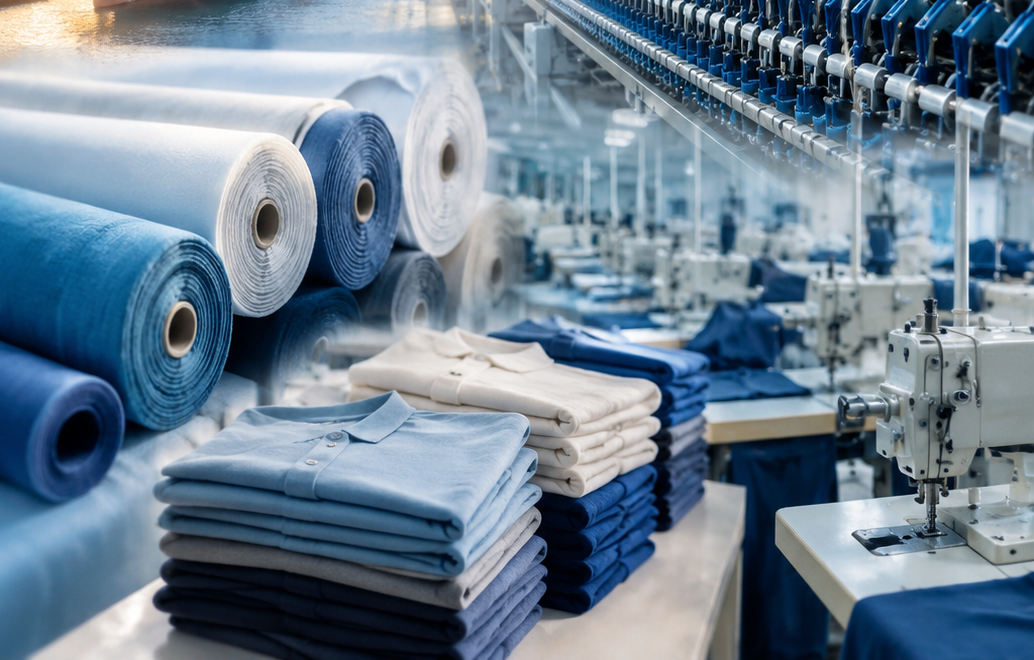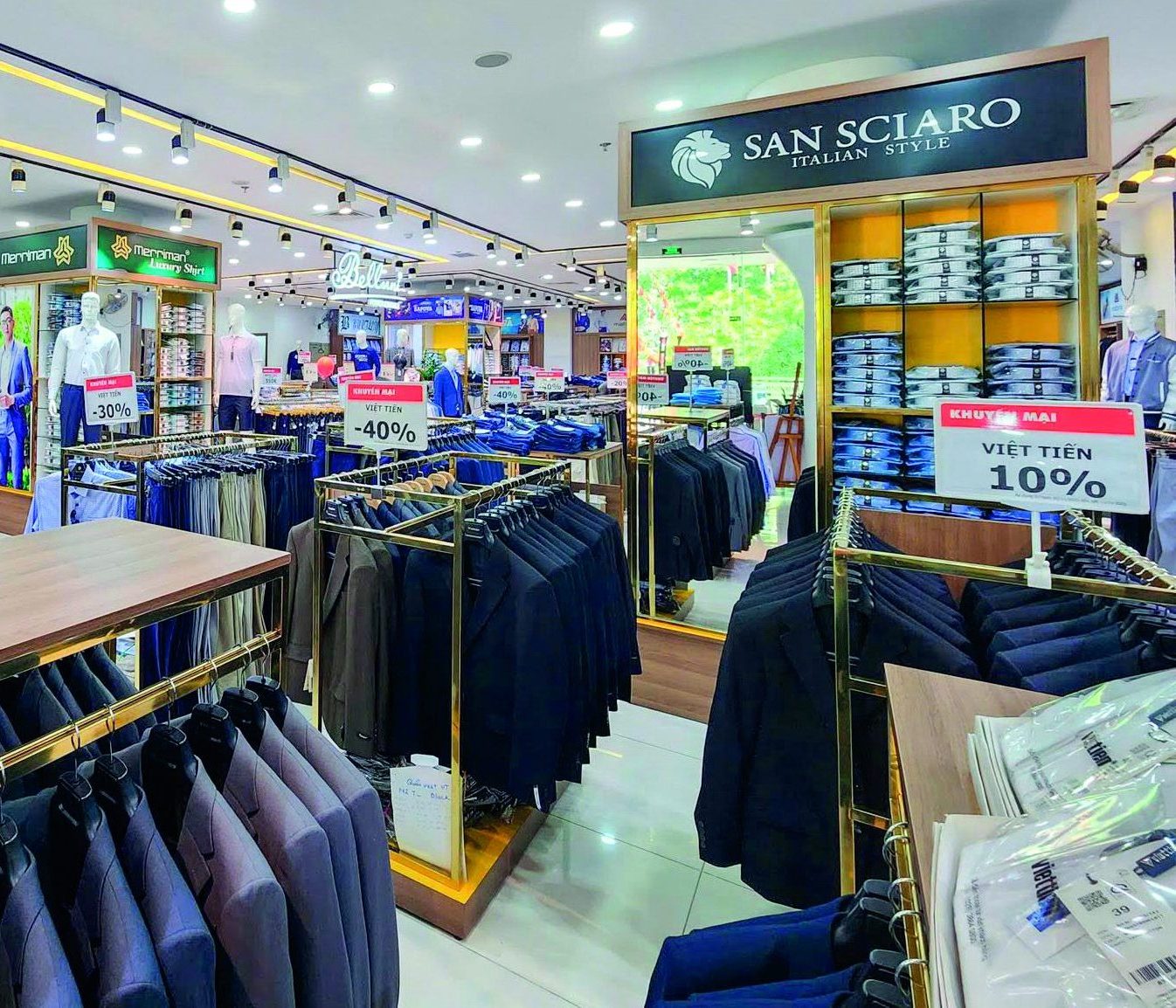

The U.S. fashion industry is simultaneously facing pressures from tariffs, inflation, and geopolitical uncertainty, forcing companies to tighten cost controls, adjust pricing strategies, and restructure their supply chains to protect profitability. The trend of reducing dependence on China continues to accelerate, while Vietnam, Bangladesh, and India are increasingly solidifying their roles in the global apparel supply chain. At the same time, many U.S. fashion companies continue to maintain or expand part of their sourcing activities in Mexico and Central America to enhance flexibility and improve resilience against supply chain risks.
This article analyzes the key shifts in the sourcing strategies of U.S. fashion brands, highlighting the profound and ongoing reconfiguration of global supply chains.

The U.S. Fashion Industry Continues to Face an Uncertain Business Environment
Entering 2026, the U.S. fashion industry is operating in an environment marked by inflation, high interest rates, trade disruptions, and weakening consumer confidence. An April 2026 report by Professor Sheng Lu from the University of Delaware (U.S.) indicates that consumption patterns are becoming increasingly segmented by income level, with middle- and lower-income consumers remaining under considerable financial strain due to the high cost of living and persistently elevated borrowing costs.
U.S. economic indicators suggest that inflationary pressures are regaining momentum. The CPI climbed to 3.8% in April 2026, marking its highest since May 2023 and an increase of 0.5 percentage points from the previous month. Meanwhile, the Federal Reserve maintained its policy rate at 3.5%–3.75% during its early-May 2026 meeting and has not indicated any intention to ease monetary policy in the near term. Despite a 4.9% year-on-year increase in retail sales in April, many fashion companies believe that consumers are becoming more price-conscious and increasingly selective in their purchases of non-essential goods.
Kohl’s reports that its core customers, lower- and middle-income households, are still facing financial pressure and are increasingly focused on value. Macy’s likewise sees rising uncertainty in consumer spending due to macroeconomic conditions, geopolitical tensions, and evolving trade policies. For Carter’s, tariffs continue to weigh heavily on market sentiment and have made the business outlook considerably harder to predict.
Beyond consumer trends, U.S. trade policy remains a major wildcard for the global fashion industry. Businesses anticipate that tariff and trade uncertainties will persist well into the second half of 2026, forcing fashion brands to keep their sourcing strategies flexible and their supply chains increasingly diversified.
Tariffs Continue to Squeeze Corporate Profit Margins
Sheng Lu’s analysis of the financial results of roughly 30 major U.S. fashion companies shows that tariffs remained among the industry’s biggest margin pressures in fiscal 2025. Many companies reported that import tariffs had shaved between 0.2-4.6% off their gross profit margins.
Macy’s estimates that tariff-related impacts will reduce its gross profit margin by approximately 0.2–0.3% in 2026. Meanwhile, GAP stated that changes in global tariff rates during 2025 had a significant adverse effect on profitability, reducing both its gross margin and operating margin by around 1.2% for the full year and by approximately 2% in the fourth quarter of 2025. At the same time, Abercrombie & Fitch reported approximately USD 90 million in tariff-related costs included in its cost of goods sold, resulting in an approximately 2.5% decline in operating margin compared with the previous year.
Some companies have faced significantly greater pressure due to their heavy reliance on sourcing from Asia. Columbia Sportswear reported that unmitigated tariff costs exceeded USD 30 million in 2025, equivalent to an impact of approximately 3–4% over a two-year period.
Meanwhile, PVH Corp. – the parent company of Calvin Klein and Tommy Hilfiger – estimated that its total tariff-related costs could reach approximately USD 195 million in 2026. However, the company stated that it is implementing a range of mitigation measures aimed at offsetting around 60% of the impact this year, with a target of reducing more than 75% of the tariff burden by the end of 2026.
In response to mounting cost pressures, many U.S. fashion companies are pursuing multiple strategies simultaneously, including adjusting prices, optimizing product portfolios, discontinuing underperforming product lines, renegotiating with suppliers, and shifting sourcing to countries with more competitive cost structures. Some companies are also accelerating their full-price selling strategies and limiting promotional activities in an effort to protect profit margins.
However, a key concern is that most companies believe the current trade environment remains highly unpredictable due to the continually evolving U.S. tariff policies. As a result, brands are required to maintain more conservative inventory levels while enhancing the flexibility of their supply chain management and global sourcing strategies.
U.S. Fashion Brands Implement Selective Price Increases
In addition to optimizing sourcing strategies and controlling costs, price increases have become one of the most widely used measures adopted by U.S. fashion brands to offset the impact of tariffs. However, rather than implementing across-the-board price hikes, most companies have opted for a selective pricing strategy, targeting fashion items, new product launches, or premium segments in order to minimize adverse effects on consumer demand.
Columbia Sportswear stated that it had implemented high-single-digit price increases in the U.S. market for its Spring and Fall 2026 collections to offset tariff-related costs. Meanwhile, Levi’s reported that tariffs had reduced its profit margin by approximately 1.5%. However, a significant portion of this impact has been mitigated through price increases, product cost optimization, and a stronger focus on full-price selling. According to the company, consumers have so far shown no significant negative reaction to these pricing adjustments.
The trend toward reducing promotional activities and increasing the share of full-price sales is also being widely adopted by many brands as a means of protecting profit margins. Victoria’s Secret noted that scaling back discount programs had significantly improved its average selling price per item, thereby supporting the profit margins of its PINK brand. Meanwhile, Oxford Industries stated that its 4–8% price increase was driven primarily by product mix enhancement and a higher proportion of newly introduced, higher-value products.
Nevertheless, companies remain cautious in their pricing strategies for basic product categories in order to protect price-sensitive consumers. Urban Outfitters, Inc. (URBN) stated that it continues to prioritize maintaining entry-level prices for its core products and only raises prices for categories where “the product value proposition is strong enough for consumers to accept.”
This trend suggests that the U.S. fashion industry is entering a new phase of competition, in which brand building, product development, and pricing management capabilities are becoming increasingly critical to offset cost pressures and sustain profitability.
The Shift in Global Sourcing Continues to Intensify
Under the combined influence of tariffs, geopolitical developments, and the need to diversify supply chains, U.S. fashion brands are accelerating the reconfiguration of their global sourcing networks in 2026. According to Sheng Lu, four major trends have emerged: a reduction in sourcing dependence on China; increased procurement from cost-competitive Asian markets, particularly Vietnam, Bangladesh, and India; a growing emphasis on nearshoring to Mexico and Central America; and closer attention to newly negotiated trade agreements affecting the textile and apparel sector.
China continues to lose ground in the U.S. apparel import market. According to import market share data, China’s share of U.S. apparel imports fell dramatically from about 22% at the beginning of 2025 to roughly 9% in March 2026. Meanwhile, Vietnam has consolidated its position as one of the leading sourcing destinations for U.S. apparel buyers, maintaining a market share of approximately 21–24% during 2025–2026.
Alongside Vietnam, Bangladesh and India are increasingly reinforcing their positions as low-cost sourcing hubs for the global fashion industry. Export data show that Vietnam’s apparel exports to the United States reached approximately USD 17.9 billion in 2025, up 10.7% from the previous year. Meanwhile, Bangladesh recorded around USD 7.5 billion in apparel exports to the U.S., an increase of 4.7% year-on-year. During the first four months of 2026, Vietnam’s apparel exports to the U.S. continued to grow by 3%, while Bangladesh posted a 2.7% increase over the same period.
Many companies believe that the shift in sourcing away from China has been underway for several years and is likely to continue in the foreseeable future. Oxford Industries reported that the share of sourcing from China had declined from around 40% to approximately 15% by the beginning of fiscal year 2026. Meanwhile, Abercrombie & Fitch currently sources from more than 16 countries worldwide in an effort to enhance supply chain flexibility and resilience.
Beyond Asia, many U.S. fashion brands continue to maintain and expand a portion of their sourcing activities in Mexico and Central America to shorten lead times, enhance market responsiveness, and reduce logistics risks. Although the apparel import shares from countries covered by the United States-Mexico-Canada Agreement (USMCA) and the Central America Free Trade Agreement (CAFTA) have remained relatively stable during 2025–2026, nearshoring continues to be viewed by companies as a strategic option for complementing their global sourcing networks amid rising trade and geopolitical uncertainties.
Geopolitics and Logistics Emerge as Strategic Priorities
In addition to tariffs, geopolitics is increasingly becoming a major factor influencing sourcing and logistics activities across the global fashion industry. Conflicts in the Middle East and disruptions along international shipping routes have prompted many companies to heighten their vigilance regarding supply chain risks in 2026.
Nike reported some transportation disruptions related to the situation in the Middle East during its most recent quarter. Meanwhile, Victoria’s Secret noted that certain shipments to North America had experienced delays due to logistics disruptions, although the impact has not yet been considered severe. At the same time, PVH Corp. believes that geopolitical conflicts and volatility in global trade will remain major sources of uncertainty for business operations in the period ahead.
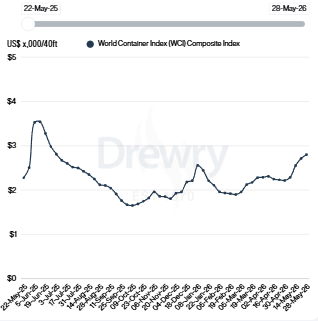
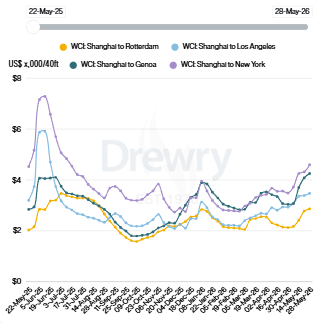
According to data from the Drewry World Container Index (WCI), global container shipping costs have been trending upward again in recent months. As of May 28, 2026, the WCI Composite Index had risen to approximately USD 2,800 per 40-foot container. Freight rates on shipping routes from Shanghai to Los Angeles and New York City have also increased significantly compared with the beginning of the year, underscoring the persistent logistics pressures facing global supply chains.
Against this backdrop, adaptability is emerging as a top priority for many U.S. fashion companies. Rather than focusing solely on cost optimization, brands are increasingly prioritizing the development of more agile and resilient supply chains through sourcing diversification, expanded nearshoring initiatives, inventory optimization, and enhanced responsiveness to geopolitical and global trade disruptions.
Overall, these trends indicate that the global fashion supply chain is entering a period of profound restructuring, driven by tariffs, geopolitical developments, and increasingly stringent risk management requirements. For Vietnam, this presents a significant opportunity to strengthen its attractiveness as a sourcing destination and expand its market share amid the ongoing supply diversification strategies of international brands. However, to capitalize on the shifting order landscape, Vietnamese textile and apparel companies must become more proactive in managing their supply chains, while enhancing their ability to deliver orders more quickly, reliably, and flexibly in response to the evolving dynamics of the global market.