
Amid the Fourth Industrial Revolution, Vietnam’s textile and garment industry faces growing pressure to accelerate digital transformation, strengthen capabilities and enhance competitiveness. This technological shift is creating an urgent demand for highly skilled workers who possess strong digital skills and capable of operating smart production systems. On this issue, Vietnam Textile and Fashion spoke with Dr. Hoang Xuan Hiep, Rector of Hanoi University of Industry and Trade (HITU).
From “being affected” to becoming active participants in digital transformation
The Vietnam National Textile and Garment Group (Vinatex) has identified “human-centricity” as its strategic message for digital transformation. As a key institution training human resources for the textile and garment industry, how has HITU translated this orientation?
HITU views digital transformation as a combination of organizational “transformation” and the application of “digital” technologies. As the foundation, people must “transform” first. Thus, HITU’s training program equips learners with the ability to understand and operate technology, interpret data, make decisions and improve processes, enabling them to become active agents of digital transformation.
The University’s curricula align with the national digital competency framework, covering 24 competencies in data and information use, digital communication and collaboration, digital content creation, digital safety, problem-solving and AI applications. The framework guides curriculum development and the assessment of learners’ digital competencies. Since the 2025–2026 academic year, all lecturers have also been required to apply AI in formal education.
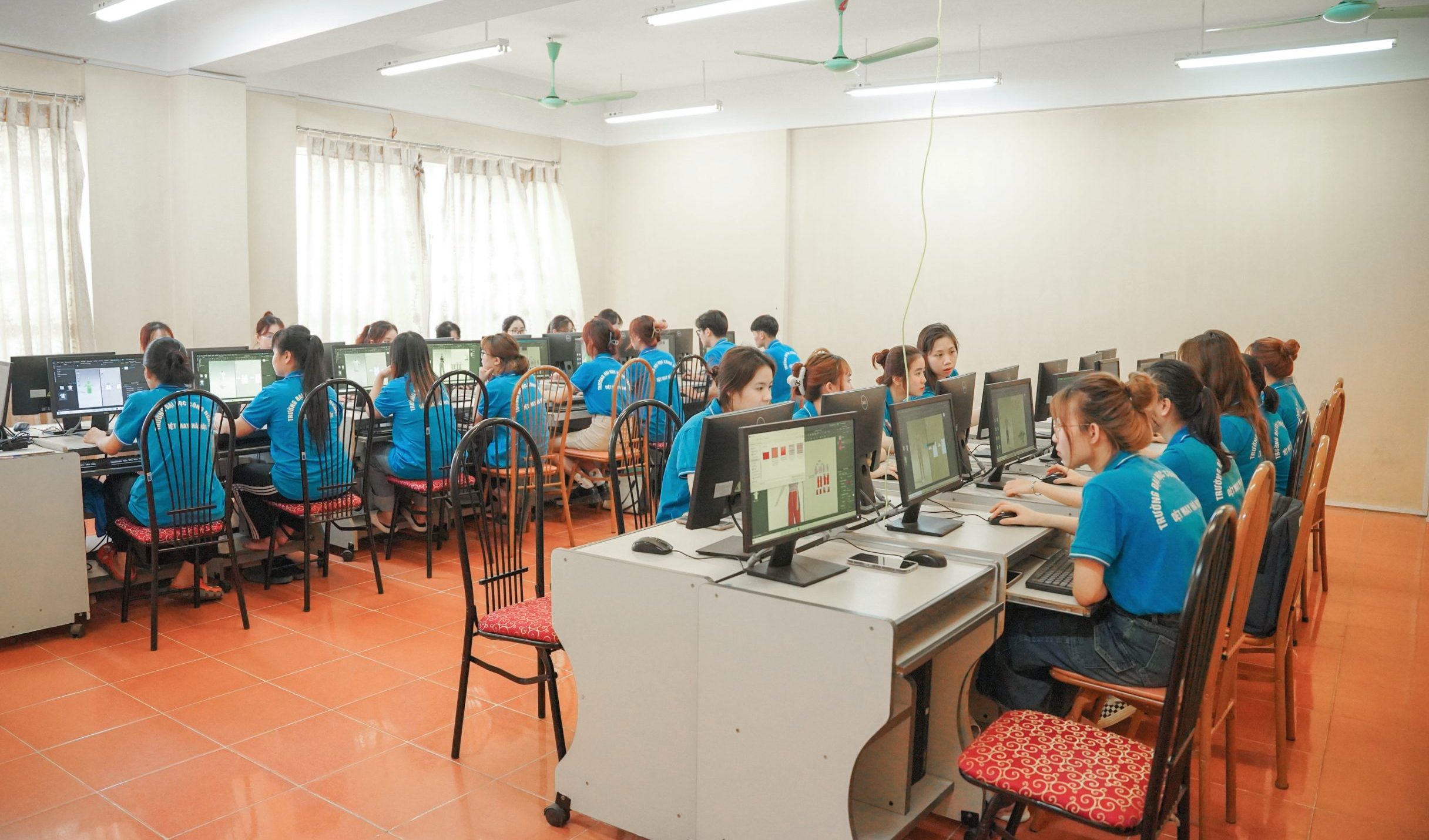
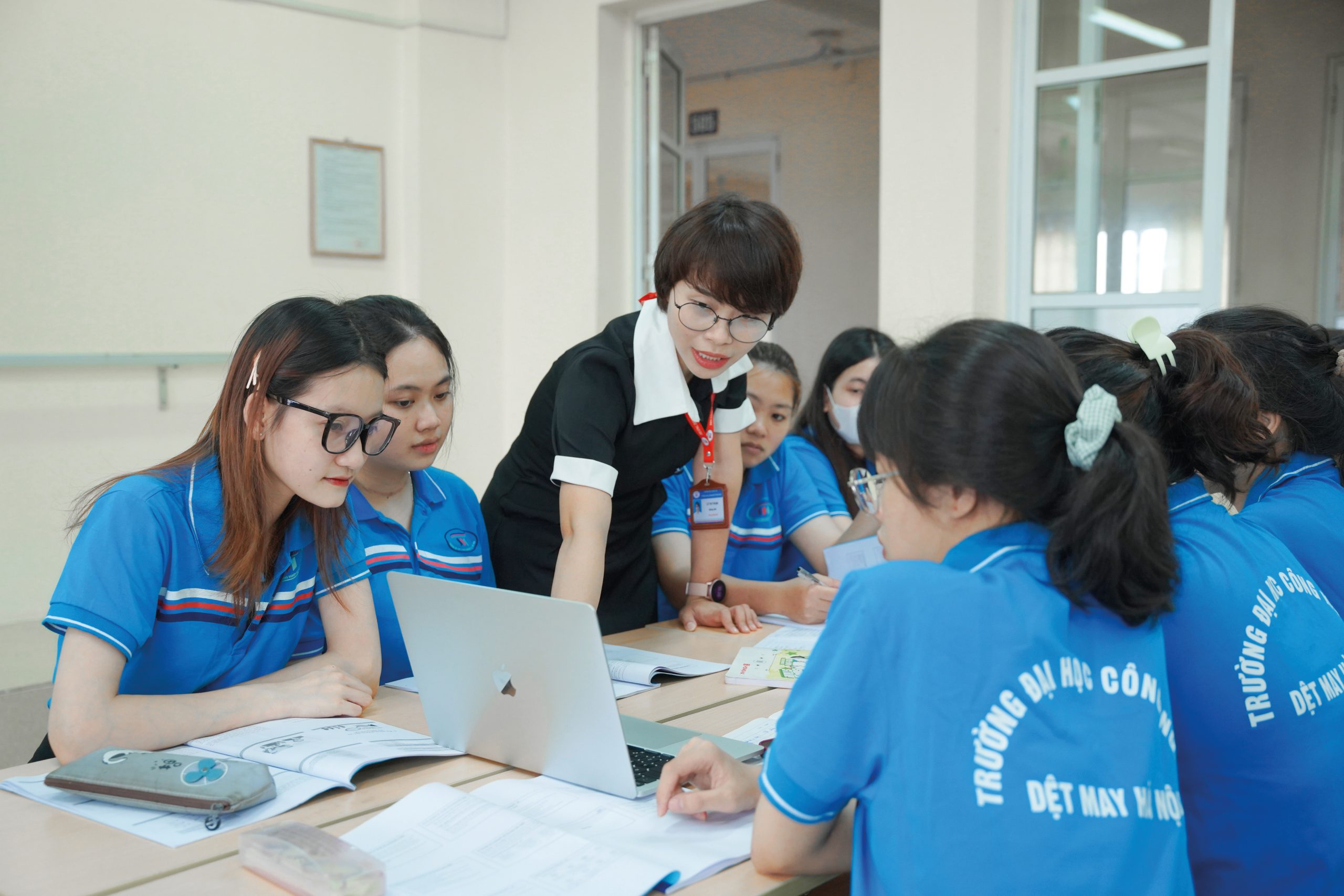
For the Spinning and Weaving Department, HITU emphasizes practical training: students experience digitally enabled equipment at enterprises, including IoT applications, smart spinning mill management models and automated color-matching systems. For Garment Technology and Fashion Design Departments, HITU integrates Gerber, Lectra, Optitex, Clo3D software and the Lean 4.0 approach into its training and incorporates AI into production preparation and automated prototyping. Students also practice at the University’s Export Production Internship Center.
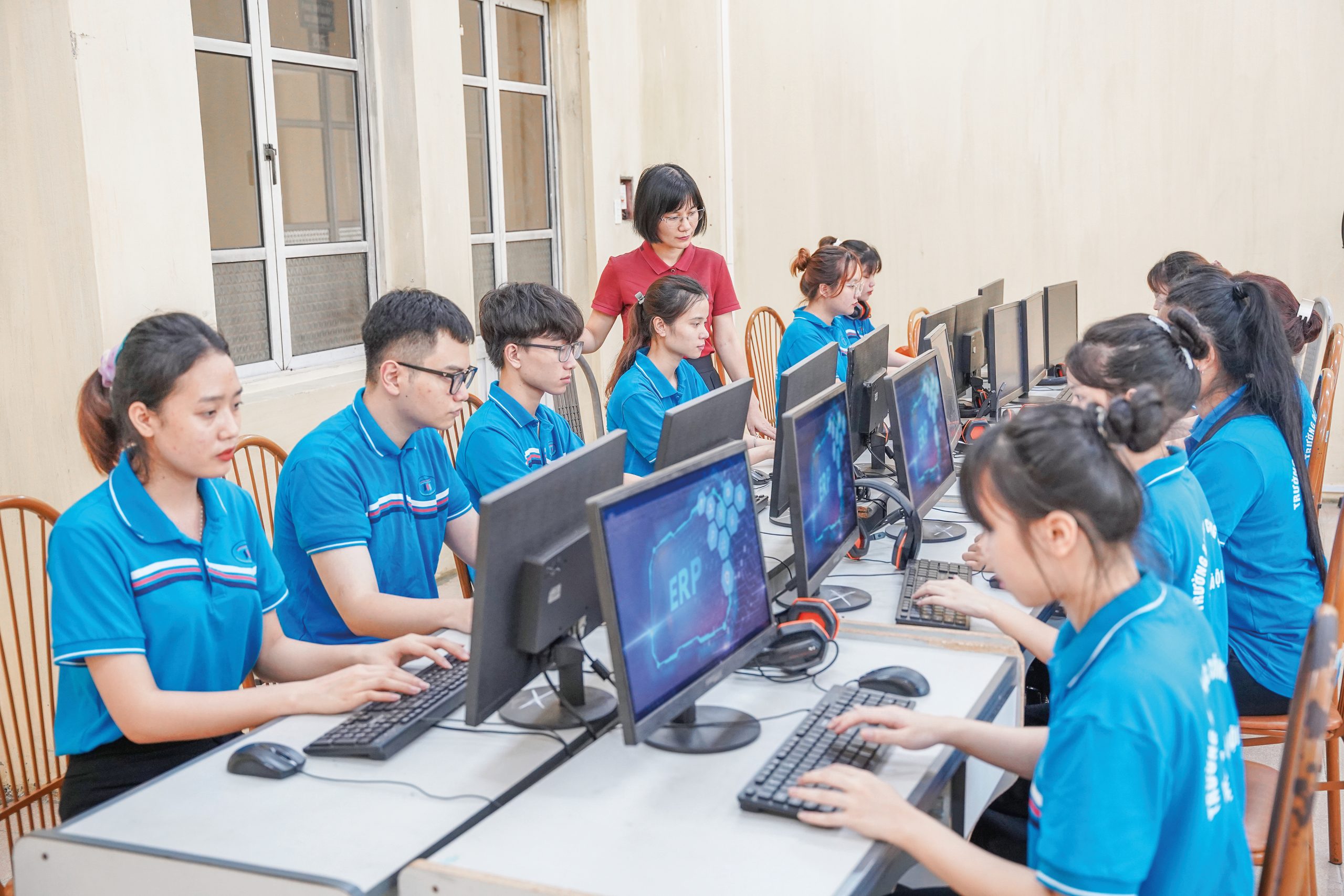
For the Textile and Garment Industrial Management, HITU offers courses in Operations Management and Information Systems for the textile and garment sector. Students practice on the TRE ERP system using real-world data, from order intake, materials and production to output data analysis, thereby developing data-driven decision-making and collaboration skills in digital environments.
Does the University have any training programs or models to help technicians keep pace with digital technologies amid growing automation pressure?
HITU’s technical workforce training is tailored to the actual needs of businesses. For the 2026-2031 period, the University will focus on strengthening digital knowledge and skills for four key workforce groups:
- Spinning and Weaving technical staff: Operate virtual processing and automation systems; harness RFID, sensors and device connectivity protocols for data analysis and fault prediction; operate and manage spinning mills; apply 3D weaving/printing; and develop smart materials.
- Industrial Garment technical staff: Implementing smart production preparation, quality control and digitally enabled garment line management.
- Equipment maintenance technicians: Apply digital technologies to repair and predictive maintenance; develop interdisciplinary mechatronics knowledge for spinning, weaving, dyeing and garment equipment.
- Fashion Design personnel: Master 2D/3D design software; create new materials; develop green fashion and personalized products.
Based on these needs, HITU is implementing two enterprise-based training models:
Long-term work-study training: Combining classroom-based digital technology theory with practical training at modern enterprises, helping businesses maintain stable production while shortening training time.
Short-term specialist courses (1–4 weeks): Rapidly updating specialized digital skills based on technologies that enterprises have adopted or are preparing to invest in.
Middle managers such as line leaders and factory managers are considered a key link in operating smart factories. What specific digital skills framework has the University developed for this workforce?
HITU considers factory managers and line leaders key to maintaining productivity and quality during digital transformation. The University has therefore developed five core competency groups for middle management:
Five core digital competency groups
- Process competency: Master production technology, line organization, planning, quality, maintenance and control points.
- Data competency: Collect, verify and analyze data to identify causes.
- Digital systems competency: Operate ERP, MES, IoT and digital identification technologies and use real-time data.
- Decision-making and improvement competency: Coordinate resources, balance production lines, manage quality and address bottlenecks based on data.
- Change leadership competency: Communicate, provide on-the-job coaching, coordinate across units and manage changes in mindset and behavior.
Skills framework by position
* Production Line Leader (Operations & Shop Floor)
- Process: Read production orders, update output and machine status by shift, and hand over work through digital checklists.
- Data: Collect real-time data, read dashboards and apply basic statistics to identify problem areas.
- Digital systems: Operate ERP/production software; use QR/RFID and Andon systems; access MES/IoT at the operational level.
- Decision-making and improvement: Adjust work based on data, prioritize problems according to impact, and apply PDCA, Kaizen and digital 5S.
- Change leadership: Guide workers in using digital tools, conduct data-based shift briefings and promote disciplined, honest error reporting.
* Factory Manager (Management & Systems)
- Process: Manage data flows across stages; plan based on system data and standardize digital processes.
- Data: Build and read management dashboards, ensure data reliability, and analyze trends to identify root causes.
- Digital systems: Use ERP at the management level; monitor real-time operations using MES/IoT/dashboards; manage access rights and data discipline.
- Decision-making and improvement: Allocate resources and prioritize orders based on real-time data; quantify improvement results and assess digitalization proposals.
- Change leadership: Build a management culture based on a “single source of truth”; train line leaders through the “read data – identify causes – act – verify” model; and manage communications when implementing MES, IoT and AI.
Strengthening hands-on cooperation with enterprises
Digital transformation requires close alignment with the technologies actually used by enterprises. How has HITU been working with Vinatex and textile and garment businesses to bring modern technologies and management software into teaching?
The University’s cooperation with enterprises focuses on several areas:
Business experts are invited to develop curricula and textbooks, and teach practical content. This strategy enables HITU to incorporate modern technologies, equipment and management processes into its curricula and help students keep pace with changes in industry.
We organize field studies for lecturers and work with enterprises to solve practical problems, such as applying AI to garment production preparation, developing competency frameworks for textile and garment enterprises, and applying PLC control to the design of semi-automatic fixtures.
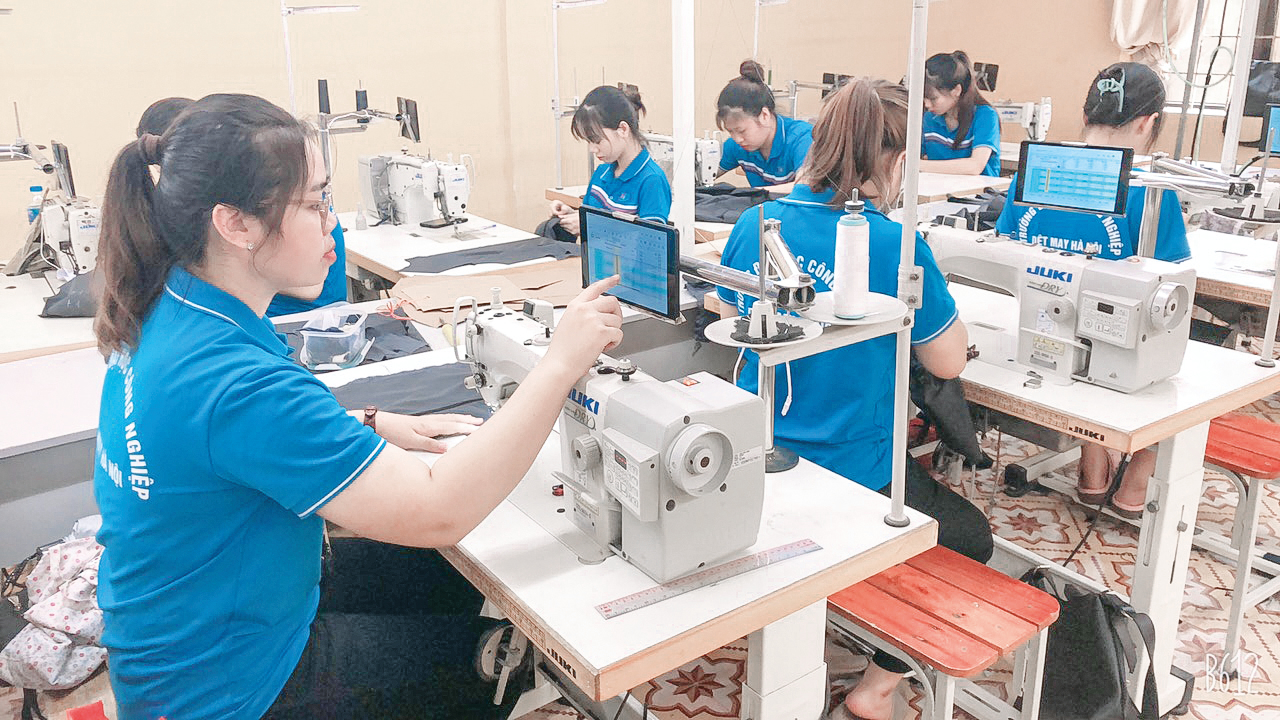
HITU facilitates internships and practical training at modern textile and garment enterprises, giving students access to new technologies and expert guidance in real production environments. Students also gain hands-on experience in digital technologies and automation at the University’s Production Internship Center, which meets BSCI and GRS standards.
The University is also strengthening enterprise cooperation to provide equipment and software for digital transformation training.
Besides technical skills, how does the University help students develop a digital mindset and adaptability before entering the workforce?
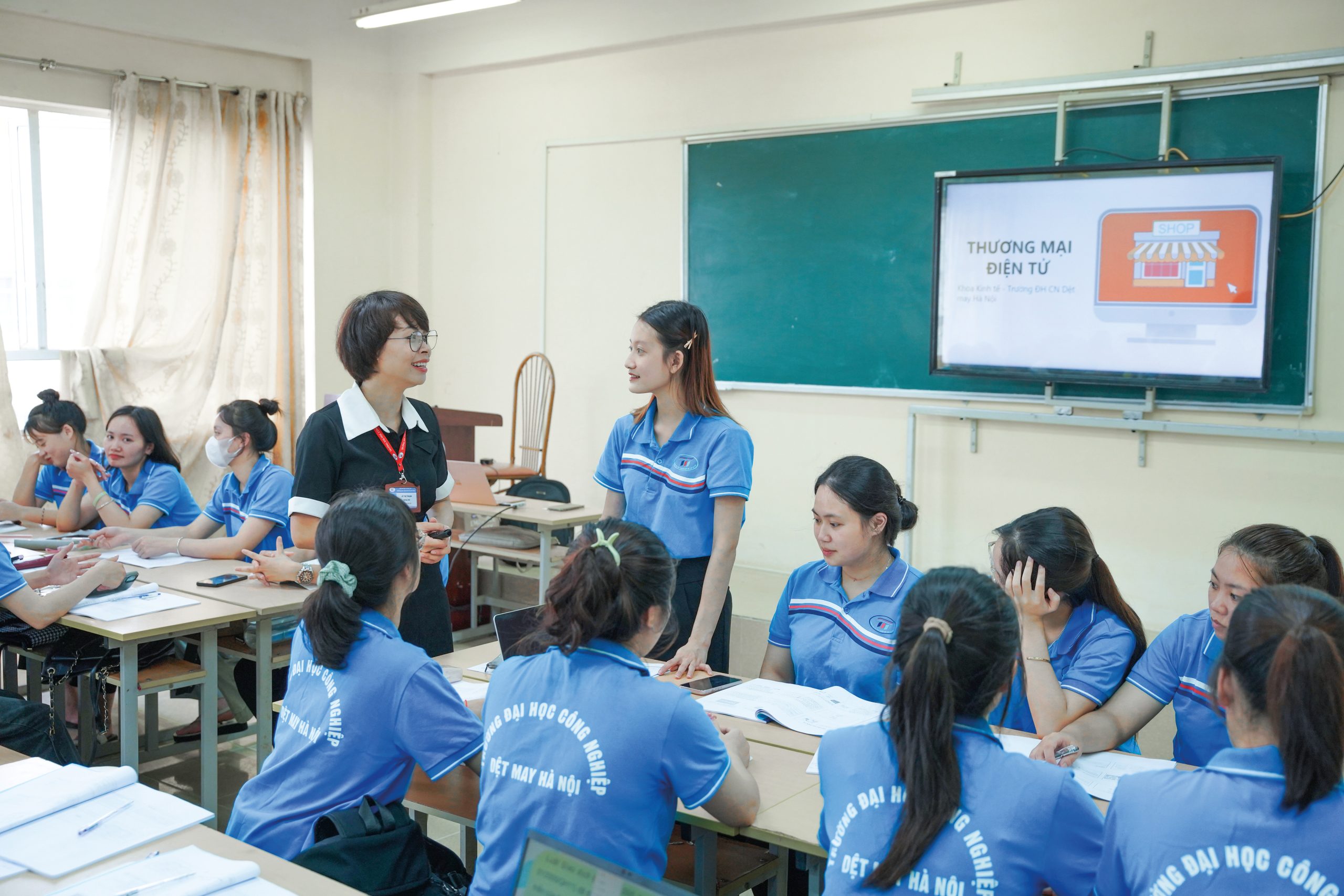
As noted, enterprise digital transformation must start with people. To help students overcome psychological barriers, HITU adopts the following approaches to develop digital thinking:
Digital awareness and mindset: Integrate digital transformation into specialized courses, helping students understand technology as a tool to improve productivity, quality and safety.
Practical cases and projects: Use factory simulations involving production data, dashboards, alerts, progress tracking and process improvement with digital tools.
Data-driven thinking: Train students to collect, verify, visualize and interpret data, building evidence-based decision-making habits.
Problem-solving and continuous improvement: Apply 5 Why, PDCA, Kaizen and Lean to production exercises.
Self-directed and rapid learning: Assign students to learn new software, equipment or digital functions independently through guides, sample data and hands-on practice.
Digital practice and behavioral assessment: Provide digital simulation environments and assess students’ ability to handle new situations, learn new tools quickly and make data-driven decisions.
Thank you very much, Dr. Hiep!