
With ultra-lightweight fabric technology weighing just 5 g/m², famous Dutch designer Iris van Herpen has introduced technological imprints, transforming haute couture creations into “surreal” works of art, where every movement reveals softness and fluidity, and where fabric, the human body, and light merge into a one harmonious whole
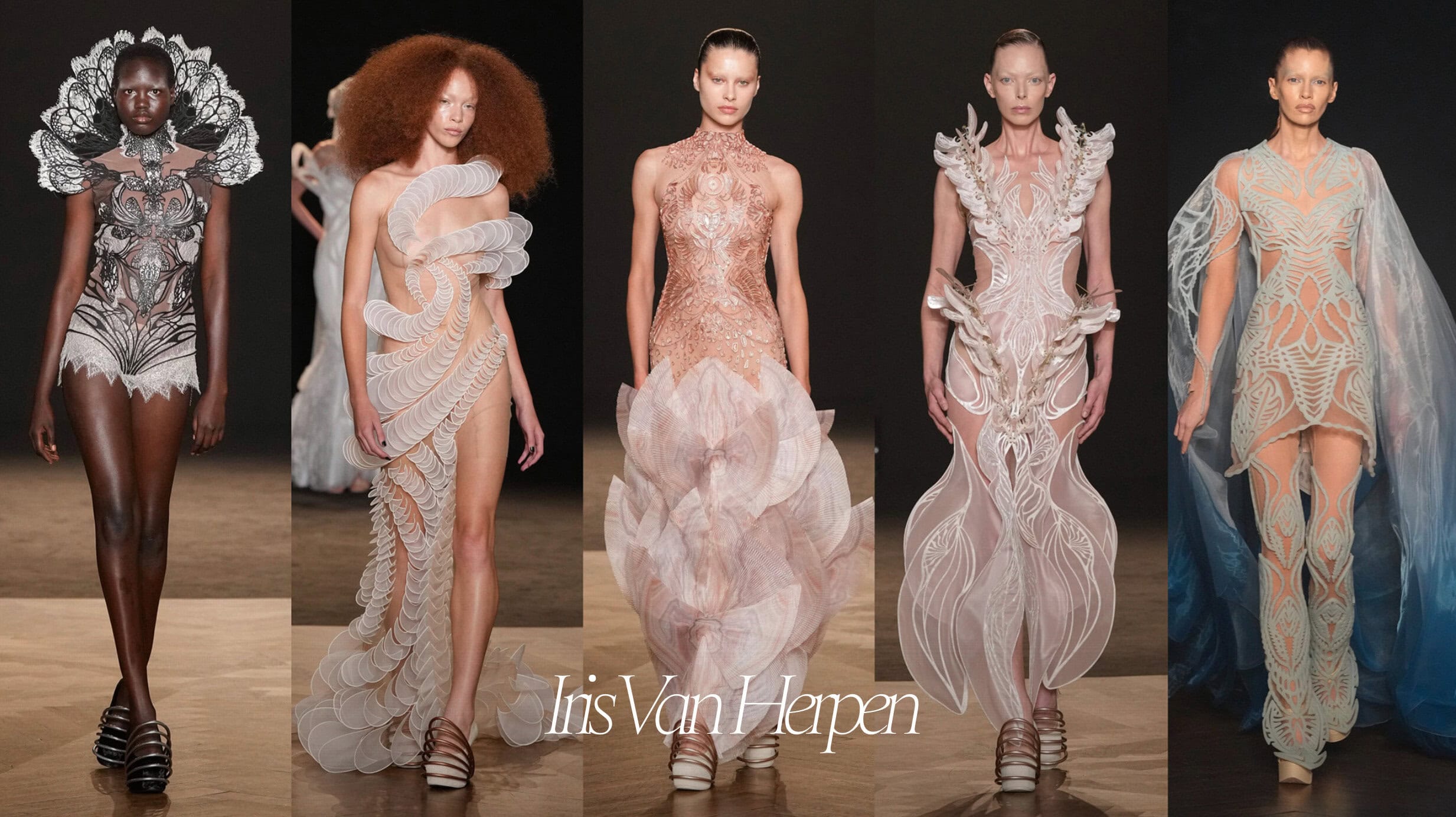
At Paris Fashion Week Fall-Winter 2025, Iris van Herpen unveiled the “Sympoiesis” collection, featuring advanced technological materials, most notably “air fabric” – an ultra thin, transparent organza weighing only around 5 g/m². This material creates a distinctive visual effect in motion, evoking a sense of weightlessness, fluidity, and near invisibility on the body, allowing fabric, light, and movement to merge into living works of art.
Technical challenges
The use of ultra thin fabrics (~5 g/m²) presents numerous technical challenges related to durability, shape retention, edge finishing, coverage, and cost. The material is prone to tearing, sagging, and deformation during sewing, requiring solutions such as reinforced edges, soft structural frameworks, micro reinforcement materials, and high precision sewing equipment. In addition, surface treatments and layered constructions are needed to control light transparency. Given the rarity of the material and the complexity of the process, the most suitable approach is to focus on prototyping and small-scale production, combining craftsmanship with advanced technology.
On weaving techniques/processing: from material to garment
Iris van Herpen pursues bespoke haute couture with a very high degree of craftsmanship, combining traditional techniques with modern technology to experiment with new materials, thereby expanding the boundaries between fashion, science, and art. In collections such as Seijaku, she employs ultra-lightweight Japanese organza, treated with shibori as well as heat-pressing, layering, and micro-reinforcement techniques to preserve the structure of delicate fabrics, resulting in refined constructions and distinctive visual effects.
Fabric preparation and cutting
Due to its ultra-thin and lightweight properties, the cutting process requires a very high level of precision, with laser cutting often employed to ensure clean, sharp edges without fraying. The fabric is typically cut into multiple small pieces to create layers, overlays, or interwoven structures, enhancing transparency, depth, and the sense of movement of the “air fabric.”
Fabric assembly and edge/structural treatment
Rather than relying solely on conventional stitching, Iris van Herpen frequently uses heat bonding or a combination of sewing and thermal pressing to preserve lightness and structural integrity. For 3D designs, she incorporates supporting elements such as lightweight boning, carbon fibers, or micro-scale frameworks. In the Sympoiesis collection, curved structural ribs laser-cut from semi-transparent carbon fiber are used to shape and define the garments.
Layering, material integration, and visual effects
Beyond ultra-lightweight fabrics, she incorporates advanced materials such as “brewed protein” (fermentation-derived biofibers), which are laser-cut and thermally bonded onto organza to create structures reminiscent of marine organisms. As a result, the garments are not only light and fluid but also possess form, structure, and depth akin to sculptural works.
Draping and form shaping
Iris van Herpen prioritizes direct draping on mannequins rather than purely two-dimensional pattern design. This approach allows for experimentation with form, layering, and fabric movement, while enabling continuous adjustment to achieve both the desired visual impact and a natural sense of motion as the model moves.
Hand finishing and garment completion
Despite extensive use of technology, the finishing process remains largely manual, including material assembly, edge stitching, and silhouette refinement. Seams are typically concealed with great care, using extremely fine needles and threads or heat bonding to avoid damaging ultra-thin fabrics, thereby ensuring the level of refinement characteristic of haute couture.
Applications and creative significance
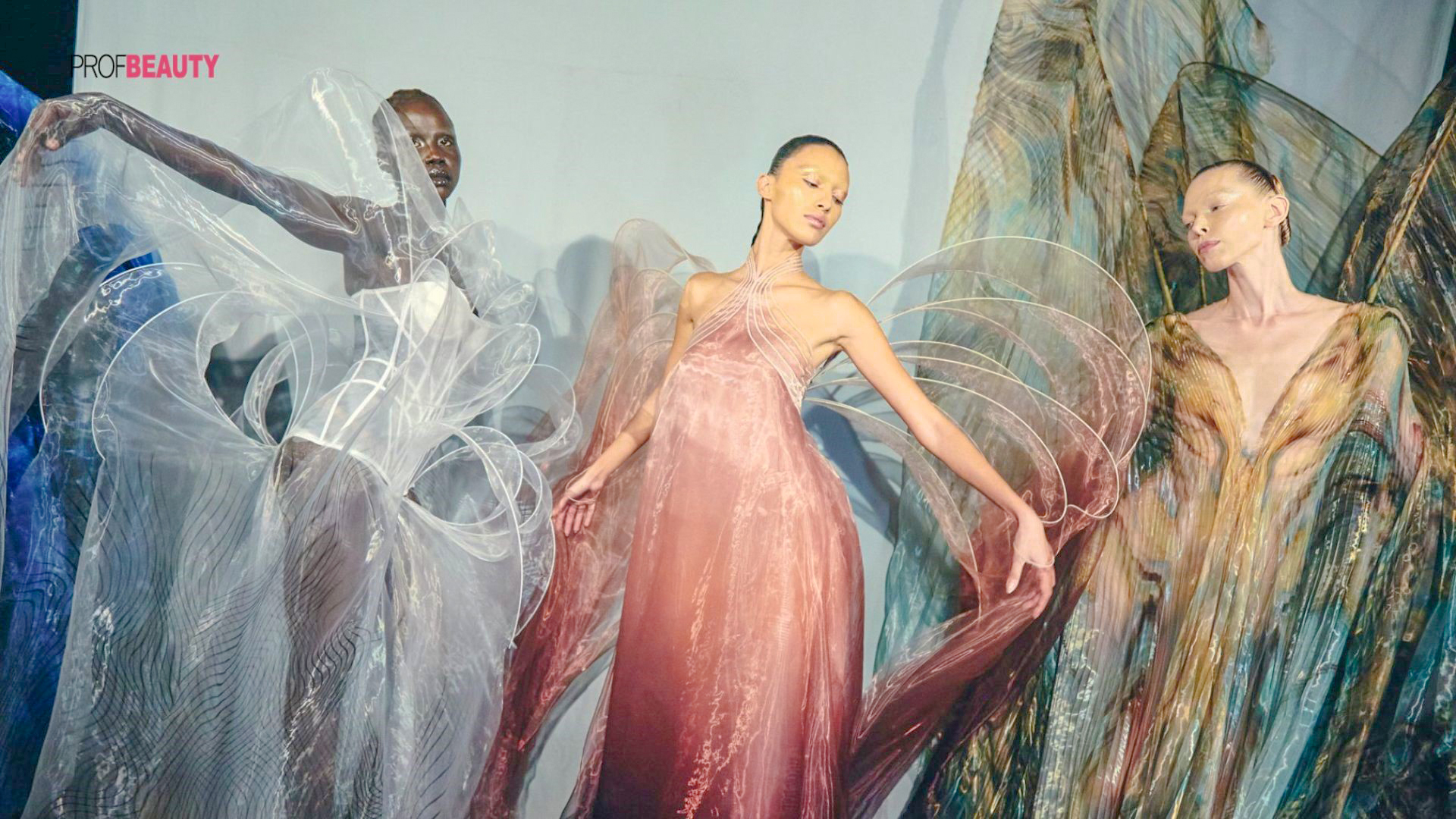
“Air fabric” is currently used primarily in haute couture, where aesthetic value and artistic concept take precedence over commercial considerations, therefore not yet suitable for ready-to-wear fashion due to technical challenges. Nevertheless, Iris van Herpen has opened new approaches to high-end fashion materials through experiments in biodesign and technologies such as laser cutting, 3D printing, micro-adhesives, and light manipulation. These ultra-light materials create interactive effects with space and light, imbuing garments with a sense of “life” and pointing toward the future of fashion.