

During the final two months of 2025, Vinatex’s IT and Digital Transformation Department conducted surveys on digital transformation efforts at key member units. The results showed that IT systems at many units remain fragmented, with limited connectivity and data synchronization, creating challenges for software integration. Except for a few units that have implemented ERP systems relatively comprehensively – such as Hoa Tho Textile-Garment JSC, Hue Textile Garment JSC, and the Group’s Head Office, most units lack sufficient IT personnel and have not adequately invested in production and business management software to establish an integrated ERP platform capable of real-time data consolidation to support management and decision-making. In addition, data backup and security practices remain limited, while investment budgets for IT and digital transformation have yet to receive adequate attention.
The Group’s leadership assessed that limitations in IT infrastructure and digital transformation across member units mainly stem from shortages of human resources and funding, as well as difficulties in data standardization. In response, the Group will establish a Digital Shared Service Center (DSSC) to invest in shared data platforms, deploy ERP – MES – AI systems, and standardize solutions for rollout across key member units. This approach will enable the units to focus on production while reducing investment risks. Vinatex will develop a four-layer digital architecture framework comprising: Digital infrastructure and cybersecurity; Data and core platforms; Applications and operational processes; Interaction channels for performance measurement, along with a digital governance service model based on a two-dimensional service matrix – (by industry segment Spinning – Weaving/Dyeing – Garment); by function Finance & Accounting, Human Resources, Production, Customer and Market). At the same time, internal policies will be established to govern the design, development, and deployment of digital products, ensuring consistent implementation from the Parent Company to key member units utilizing the Group’s digital governance services.
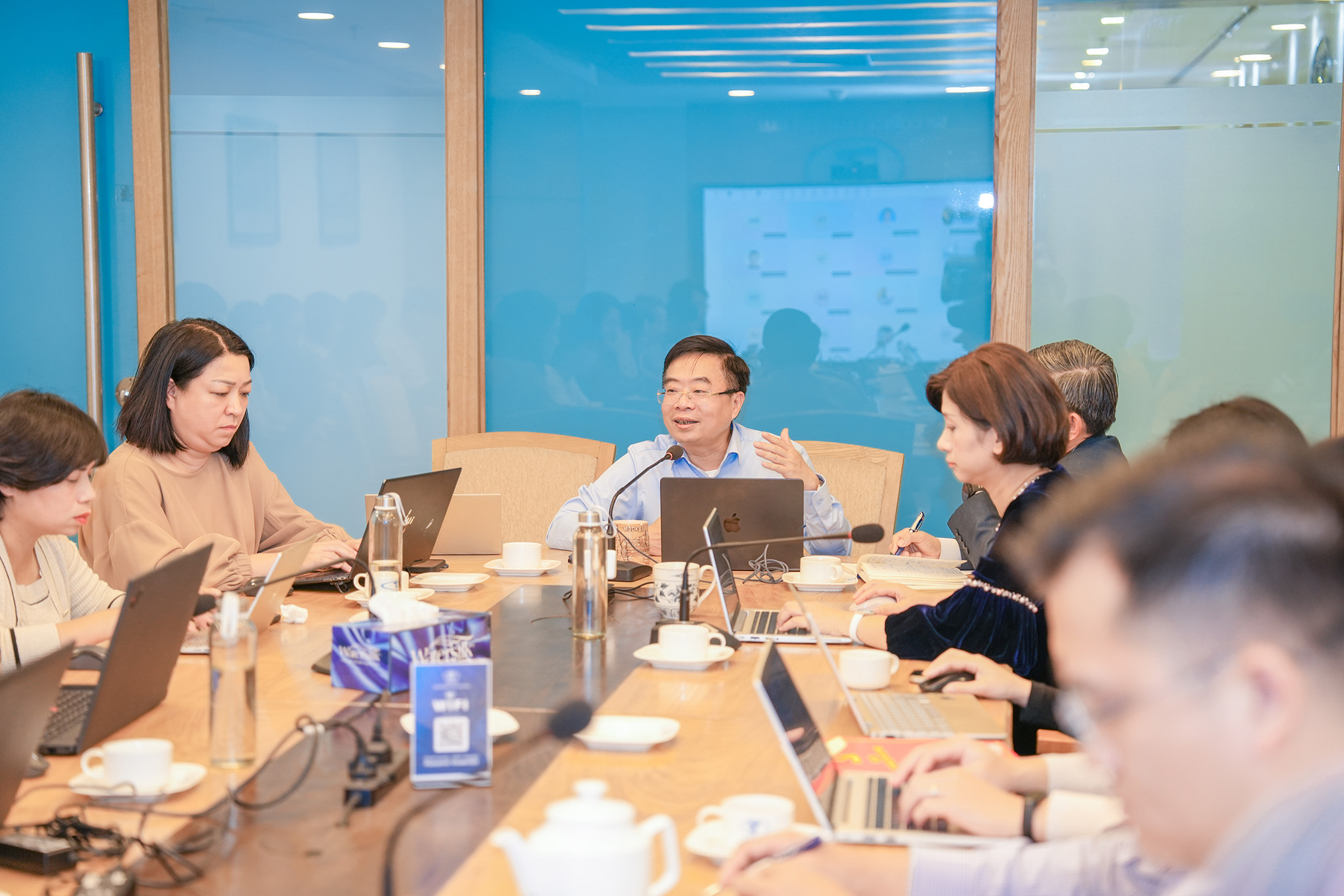
The Chairman of the Board of Directors of Vinatex – Mr. Le Tien Truong, agreed with the project team’s proposal on the four-layer digital architecture framework and the digital governance service model as the overall orientation for the Group’s digital transformation strategy. However, it is necessary to clearly define the scope of system implementation during the 2026 – 2030 period, specify target units, and assess the execution capacity of both the Group and its member units. Appropriate approval – supervision – and support mechanisms must also be established to overcome the shortcomings of earlier stages, particularly fragmented implementation and insufficient decentralization.
Regarding policies for managing the operation of the Group’s digital transformation system, it is necessary to fully assess the level of impact on strong member units that have proactively implemented digital transformation in advance. Based on this assessment, a decentralized approach should be established for applying the digital transformation strategic model, consisting of 2 groups: (1) Proactive and capable units, which independently propose and implement their initiatives, with the Group limited to approving proposals and supervising implementation; (2) Units not yet capable of implementing digital transformation, for which the Group will provide direct direction and implementation, including investments in equipment, software, and integrated digital transformation solutions in accordance with the approved master plan.
For the Functional Departments, it is necessary to review and standardize concepts, definitions, and data elements requiring digital transformation to complete the Group-wide digital data architecture framework. At the same time, Departments should identify their digital application needs and priorities and assess whether to develop solutions in-house or engage external partners based on effectiveness analyses, to avoid duplication and system fragmentation. Priority should be given to integrating functions into a single core platform, gradually forming a “One Vinatex App”, with separate applications developed only when specific technical requirements make this necessary.

The Four Pillars of the Digital Transformation Program
With the overarching strategic goal of becoming a one-stop destination for comprehensive green fashion solutions for corporate customers, Vinatex has identified 4 core pillars for its digital transformation program, including:
Customer and Market
Production Capacity Management
Finance, Accounting, and Governance
Human Resource Management
Based on these pillars, the Group is gradually applying information technology across areas ranging from production management to finance and accounting, human resource management, and customer and market governance, thereby enhancing overall management capabilities at both the Group level and across member units. With more than 30 member companies and diverse ownership structures, establishing a digital transformation, ready operating model at each unit is essential to enable the Group to determine an appropriate and effective transformation pathway.
Vinatex is focusing on implementing digital transformation across its key production and business sectors, including Spinning, Weaving, Dyeing, and Garment manufacturing. In the Spinning sector, the Manufacturing Execution System (MES) – a critical component of the Enterprise Resource Planning (ERP) data infrastructure – has been deployed since 2021. The system has since been upgraded and expanded to 7 units across all three regions of the country, integrated with modern production equipment and automation solutions, as well as IoT technologies for real-time data collection. In the Garment sector, several enterprises have adopted digitalization across operations ranging from warehouse management and line balancing to real-time productivity monitoring, using tools such as QR codes and RFID, thereby improving operational efficiency.
These projects have delivered tangible and practical results in production and business operations across member units: comprehensive, accurate, transparent, and timely data repositories that enable leaders to make well-informed and timely decisions.
The Group has also determined that digital transformation must be integrated with the transformation of management models and the development of human resources in order to achieve maximum effectiveness across 4 key dimensions:
(i) Resource organization;
(ii) Human resource training and development;
(iii) Work management and compensation policies
(iv) Operating models and the delivery of human resource management services.

In the coming period, the textile and garment industry will benefit from opportunities arising from global supply chain shifts from competing markets, particularly China to Vietnam. The green fashion trend opens opportunities for higher value-added products. Digital transformation serves as a key solution to improve efficiency, reduce resource consumption, and optimize costs. Leveraging the advantages of a fully integrated value chain (Spinning – Weaving/Dyeing – Garment) creates significant competitive strength, growing domestic market demand.
However, the industry also faces substantial challenges, including price competition from countries such as Bangladesh, China, and India; rising labor and energy costs; increasingly stringent environmental and sustainability requirements; heavy reliance on imported raw materials; a lack of high-tech, high value-added yarn products; and uneven management systems, with digital transformation implementation remaining slow and insufficiently integrated.
During the 2025–2030 period, Vinatex aims to restructure itself around a digital mindset, with digital technologies and AI as the foundation, while accelerating technological and product innovation to create new competitive advantages. The focus will be on data integration, expanded adoption of Industry 4.0 technologies, and value-chain linkages, moving toward smart governance as well as green and sustainable production, thereby strengthening the Group’s position in the global supply chain. In the short term, the Group is prepared to forgo part of its financial returns in order to invest in digital transformation and workforce development, with the specific strategies and implementation plans of each enterprise serving as the decisive factor for success.
By: Nguyen – Cao