
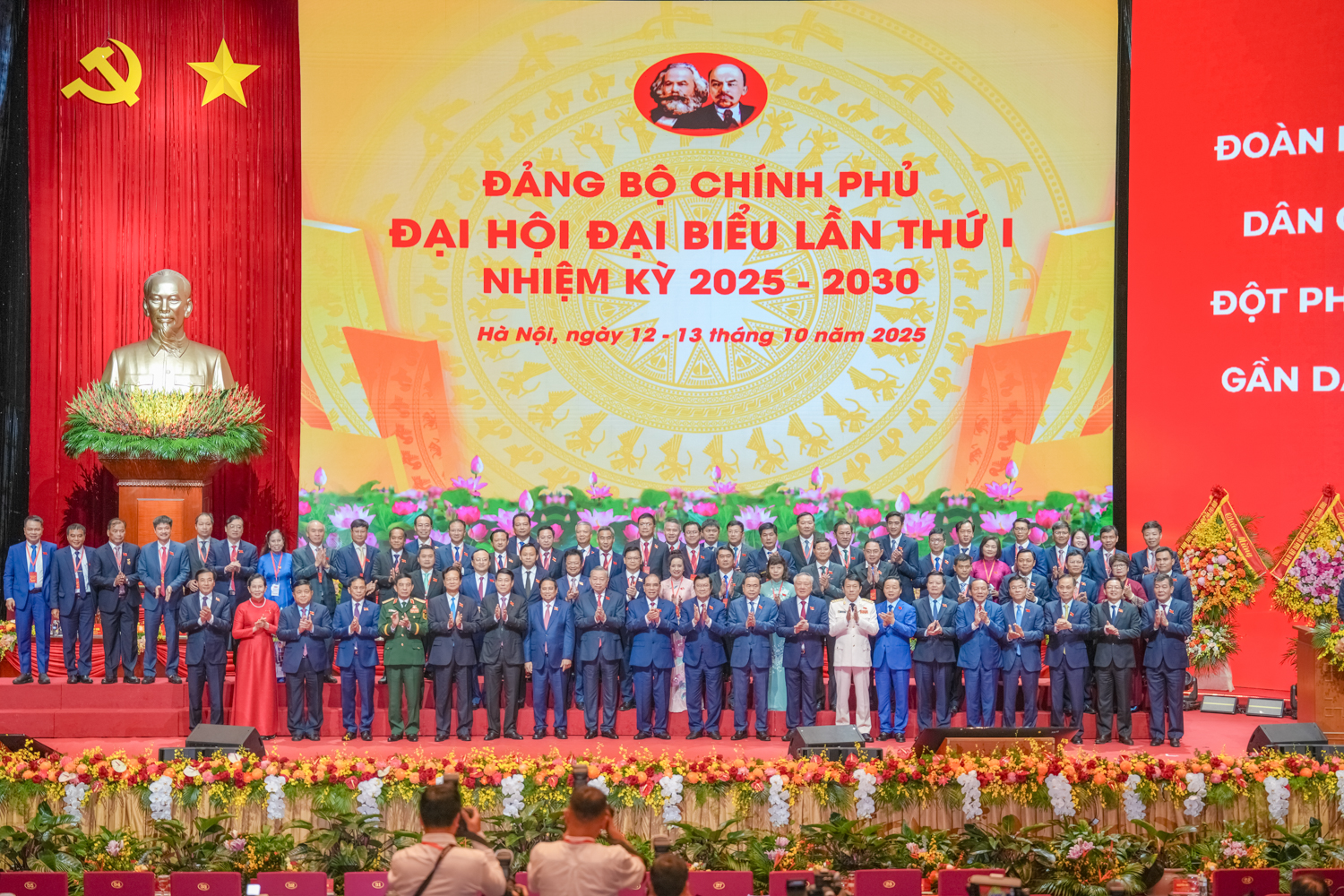
Over 2 days, 12th and 13th of October, the first Party Congress of the Government for the 2025-2030 term carries the theme: “Building a clean and strong Government Party organization; united, exemplary in leading science, technology, innovation, digital transformation; accelerating breakthroughs for rapid and sustainable national development in an era of rising, wealthy, civilization, prosperity, and happiness”. The Congress’s motto is: “Solidarity and discipline – Democracy and innovation – Breakthrough for development – Close to the people, for the people.”
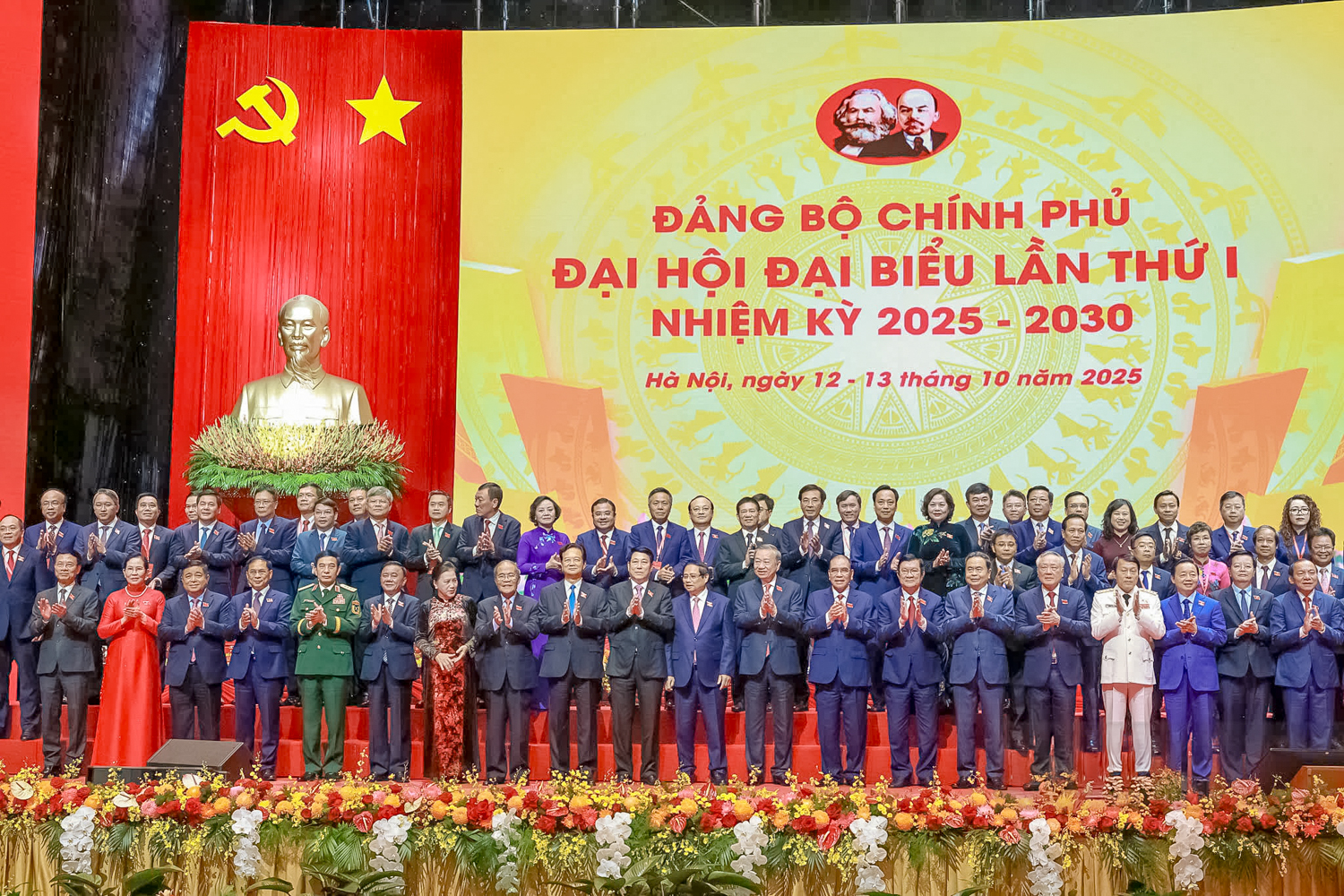
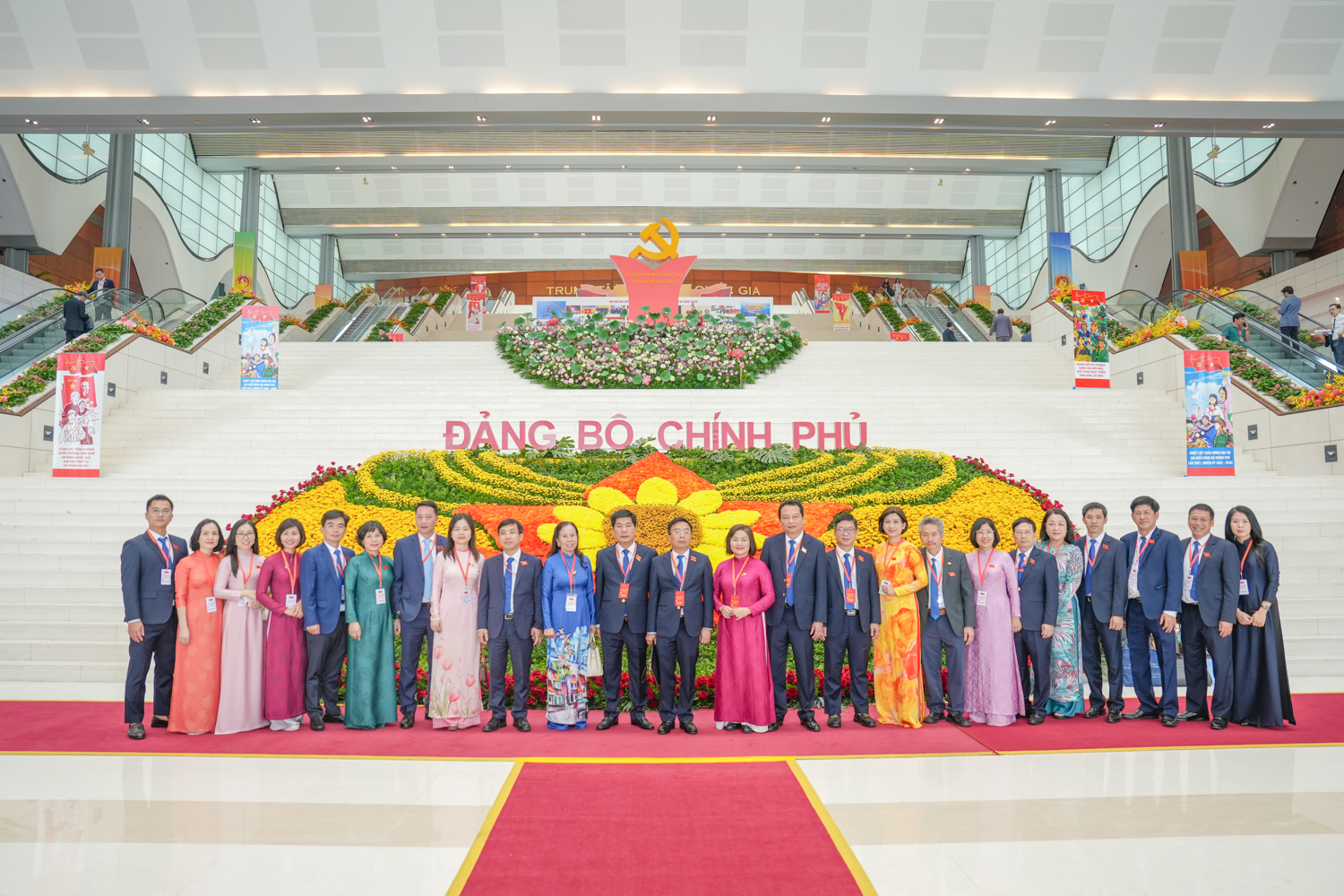
A total of 453 official delegates attended the Congress (including 60 ex officio delegates, 157 appointed delegates, and 236 elected delegates). The official delegation from the Party Committee of the Vietnam National Textile and Garment Group (Vinatex) consisted of 5 members, led by Party Committee Secretary Le Tien Truong. Also attending the Congress were invited guests, who are members of the Executive Committee of the Vinatex Party Committee.
Stated at the Congress, Comrade Pham Minh Chinh, Member of the Politburo, Secretary of the Government Party Committee, and Prime Minister, emphasized that during the 2020–2025 term, despite a global and regional context marked by rapid, complex, unpredictable, many of which were unprecedented and beyond forecast, thanks to the unity and determination of the entire political system, the business community, and the people of the country, under the leadership of the Party and with the support of international friends, Vietnam has achieved significant, comprehensive, and outstanding accomplishments across all fields. The nation is expected to meet and exceed 22 out of 26 socio-economic targets set for the 2021–2025 period, including the full completion of all social targets. For the years 2024–2025, Vietnam is projected to achieve and surpass all 15 key socio-economic indicators. Regarding economic growth target, although the rate in 2021 was only 2,55% due to the impacts of the COVID-19 pandemic, the average growth for the 2021–2025 period is still estimated to reach 6,3%, close to the target range of 6,5%–7%.
Economic growth has remained positive, ranking among the highest in the region and the world. Vietnam’s GDP has expanded from USD 346 billion in 2020, ranking 37th globally, to an estimated USD 510 billion in 2025, increasing 5 levels to 32nd in the world and 4th in ASEAN.
Implementation of the three strategic breakthroughs has yielded many remarkable results. There has been a strong shift in the mindset toward law-making and enforcement, accompanied by greater decentralization and delegation of authority, with a focus on removing bottlenecks and unlocking resources for development.
The Congress set the goal that by 2030, Vietnam will become a developing country with a modern industrial base, upper-middle income, GDP ranking among the top 30 economies in the world, 3rd within ASEAN. The economy is expected to a high growth rate during the 2026–2030 period.
Vietnam aims to build a dynamic, rapid, and sustainable economy, ensuring major macroeconomic balances. The legal framework and governance institutions will be modern, competitive, efficient, and effective; infrastructure will be fundamentally modern and well-integrated; comprehensively developed human resources. The level of science, technology, and innovation will rank among the leading countries with upper-middle income. The average annual GDP growth rate is targeted to reach 10% or higher, with GDP per capita expected to reach approximately USD 8.500 by 2030.
The Congress was honored to welcome Comrade General Secretary To Lam, who attended and delivered a directive speech. On behalf of the Politburo and the Secretariat, the General Secretary warmly commended, acknowledged, and praised the significant achievements that the Party Committee of the Government attained during the 2020–2025 term.
The General Secretary emphasized that the global situation continues to evolve rapidly and unpredictably, marked by epochal changes; opportunities and challenges are intertwined, yet challenges outweigh opportunities. Our country is undergoing a historic period of transformation, with the implementation of a two-tier local government model; restructured development landscap; with numerous strategic policies, orientations, and breakthrough initiatives now being implemented.
This is the time for us to seize the opportunity and leap forward, harnessing Vietnamese intelligence in combination with the advanced knowledge of humanity, to swiftly establish a state of “strategic autonomy.” We must make every effort to achieve and maintain a high and sustainable growth rate, successfully realizing the nation’s two centennial strategic goals. The responsibility placed upon the Party Organization of the Government is therefore enormous, as it serves as the core and pioneering force in implementation. This must be carried out in the following spirit: First, all actions must serve the interests of the nation and the people; Second, closely follow the leadership of the Party, and listen attentively and promptly to the legitimate aspirations of the citizens; Third, promote the role of unity across society, inspire and mobilize the maximum possible resources both domestically and internationally for national development.
The General Secretary emphasized and outlined 3 key requirements and 5 major directions for the Party Organization of the Government in the 2025–2030 term as below:
3 key requirements:
First, there must be a unified understanding and a clear determination of the goal — to lead the nation steadily into an era of prosperity, affluence, civility, and happiness.
Second, greater efforts and stronger aspirations; enhanced forecasting, leadership, and governance capacities; along with fostering innovation in state management. It is essential to break away from old patterns and outdated thinking, formulating practical directions, tasks, and solutions — all for the economic, cultural, and social development of the nation, with the final goal of improving the material well-being, spiritual life, and happiness of the people.
Third, building a team of officials and civil servants who are “competent, visionary, and virtuous”; strong political will, integrity, a strong sense of responsibility, and the courage to think, act, take responsibility, and face difficulties and challenges. The mindset must shift from administrative management to public service orientation; from merely “fulfilling responsibilities” to “delivering tangible results”. There must be mechanisms and policies that motivate and protect those who dare to innovate for the common good, ensuring that state agencies and the Government do not become safe havens for the incompetent or those afraid of confrontation.
5 major directions:
First: The Party Committee of the Government holds a special position within the political system, where brings together the nation’s strategic-level leaders and managers — directly responsible for translating, institutionalizing, and implementing the Party’s guidelines and policies through the laws, mechanisms, and policies of the State.
Therefore, the Party Committee of the Government must serve as an exemplary model of political courage, intellect, innovation, and public integrity; a center of unity — aligning will and action across the entire state administrative system. It must continue to build a truly clean, strong, and disciplined Party organization at all levels; resolutely combat corruption, wastefulness, and negative practices under the motto: “no dark zones, no gray areas,” “no blind spots,” and “no exceptions.”; building a capable and upright officials and Party members — especially leaders — who are equal to their responsibilities, and on building a Government that is “development-oriented, upright, decisive in action, and wholeheartedly serves the people”.
At the same time, continue to refining the internal organizational structure of government agencies; reviewing and updating working processes and regulations; and clearly defining functions, responsibilities, and coordination mechanisms to ensure smooth, efficient operations and overcome delays or entangled in delegation and decentralization. The effectiveness of the Government’s operations serves as the true measure of the capacity, and fighting spirit of the Party Committee of the Government.
Secondly: Focus on economic growth, maintaining macroeconomic stability, controlling inflation, and ensuring major economic balances. The goal for the 2026–2030 period is to achieve double-digit growth. Implement monetary and fiscal policies in a flexible and effective manner; remove bottlenecks and obstacles to business and production; unlock traditional growth drivers while creating breakthroughs in new ones (digital economy, green economy, and circular economy). Resolving long-standing projects and addressing weak banks to ensure the health and sustainability of the financial–economic system.
Establish a new growth model that ensures rapid yet sustainable development, with science, technology, innovation, and digital transformation serving as the main driving forces; gradually achieve technological self-reliance, especially in strategic technologies. Vigorously develop the domestic market while expanding and diversifying international markets, linking this with improving product quality and deeper, broader participation in regional and global supply chains; direct local authorities to decisively address issues such as flooding and environmental pollution that affect people’s livelihoods, socio-economic development and to develop more proactive and systematic plans for responding to storms and natural disasters.
Third: Focus on implementing 3 strategic breakthroughs (institutions, infrastructure, and human resources). Institutions must become a competitive advantage, unleashing productive capacity and unlocking all development resources; shorten and simplify administrative procedures, promote innovative entrepreneurship, and improve the investment and business environment.
Invest in completing strategic infrastructure (transportation, seaports, high-speed railways, and urban rail systems); research and implement programs to effectively utilize outer space, marine, and underground spaces, creating new opportunities for economic growth. Develop energy infrastructure to meet the demands of economic expansion and ensure energy security. Invest in the construction of major national projects in culture, sports, education, and healthcare with regional and international significance.
Consistently and resolutely uphold the principle that education and training are the nation’s “top priority”; building a modern national education system on par with regional and global standards, ensuring clear improvements in quality across all levels of learning. Focus on developing and valuing talent, training a high-quality workforce that meets the demands of scientific and technological advancement, innovation, and national digital transformation. Promote the application of science, technology, innovation, and digital transformation in all socio-economic sectors, as well as within government institutions and the business community.
Fourth: Promote cultural development in harmony with economic and social progress; ensure the well-being of the people so that no one is left behind; and build a civilized, united, and progressive society. Advance social progress and equity; improve the quality of healthcare and social welfare; place emphasis on ethnic and religious affairs, gender equality, and holistic human development. Manage and use natural resources efficiently, protect the environment, and proactively adapt and respond to climate change.
Fifth: Ensure national defense and security while enhancing the effectiveness of foreign affairs and international integration. Strengthen defense and security capabilities; firmly safeguard national independence, sovereignty, unity, and territorial integrity; and maintain political stability and social order. Implement foreign affairs and international integration activities in a comprehensive and effective manner to consolidate and elevate Vietnam’s international reputation and standing. Preserve a peaceful and stable environment for national development.