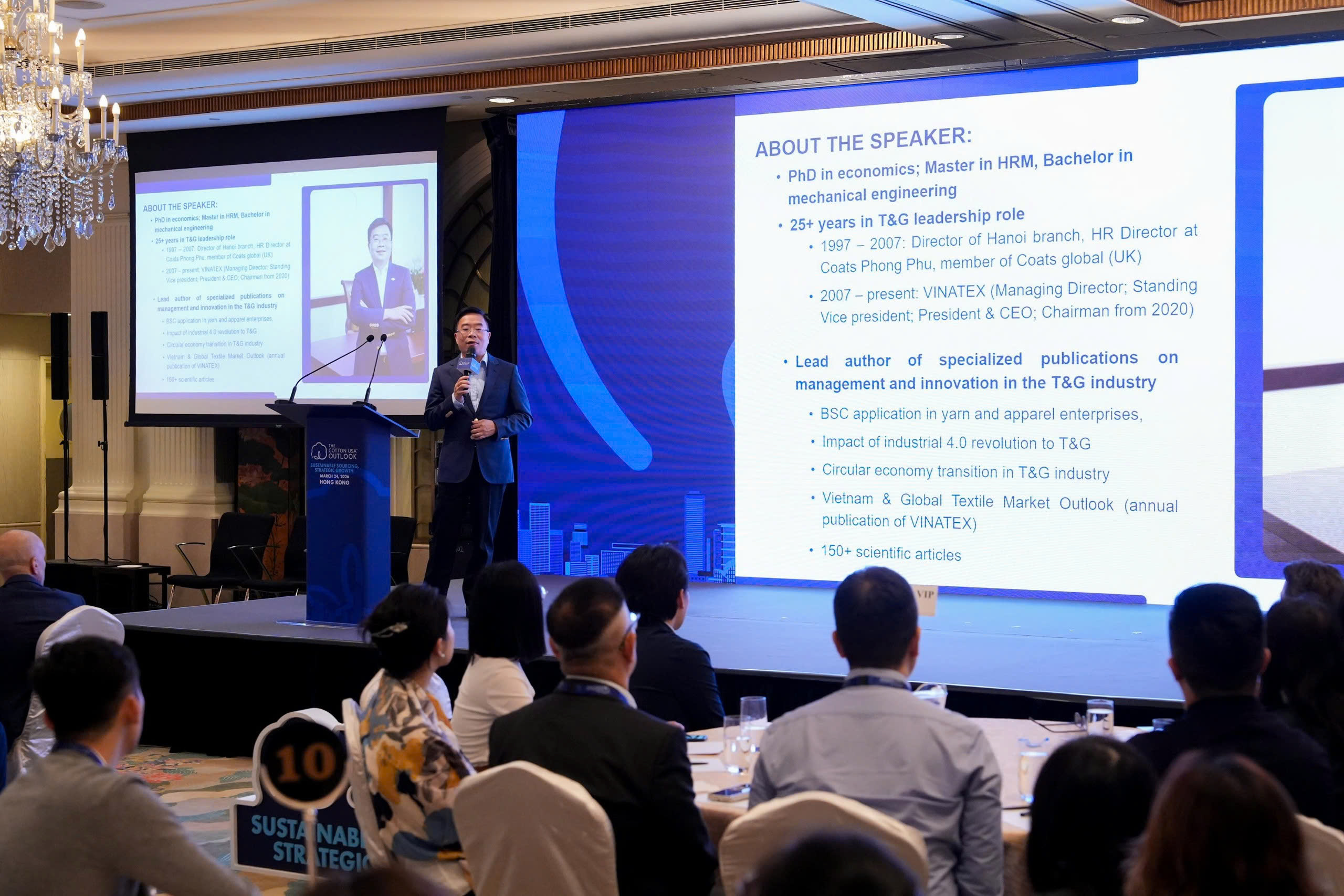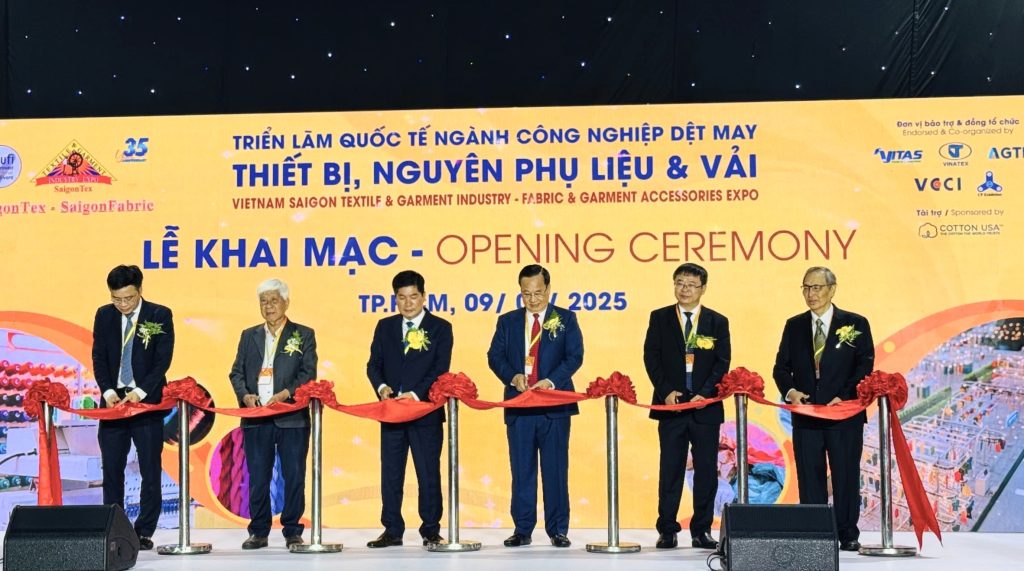

Mr. Cao Huu Hieu, General Director of the Vietnam National Textile and Garment Group (Vinatex), stated that despite the impacts of U.S. tariff policies, thanks to strong management quality, agile leadership, and the unity and determination of its member units, Vinatex successfully achieved its 2025 profit target within the first 9 months and maintained its growth momentum for the entire year of 2025.

On the occasion of Vietnam Entrepreneurs’ Day (13th October), Vietnam Textile and Fashion Magazine had a conversation with Mr. Cao Huu Hieu – Deputy Secretary of the Party Committee, Member of the Board of Directors, and General Director of the Vietnam National Textile and Garment Group (Vinatex) – to discuss this achievement.
* Mr. General Director, could you please share your insights on the current market demand for the textile and garment industry, based on Vinatex’s forecasting and market surveys conducted in several key textile and garment markets?
Since the Covid-19 pandemic, the textile and garment market has experienced complex and unpredictable developments. In addition, the new U.S. tariff policies have had a direct and adverse impact on Vietnam’s textile and garment industry in general, and on the Group’s member enterprises in particular. In response, Vinatex has organized multiple working delegations to key markets such as the United States, the European Union, Japan, and China to closely monitor changes in demand, consumption trends, and explore new opportunities for cooperation.
The early months of 2025 have shown positive signs of export growth as the U.S.–China trade war have eased and consumer demand has begun to recover. Vietnam’s textile and garment export turnover in the first 8 months of the year increased by about 7% compared to the same period last year. However, overall, global demand for textile and garment products has not yet returned to pre-pandemic levels. Inflation and high living costs continue to make consumers in many countries tighten their spending on non-essential goods.
Notably, after the U.S. relatiatory tariff policies officially took effect, purchasing power in this market declined sharply, with orders for many enterprises dropping by 20–30%. According to our assessment, the fourth quarter of 2025 may see a more pronounced slowdown in textile and garment demand in the U.S., due to the combined effects of the new tariff policies and excessive ordering during the first half of the year. This poses a major challenge, as the U.S. remains the largest export market for Vietnam’s textile and garment industry, accounting for more than 40% of the sector’s total export turnover.
* Mr. General Director, how has the U.S. “tariff storm” impacted textile and garment enterprises?
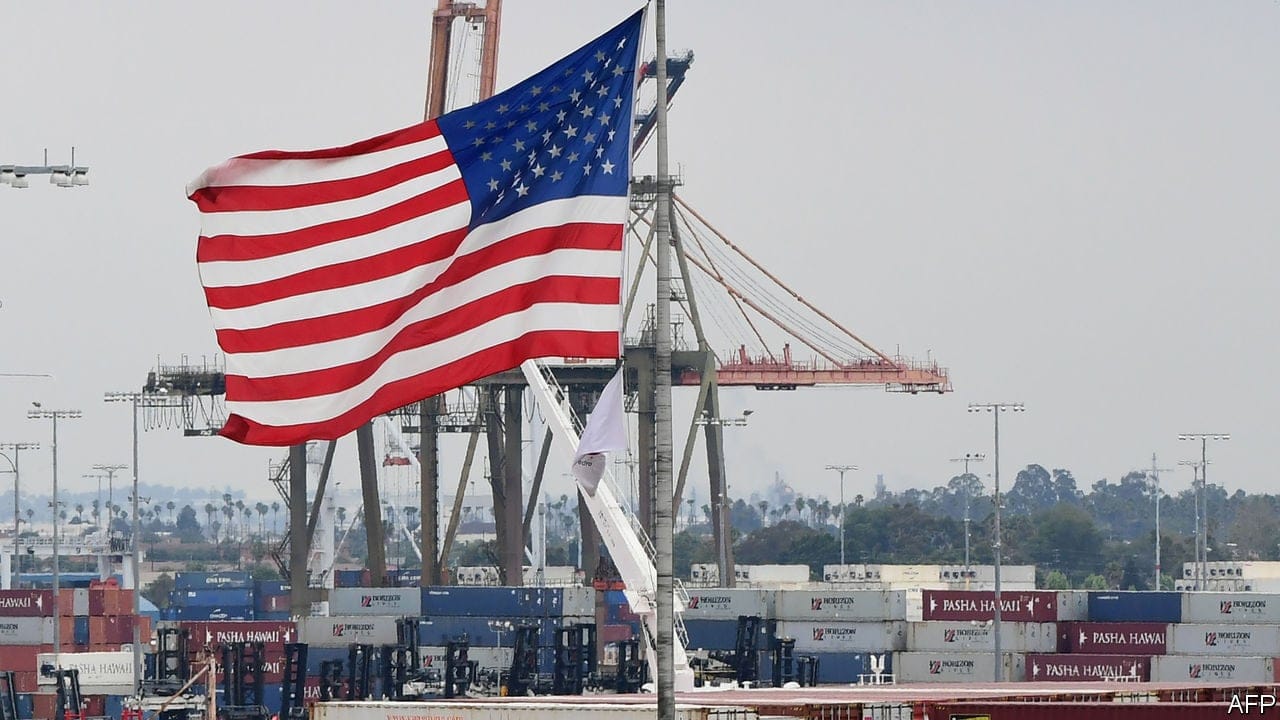
As I mentioned earlier, the United States is currently the largest export market for Vietnam’s textile and garment industry. Therefore, the imposition of a 20% countervailing tariff has had a direct and immediate impact on the operations of enterprises in the sector. At this tax rate, Vietnam loses its competitive edge compared to other textile-exporting countries. In particular, the specific regulations on “transshipment” could pose even greater challenges if goods from Vietnam become subject to additional tariffs.
The actual impact has been a sharp decline in orders. The tariff increase has raised the prices of goods exported to the U.S., while high inflation has led consumers to cut back on spending. Although Vinatex’s research and surveys indicate that retail prices of textile and garment products in the U.S. have remained largely unchanged, the pressure of rising living costs has clearly caused a significant drop in fashion purchasing demand. In addition, customers have become increasingly cautious, placing shorter-term orders due to the ongoing uncertainty surrounding U.S. tariff policies.
Alongside the decline in demand, processing prices have also fallen sharply due to competitive pressures and customer requests to share part of the additional costs resulting from the newly imposed countervailing tariffs. This has led to a significant decrease in profit margins for textile and garment enterprises.
In the first 9 months of the year, the impact of the tariffs was not too severe, as customers had accelerated their orders before the tariffs took effect. However, at this point, the impact of the policy has fully “set in” for Vietnamese enterprises in general, and for Vinatex in particular. In previous years, this period would typically mark the peak season, with most units having secured orders through the end of the year — and even into the first quarter of the following year. This year, however, most orders are being placed on a monthly basis, and some enterprises do not even have enough orders to cover production for November 2025.
For Vinatex, thanks to early market monitoring, accurate forecasting, and flexible response measures, the negative impacts have been significantly mitigated. As soon as the U.S. temporarily postponed the countervailing tariffs in April 2025, the Group launched the “90 Days Sprint” campaign to seize the opportunity to complete second-quarter orders and sustain the growth momentum carried over from late 2024.
The results for the first 9 months of 2025 have been very positive: revenue reached nearly VND 15.000 billion, fulfilling 80% of the annual plan and equaling 110% of the same period last year; pre-tax profit was around VND 1.040 billion, achieving 114% of the yearly target and doubling that of the same period last year. If this momentum continues, Vinatex could approach a profit of VND 1.400 billion — matching the record level achieved in 2021, the highest in the Group’s 30-year history.
* How do you assess the competitive capacity of Vietnam’s textile and garment industry within the global value chain?
The textile and garment industry is one of Vietnam’s key export sectors, ranking third in the country in terms of export value. However, amid increasingly fierce competition and stricter requirements from major import markets, Vietnam’s textile and garment industry is facing significant challenges.
The greatest challenge lies in complying with rules of origin to qualify for preferential tariffs under free trade agreements, and especially in avoiding the risk of U.S. countervailing tariffs on transshipped products. Like many other textile-exporting nations, Vietnam’s textile and garment industry remains heavily dependent on imported raw materials — particularly from China. For example, in the spinning sector, Vietnam imports 100% of its cotton and 90–95% of its fiber materials. In addition, chemicals and dyes are still not domestically produced. This dependency exposes the Vietnamese textile and garment industry to significant risks if the U.S. enforces tariff regulations on products with a high proportion of third-country content, potentially resulting in much higher countervailing duties. Therefore, increasing the localization rate of raw materials and accessories, strengthening production chain linkages, and ensuring transparency in traceability are urgent and essential requirements for the industry.
Another major challenge is upgrading Vietnam’s position within the global textile and garment value chain. At present, Vietnam’s textile and garment industry primarily participates in the manufacturing stage and has yet to make significant progress in high value-added segments such as design, branding, and distribution. The industry has not been able to develop these activities due to limitations in both financial and human resources — particularly the weakness in training professional design teams. In reality, every major fashion brand in the world is backed by a strong design team that not only excels technically but also has the creative vision to define a brand’s style and identity. Building a brand is a long-term process that requires persistence and continuous investment. With the current limited capacity, Vietnamese fashion brands are losing ground even in their domestic market when competing against large international brands with far greater scale and capability. Establishing a Product Development and Business Center that can pool and optimize shared resources across units within the system is therefore extremely necessary — and will undoubtedly generate substantial effectiveness in the long run.
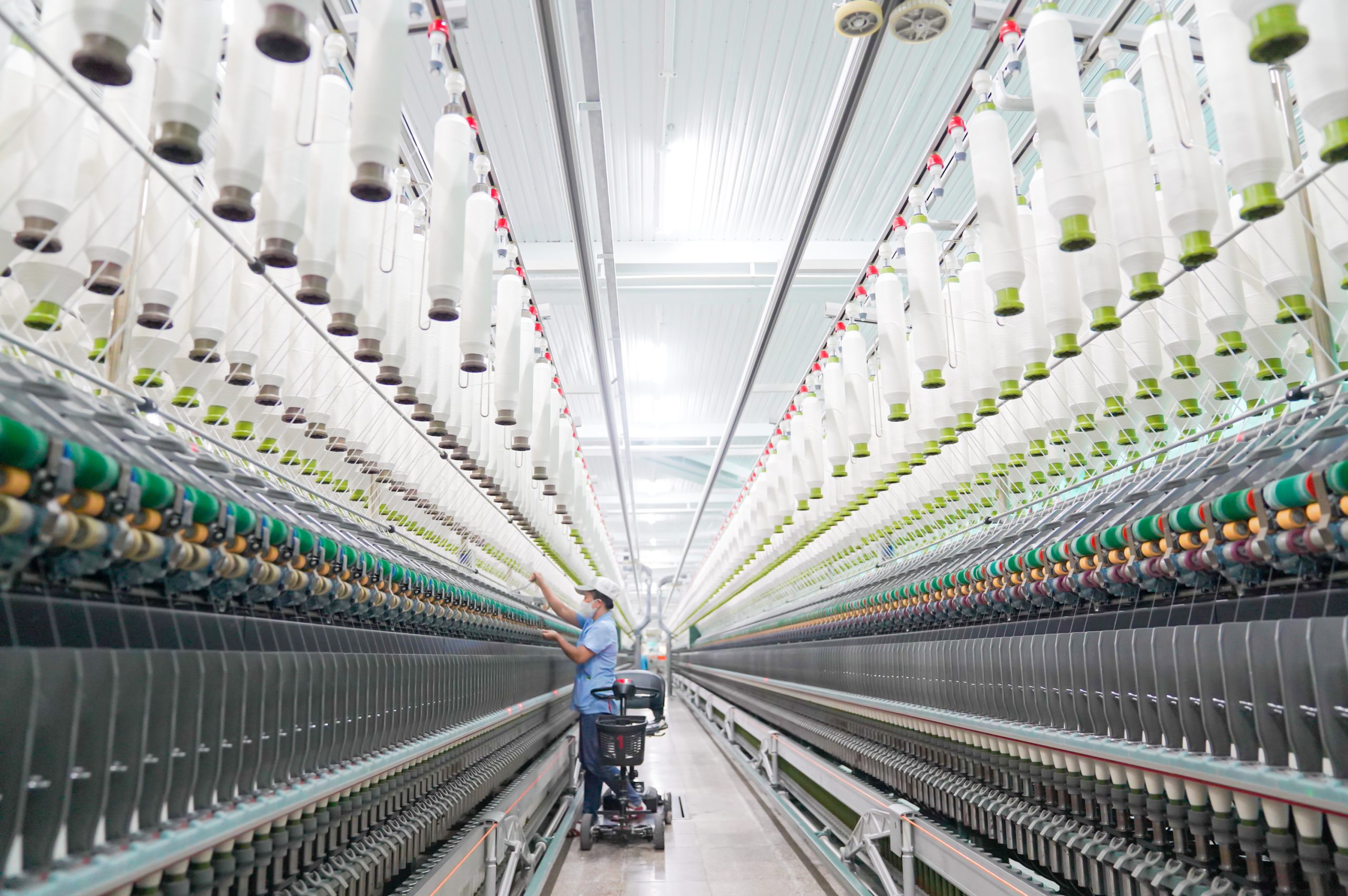
Thirdly, there is the challenge of competitive pressure. Vietnam no longer holds a labor cost advantage compared to many other textile-exporting countries. Large-volume, low-margin basic orders are shifting to nations with cheaper labor. To maintain competitiveness, the industry must enhance overall productivity, invest in modern machinery, accelerate automation, and transform its organizational models and management methods. This will enable a shift toward producing high-end, specialized products with greater added value. This is the inevitable path for Vietnam’s textile and garment industry to sustain its position within the global supply chain.
* Looking back on the challenging journey of recent years and the opportunities that lie ahead, what message would you like to convey to entrepreneurs in the textile and garment industry in particular, and to the Vietnamese business community in general?
In a time when both the country and the world are undergoing profound changes, managing a Group with nearly 60.000 employees has given me a deep sense of understanding and empathy for my colleagues and fellow entrepreneurs, both within our system and across the broader Vietnamese business community. Despite the severe impacts of the pandemic, economic fluctuations, and international trade policies, our enterprises have shown remarkable resilience — sustaining production, securing jobs for millions of workers, and maintaining Vietnam’s strong position within the global supply chain.
I believe it is precisely during these challenging periods that our business leaders have developed resilience, adaptability, and an enduring spirit of innovation. For me, three core values have emerged from this journey:
Be flexible and even more flexible: The world is constantly changing, and it is agility in management that ultimately drives success.
Information and data are the foundation: Every decision must be based on scientific forecasting and a reliable, standardized data system.
Empathy and collaboration: Only through transparent governance and clear, unified communication can the entire system move in the same direction and achieve optimal efficiency.
As entering a new phase, when the world is rapidly shifting toward a green – digital – sustainable direction, this is also an opportunity for Vietnamese businesses to assert a new position for themselves through transforming growth models, investing in technology, and building brands that embody Vietnamese identity. I firmly believe that Vietnamese entrepreneurs have more opportunities now than ever before, as the Party and the State have introduced open and supportive policies that recognize and empower enterprises — especially with the “four pillar resolutions,” which are breakthrough initiatives creating vast development space for the private economic sector.
I hope that the business community in general, and entrepreneurs in the textile and garment industry in particular will continue to uphold the spirit of unity, courage, and innovation, daring to think and act boldly. By doing so, we will not only overcome challenges but also rise to take the lead and make meaningful contributions to the growth of Vietnam’s economy. On the occasion of Vietnam Entrepreneurs’ Day, I would like to extend my warmest and most heartfelt congratulations to the entire Vietnamese business community and to all entrepreneurs in the Vietnam textile and garment industry.
* Thank you very much, Mr. General Director!