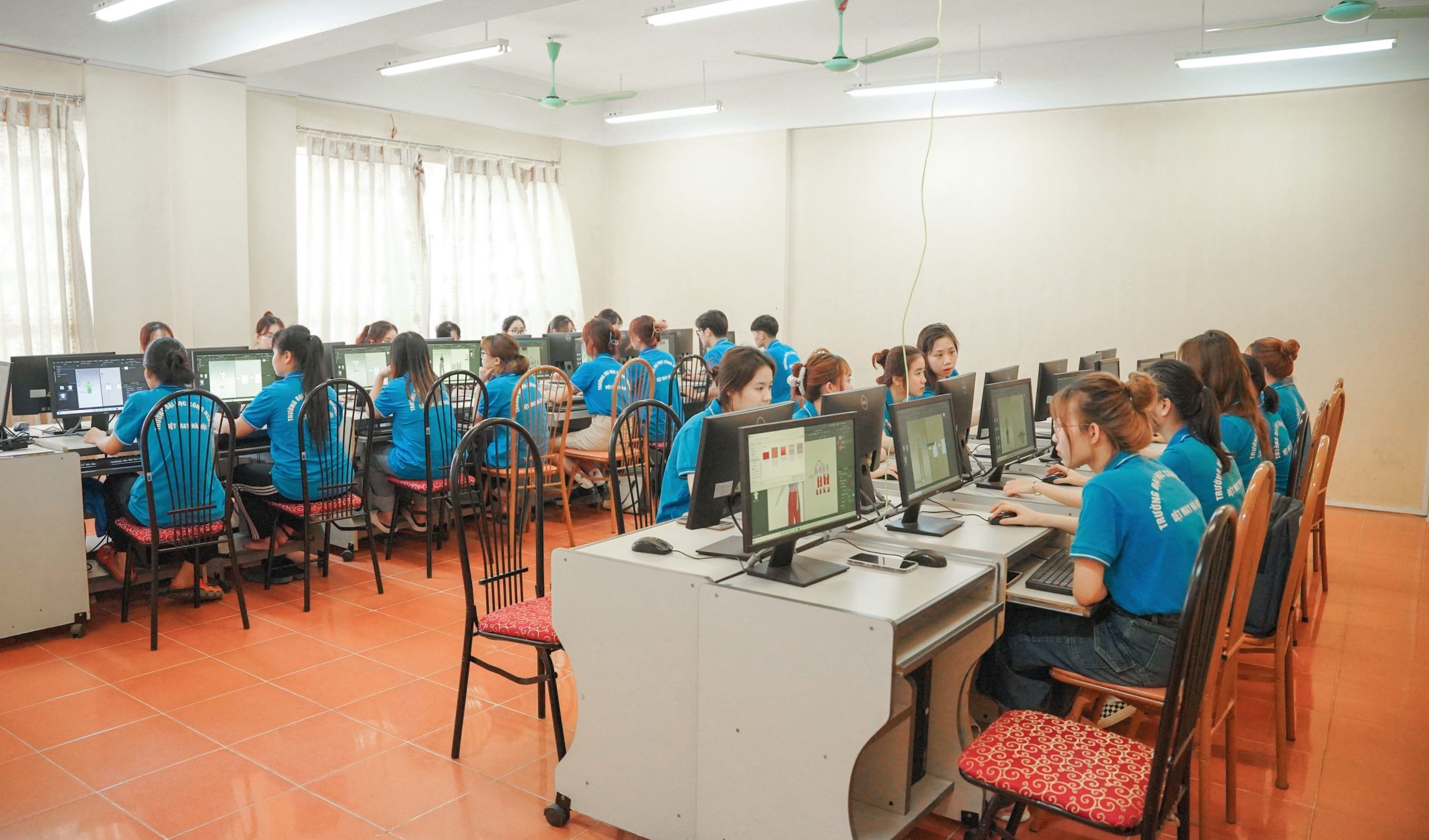

Unlike the modern workplaces of technology companies or the glamour of e-commerce platforms, digital transformation in textile and spinning mills is a quiet, challenging, complex journey but propelled by strong momentum. Here, technology is not only on presentation slides, but measured by the steady rhythm of spinning frames, the precision of every sewing line, and the savings reflected in real numbers.
Visiting factories across the Vietnam National Textile and Garment Group (Vinatex) amid the bustle of production, we could clearly see that digital transformation is no longer a slogan or merely a technology experiment. It has become a matter of survival—a journey that companies must undertake themselves to break away from traditional management models, optimize resources, and strengthen their position in both domestic and international markets.

Recognizing the Challenges
Walking through each production workshop, it is easy to recognize that there is no one-size-fits-all formula or standardized blueprint for digital transformation. Each company has its own characteristics and starting points, creating a colorful and multifaceted picture of digital transformation in practice.
Challenges are tangible when businesses embark on digital transformation. And textile and garment executives — whether taking a pioneering or cautious approach — tend to share a deeper understanding: machinery and software can be purchased with financial resources, but the biggest barriers lie in the workforce’s ability to adapt, the limitations of existing infrastructure, and the difficult balancing act between investment costs and the value actually generated.
Mr. Do Thanh Tung – Deputy General Director of Eight March Textile Company Limited (EMTEXCO), believes that while machinery and equipment can be bought with money, training people and building a corporate culture with a shared awareness and commitment to digital transformation are far from simple. These are the decisive factors determining the success of digital transformation within an enterprise.
Sharing the same view, Mr. Tran Dinh Hiep, General Director of Phu Bai Spinning Mill Joint Stock Company, also emphasizes that technology is merely a supporting tool; people are the key factor to determine success or failure. If workers fail to see the practical benefits or managers do not change their mindset and approach operations, even the most expensive software will remain as a “showpiece.”
According to Mr. Hiep, the factory currently operates a wide range of machinery and technology generations, including four generations of machines: G33 machines from 2001, Chinese-made machines from 2007, G32 machines from 2019–2021, and G37 machines from 2026, along with various types of roving and winding machines. This lack of standardization makes it impossible to directly apply commercially available integrated spinning management software across Phu Bai’s entire system.
Looking at the bigger picture, Ms. Nguyen Thi To Trang, General Director of Vinatex Phu Hung Joint Stock Company, frankly acknowledged that the company is somewhat behind the broader digital transformation curve. Vinatex Phu Hung is taking a cautious approach, prioritizing technology solutions that genuinely fit the factory’s scale and actual operating conditions, rather than chasing the latest technology trends that may have limited practical applicability or exceed the company’s operational capabilities. The key is to carefully balance investment costs against the tangible value generated and to pursue digital transformation in a measured, step-by-step manner.
Solutions Driven by Production and Business Realities
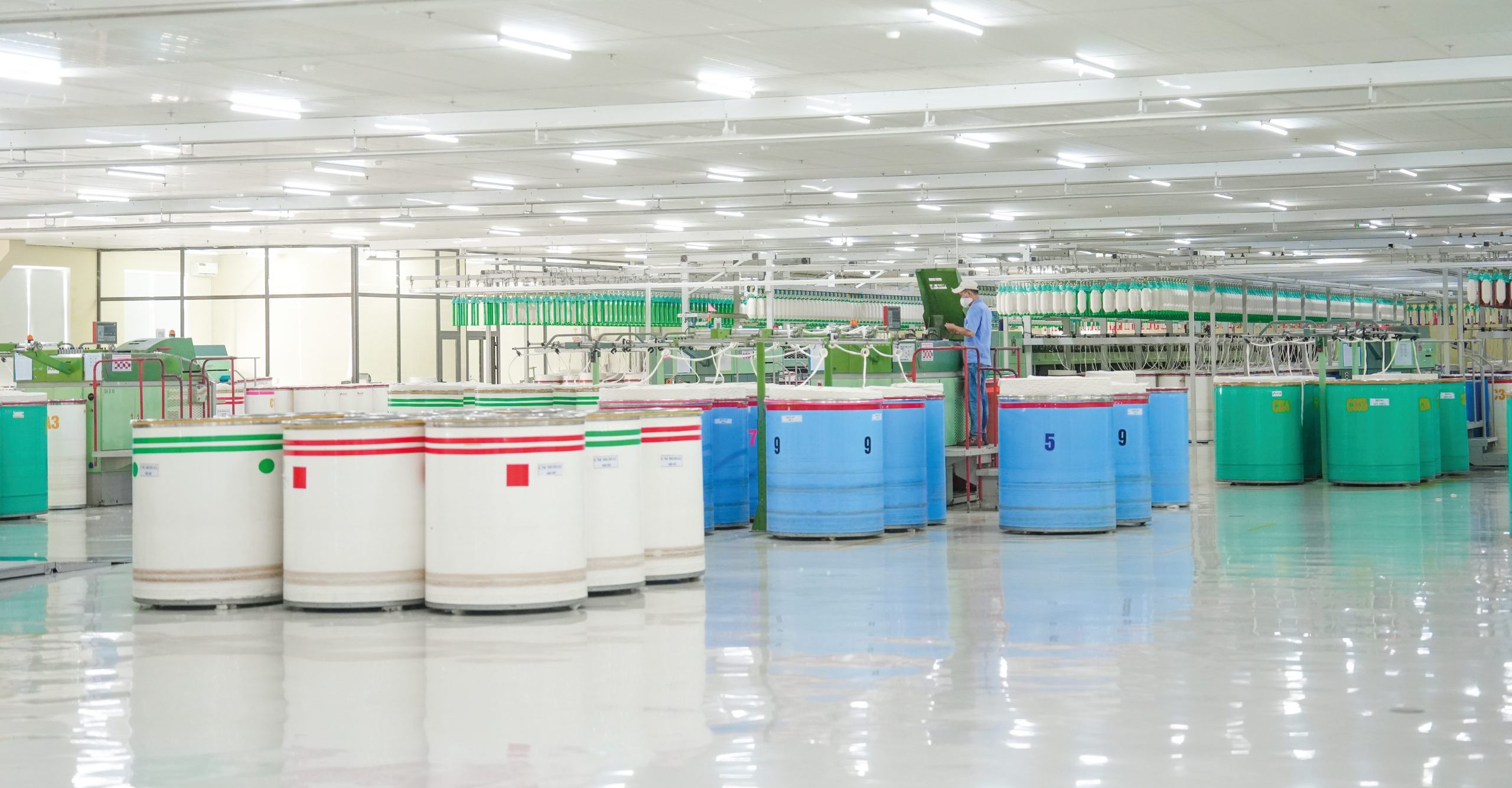
Guided by the leadership’s strategic direction, digitalization initiatives have been translated into dynamic action programs that directly target three key pillars: Production Management – Data Management – People Development.
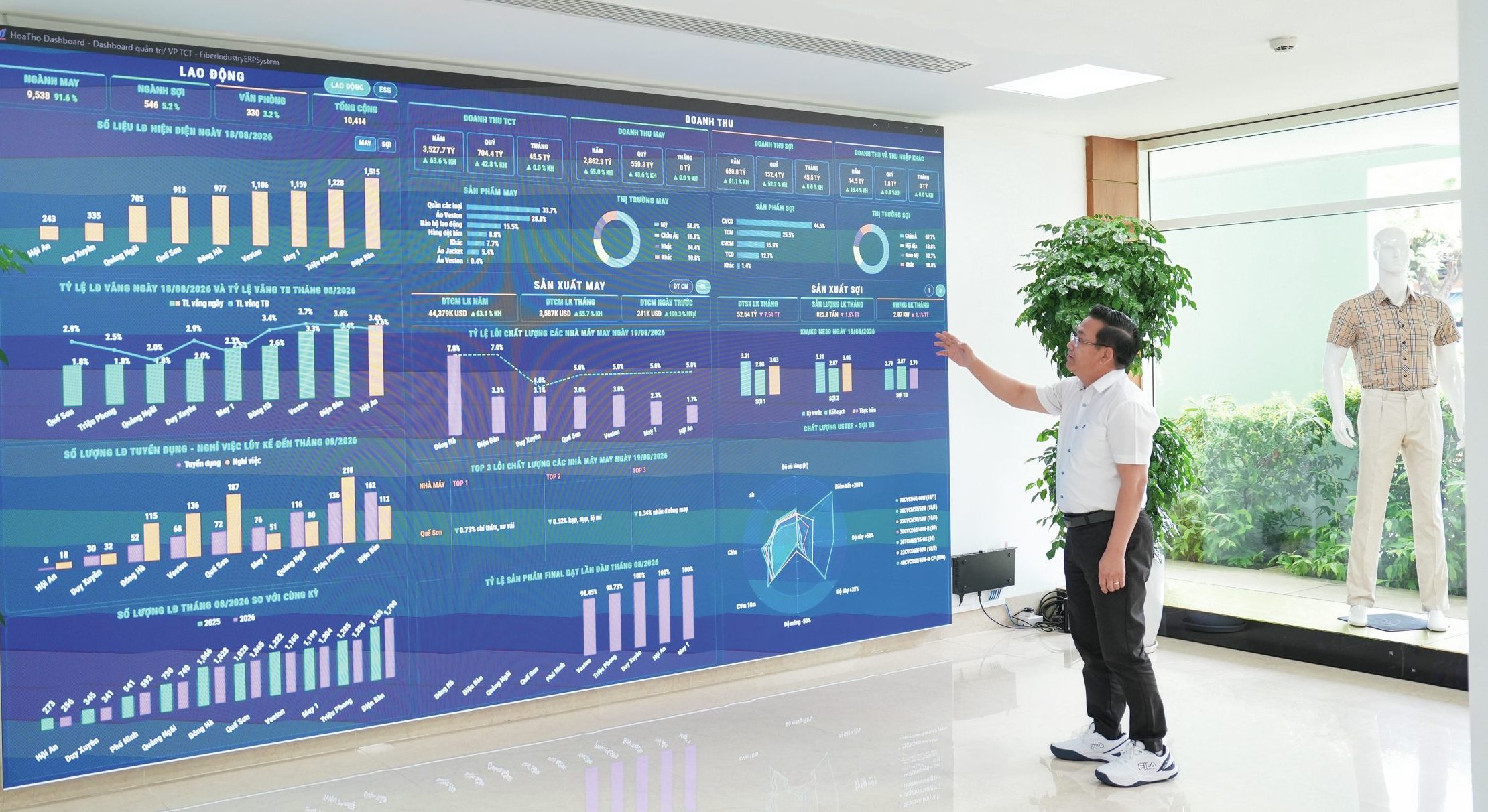
At Hoa Tho Textile and Garment Joint Stock Corporation, General Director Nguyen Ngoc Binh said the company views digital transformation as a strategic tool for comprehensively renewing its management system. Hoa Tho has successfully deployed equipment management software, standardizing information on both active and idle equipment across its investment portfolio. This solution enables assets to be flexibly redeployed among member factories, improving utilization rates and eliminating unnecessary capital tied up in idle assets. In addition, the application of a Manufacturing Execution System (MES) in combination with MFS software has helped fully optimize the cotton mixing stage — a critical process that directly determines yarn quality and production costs in the spinning industry. Hoa Tho Textile and Garment has also established direct data connectivity with overseas partners, linking information on orders, production plans, and manufacturing progress.
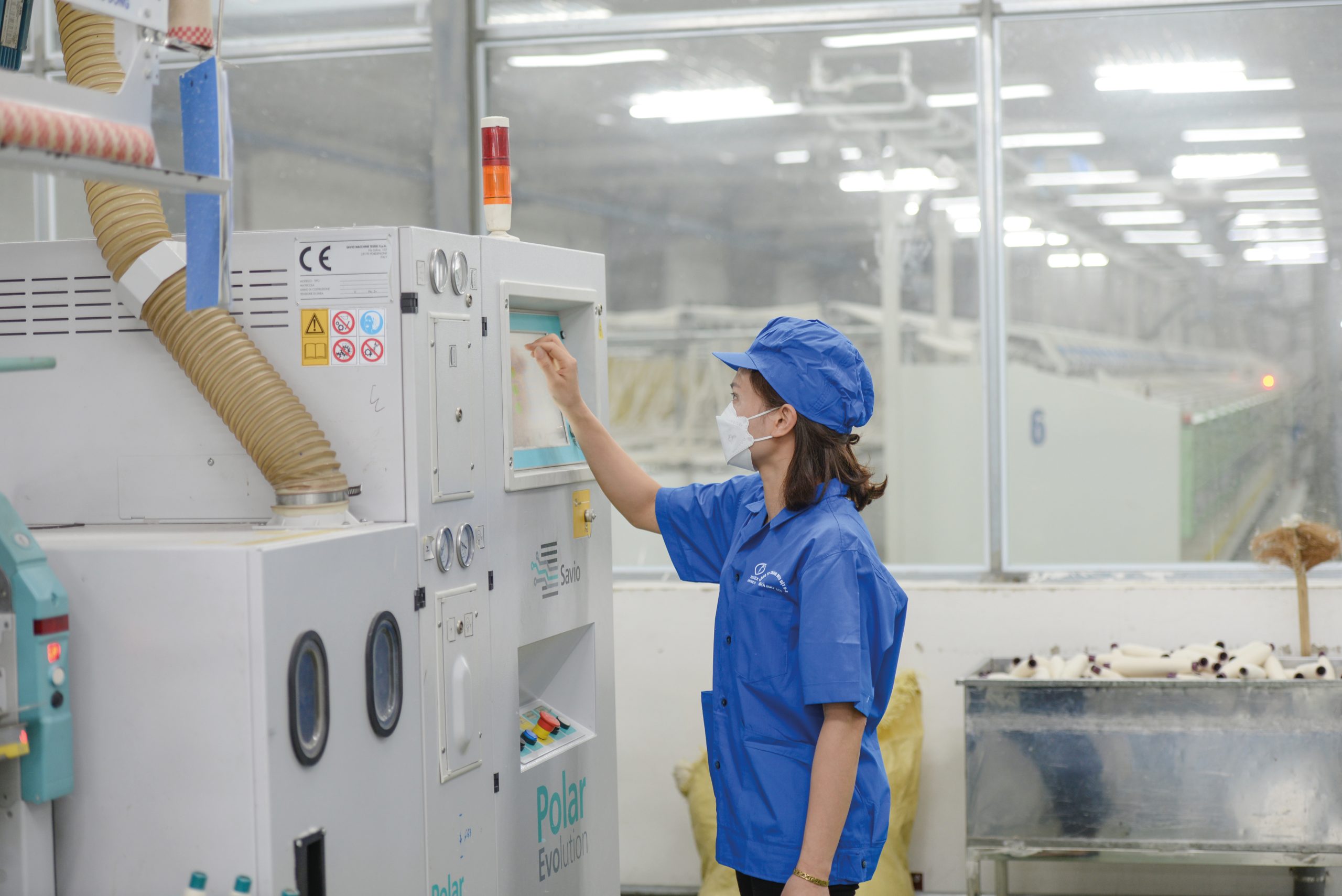
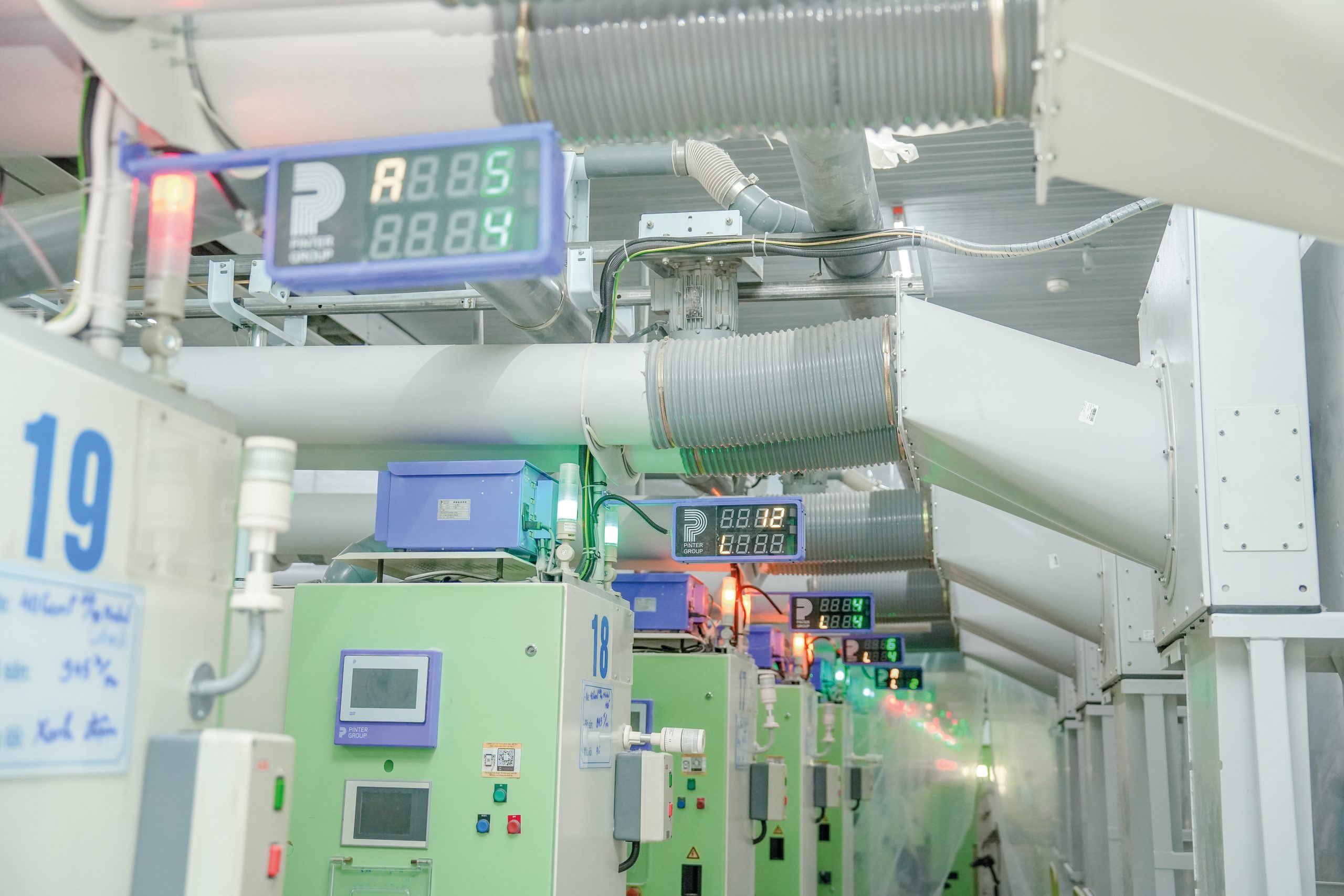
At EMTEXCO, the company has invested in a modern monitoring system for ring-spinning machines, winding machines, and the air-conditioning system to comprehensively address the problem of data loss and discrepancies arising from manual processes. All operational data is transmitted directly to a centralized management platform, enabling the management team to closely monitor production lines 24 hours a day.
At Phu Bai Spinning Joint Stock Company, the company is accelerating the development of a digitalized production management system (output, power consumption, maintenance, machine downtime). The system integrates a Manufacturing Execution System (MES) and connects smart equipment through IoT infrastructure. It enables real-time monitoring and analysis of raw-material consumption, energy use, and the operating efficiency of spinning machinery, allowing the company to flexibly adjust processes and minimize intermediate costs. The company has also developed a real-time energy monitoring system to optimize energy costs, while deploying QR code-based warehouse management software (Bravo) to improve management efficiency and traceability.
One of the company’s major advances has been the shift from static reporting to real-time data-driven management. Hoa Tho has deployed Power BI and management dashboards with real-time data updates to support the analysis and evaluation of garment orders. Meanwhile, Phu Bai Spinning has shifted to automated data indicators, enabling the Executive Management to make immediate adjustments to production volumes in response to severe volatility in the global yarn market. At EMTEXCO, a major step forward has been the digitalization of data, document coding, and the integration of all relevant information into QR codes. Customers can now easily trace the origin of input materials, green certifications, and product quality indicators, all of which are stored on the system for long-term access.
The Power of Numbers
As part of its efforts to accelerate digital transformation in production and business operations, Mr. Do Thanh Tung – Deputy General Director of EMTEXCO, shared compelling real-world data. From the second half of 2025 through the first half of 2026, digital transformation and real-time data monitoring enabled the company to reduce average raw-material consumption by approximately 1% per month. While 1% may seem modest, it translates into monthly cost savings of up to VND 360 million – a highly meaningful economic benefit amid the tight profit margins facing the textile and garment industry.
At the same time, the application of QR codes to import-export documentation at EMTEXCO has shortened processing times from 4–5 days to just 1–2 days. Similarly, on the spinning production line, tasks that required 4–5 workers to perform manual record-keeping can now be handled with just 1–2 employees monitoring the process through the centralized software platform.
Speaking with Mr. Nguyen Ngoc Binh – General Director of Hoa Tho Textile and Garment Corporation, we learned that Hoa Tho’s equipment management system has significantly improved the utilization rate of idle machinery, minimized unnecessary equipment purchases, and saved billions of Vietnamese dong in new investment costs each year. Beyond cost savings, the greatest value of digital transformation lies in enhancing management capabilities and strengthening international competitiveness. Real-time data connectivity between Hoa Tho and its global partners has drastically cut communication, sample approval, and order coordination times, enabling the company to respond promptly to urgent orders.
Similarly, real-time data enables the management teams at Phu Bai Spinning and Vinatex Phu Hung to closely monitor inventory levels and production costs, allowing them to flexibly restructure their product mix and adjust output as soon as signs of volatility emerge in global markets.
Towards the Smart Factory Model
At a new turning point in their development, many textile and garment enterprises have drawn up clear strategic action plans for the next phase, with the aim of further developing and completing their digital ecosystems.
Leaders of Hoa Tho Textile and Garment Corporation JSC said the company plans to expand its use of AI and complete its digital supply chain. It will continue scaling up the integration of GPT -based AI into warehouse and logistics management, materials management, and automated predictive equipment maintenance. The company will upgrade its customer data connectivity portal, enabling major partners to directly track the progress of each production stage in real time. It will also accelerate the deployment of MES and smart management reporting tools (Dashboards, Power BI) across all affiliated garment factories, moving toward paperless management.
“We view digital transformation as a strategic tool for strengthening management capabilities. Digital transformation is not simply about adopting technology; it is a comprehensive approach to innovating the management system, enabling our units to coordinate seamlessly and optimize processes from production through to business operations,” said Nguyen Ngoc Binh, General Director of Hoa Tho Textile and Garment Corporation.
With data-driven decision-making becoming the prevailing management practise, ensuring the accuracy of the data input into the system is a major challenge for Phu Bai. If input information (from contracts prepared by the sales department to cost allocations across its three factories) is logged incorrectly or inaccurately, it can fundamentally distort assessments of operational efficiency among the factories. Moving toward the modernization of a smart spinning factory model, Phu Bai Spinning JSC will integrate ERP into its digital transformation process, positioning digital transformation as a key foundation for improving operational efficiency and management capabilities.
Vinatex Phu Hung JSC has also set a goal of accelerating data integration and taking greater ownership of its data. The company will allocate a dedicated technology investment budget for its next phase of growth, while focusing on recruiting and developing a highly qualified, specialized IT team to take charge of system operations. It will integrate all standalone management software systems into a centralized platform, ensuring a seamless flow of data from raw-material intake through to shipment. The company aims to leverage the data collected to optimize costs, improve worker productivity, and support the Board of Directors in making more accurate business decisions.
At EMTEXCO, the company plans to further integrate QR-based traceability across 100% of its export product lines, linking quality-related data with renewable energy certificates and carbon reduction certificates. It will continue upgrading IoT sensors across the remaining production stages, minimizing manual intervention in data recording. With a people-centered approach, EMTEXCO will continue organizing initiatives and improvement campaigns to promote technological innovation, while turning awareness of digital transformation into a daily habit for every worker on the production line.
The story of digital transformation points to new directions for textile and garment enterprises in the digital age. It is widely recognized that digital transformation in the textile and garment industry is not a fixed destination, but a journey of continuous improvement. Initial achievements, together with a well-structured implementation roadmap, demonstrate the sound and agile thinking of enterprise leaders in embracing digitalization across management and production. This approach not only enables textile and garment enterprises to optimize costs and navigate each period of market volatility, but, more importantly, serves as a golden key to elevating the value and global standing of Vietnamese textile and garment brands.