
Resolution 71-NQ/TW on August 22nd, 2025 sets the goal of accelerating the development of higher education in a strong and well-directed manner, aiming to build a high-quality workforce for the country’s priority sectors. In line with this vision, Hanoi Industrial and Trade University aims to be among the top 100 universities in Vietnam by 2030–2035 and to become a leading application-oriented higher education institution by 2045, particularly in the textile and garment field, serving the nation’s industrial and commercial development needs.

Enhancing awareness, renewing mindsets, and driving action
Dr. Hoang Xuan Hiep, Principal Rector/President of Hanoi Industrial and Trade University, stated that to implement Resolution 71-NQ/TW, the university’s top priority is to enhance awareness, renew mindsets, and accurately assess the context in order to maintain autonomy and ensure sustainable development. The university is thoroughly disseminating the Party’s new directives on restructuring higher education, regularly forecasting socio-economic and educational developments to address emerging issues promptly, and strongly innovating its training and research models in close connection with industry—especially in textiles, the school’s core strength.
To achieve its goals, the university is focusing on improving the quality of its teaching staff to meet the demands of training human resources for digital and green transformation. Key solutions include supporting doctoral training, raising academic titles, increasing industry-practical experience, assisting national- and ministerial-level scientific research, and prioritizing the recruitment of PhD-qualified lecturers to reach 30% by 2030; restructure teaching workforce to ensure lecturers account for 70% of total staff, sending lecturers to training programs on digital and green transformation, and develop program to attract international lecturers.
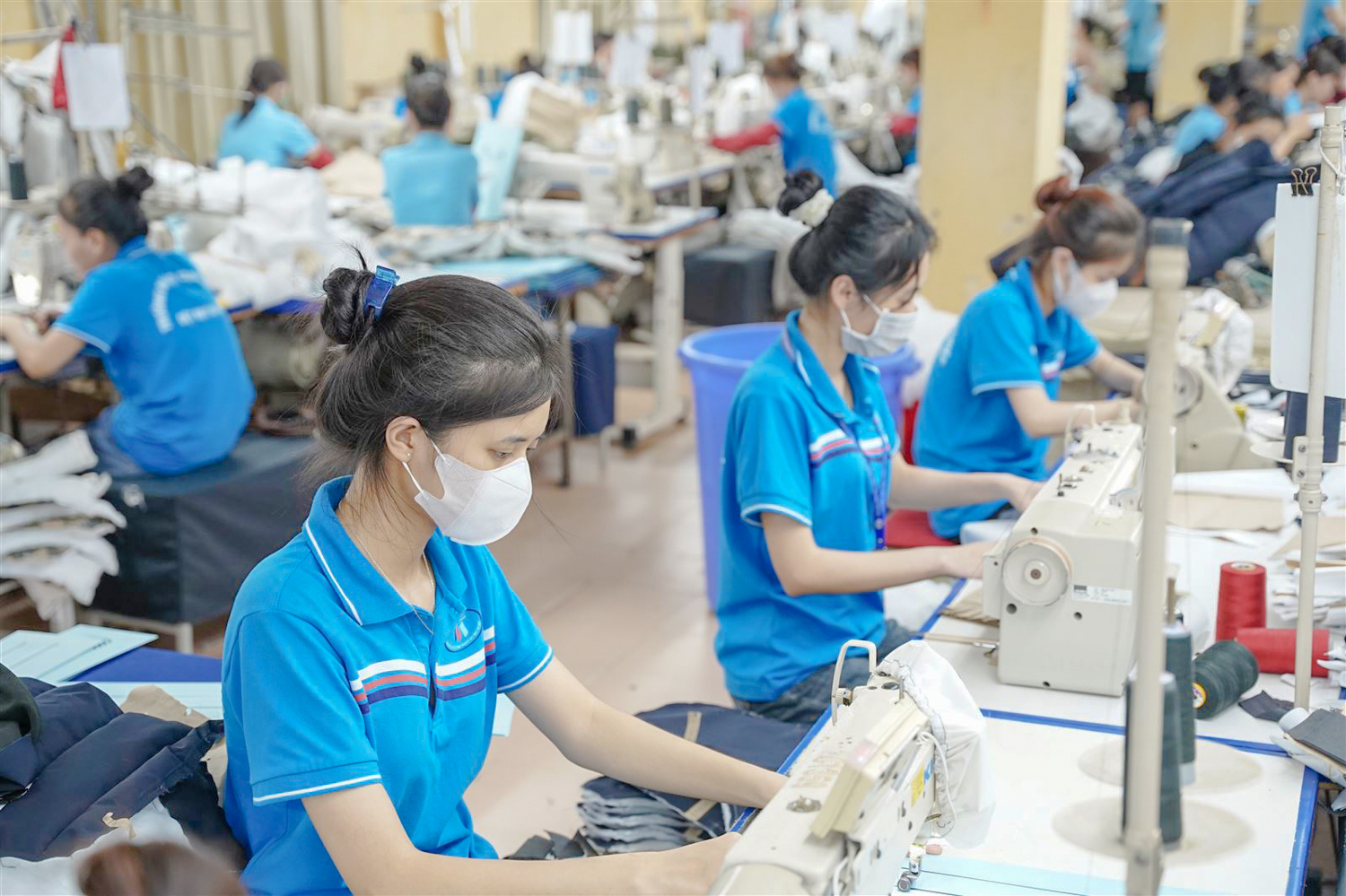
Creating breakthroughs in developing high-level human resources, with a focus on the textile–garment industry and supply chain management
According to Dr. Hoàng Xuân Hiệp, to implement Resolution 71-NQ/TW on developing universities toward research, innovation, next-generation technology, and sustainability models, Hanoi Industrial and Trade University must rapidly modernize its training system and create breakthroughs in developing high-quality human resources for industry and commerce – especially in textiles, supply chain management, and market development. The university will prioritize investment in scientific research linked to digital and green transformation, establish an advanced textile training and research center, strengthen State–University–Business cooperation, enhance foreign-language teaching and learning, pilot English instruction in selected programs, and expand training in additional foreign languages.
The training programs will incorporate green skills and digital skills, increase hands-on practice and internship time in enterprises, and integrate content on data analytics, AI, and entrepreneurial. The university is also strengthening its capacity to launch postgraduate programs in high-demand fields and developing a multi-disciplinary admissions scheme, with textiles as the flagship major.
Mr. Hiep believes that with higher education funding rising to 3%, along with special mechanisms and investment capital for autonomous universities, the institution will have significant opportunities to make breakthroughs in training high-quality human resources.
Targets for 2030
– Achieve national accreditation for the university: external evaluation completed in 2027 (cycle 2); by the end of 2025, 7 training programs accredited, increasing to 11 programs by 2030.
– Average long-term enrollment: 5,000 – 6,000 students per year.
– Employment rate: over 80% of graduates employed in their trained field within 12 months.
– Lecturers with doctoral degrees: over 20% by 2025 and over 30% by 2030.
– At least 70 scientific publications per year.
– Annual growth of 12% in international publications and revenue from science, technology, and innovation compared to 2025 levels.
– At least one patent application or granted patent each year.
– Secure 15–20 hectares of land by 2030.
– Achieve full autonomy in both recurrent and capital expenditures from 2025 onward.