
By: Cao Huu Hieu
Deputy Secretary of the Party Committee, CEO of Vinatex
After a period of heavy impact from the Covid-19 pandemic, Vietnam’s Textile and Garment industry has entered a recovery phase marked by mixed prospects. Although orders have gradually returned, the global market still harbors significant uncertainties as consumer demand weakens, inflation persists, and protectionist trade trends intensify. Global supply chains disrupted during the pandemic have been reconnected, but under a new order – more stringent in terms of speed, flexibility, and sustainability responsibility.
In this context, traditional advantages that once enabled the textile and garment industry to grow rapidly are gradually revealing their limitations. This poses an urgent requirement for the entire industry, including Vinatex as the core group, to restructure and renew its growth drivers to adapt to a new stage of national development – the era of national advancement, aiming for high and sustainable growth, contributing to Vietnam’s goal of becoming a developed, high-income country by 2045 and achieving net-zero emissions by 2050

Old Drivers No Longer Fulfill the “Mission” of Breakthrough Growth
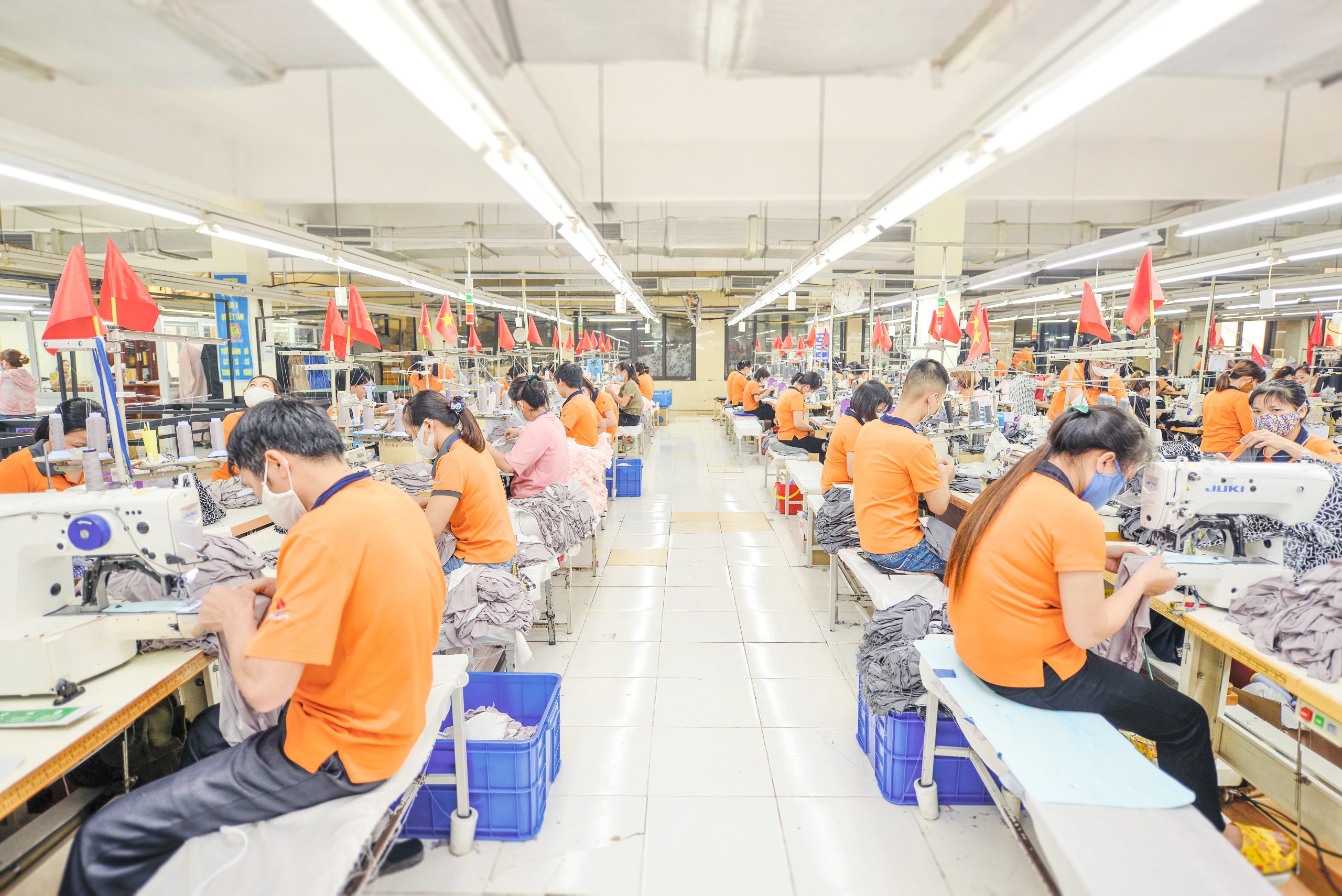
In previous years, Vinatex continued to develop based on long-standing drivers of Vietnam’s Textile and Garment industry: an abundant labor force with competitive costs, large-scale processing capacity and stable relationships with traditional customers. These drivers helped make textiles and garments one of Vietnam’s key export industries, creating jobs for millions of workers and making significant contributions to economic growth.
In recent years, these drivers have been supplemented by scientific and technological achievements through automation of certain production stages and digitalization of management. However, the level and scope of application remain limited and have not yet created a breakthrough change in total factor productivity (TFP). Amid increasingly stringent requirements for sustainable development and traceability, rising competitive pressure from lower-cost countries, and rapid technological shifts, the traditional growth model is gradually exposing shortcomings, reflected in the following aspects:
Like many other industrial manufacturing industries, the textile and garment industry has largely relied on capital and low-cost labor, with TFP contributing relatively little compared to industrialized countries. Meanwhile, rapidly rising labor costs are eroding the “low-cost” advantage (Vietnam’s labor costs now rank just below China’s and are significantly higher than those of competitors such as Bangladesh, Sri Lanka, and India), while innovation and science and technology have yet to become the primary drivers of growth.
Second, the pure processing model is no longer effective.
This model was suitable in earlier stages, when most of the workforce was untrained, financial capacity was limited, and design and distribution capabilities were weak. Today, however, this production mode still accounts for a large proportion of output and remains heavily dependent on imported materials and technologies. In addition to low value added, it carries significant risks in meeting increasingly strict rules of origin and tariff requirements in key export markets—especially amid heightened reciprocal tariff tensions with the United States.
Third, competitiveness based on cost and volume has reached its limit.
With very thin profit margins, many enterprises have relied on overtime and scale expansion to compensate. Yet as the market shifts toward smaller orders, greater product variety, and shorter delivery times, this model’s limitations become evident. Traditional customer relationships, if confined to processing only, are also difficult to sustain as customers increasingly prioritize partners with full-package manufacturing capabilities, transparency, and strong social responsibility.
A New Era – New Growth Drivers
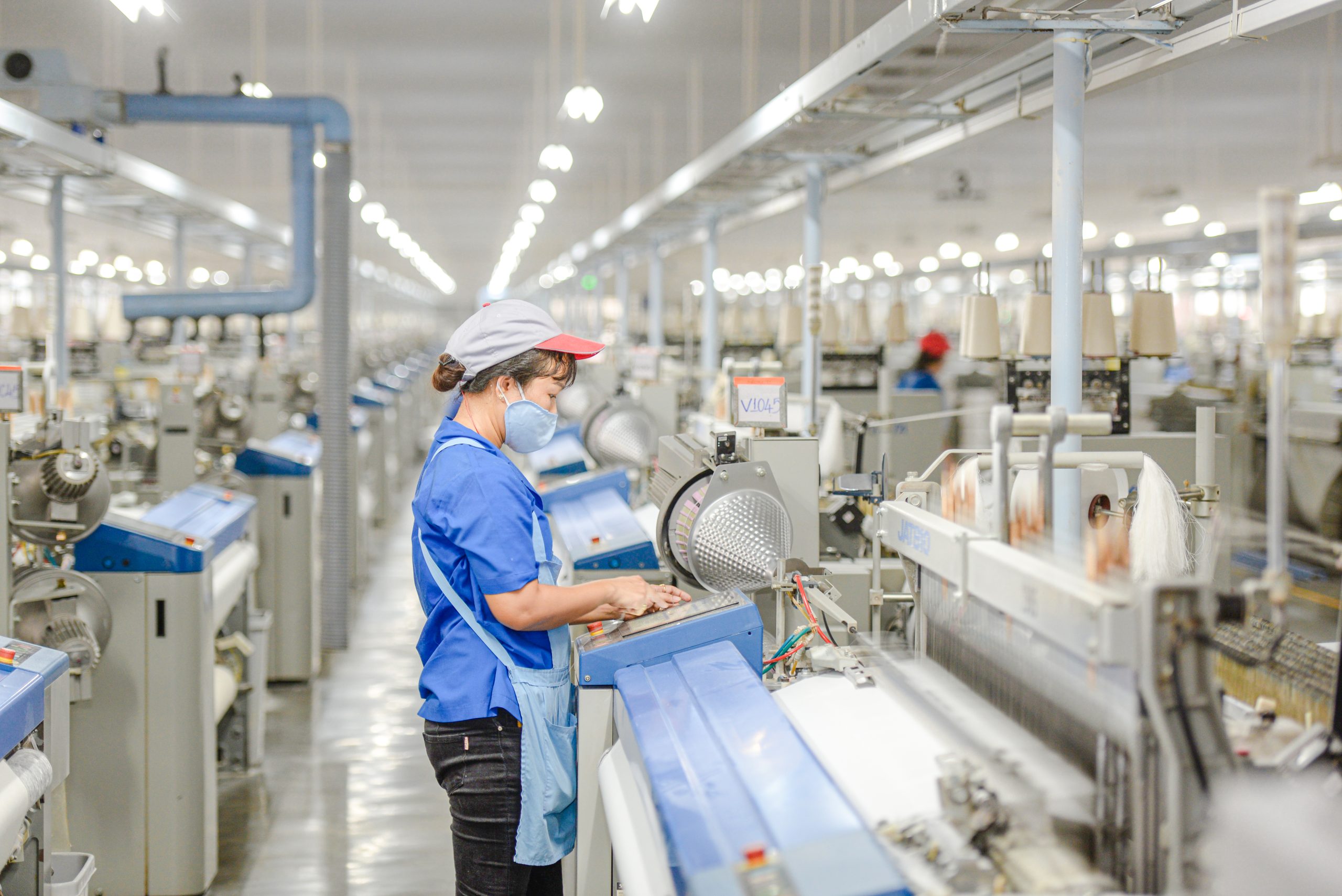
The new era is characterized by a shift in growth drivers—from scale expansion to efficiency enhancement; from cost advantages to technological and governance capabilities; and from short-term growth to sustainable development. In this context, data, digital technologies, value chains, and high-quality human resources become the new pillars of growth. This fundamental shift requires manufacturing sectors, including textiles and garments, to renew traditional growth drivers to adapt and achieve breakthroughs.
Data and digital technology as core drivers
Digital technology is no longer merely a support tool; it has become the central platform for management and production, enabling textile and garment enterprises to shift from experience-based to data-driven management. The application of ERP, MES, and PLM systems enables real-time control of productivity, quality, and schedules, reducing hidden costs, shortening lead times, and enhancing customer reliability.
Renewing the Value Chain – From Processing to Value Creation
Moving to higher-value-added production modes is an inevitable trend for Vietnam’s textile and garment industry. This shift is driven not only by internal capabilities but also by customer requirements. After Covid-19, customers tend to outsource more stages to manufacturers and prioritize those with full-package supply capabilities. At the same time, major markets increasingly demand transparency in product origin. This requires enterprises to gradually master materials, design, and technology, moving toward ODM and OBM production models.
Renewing Labor Dynamics – From Quantity to Quality
As a labor-intensive industry, people continue to be the focal point/core element, but competency requirements have fundamentally changed. Workers need multi-skilling; managers must understand technology and be able to analyze data for decision-making. At the same time, building a humane corporate culture that emphasizes welfare and career development is critical to retaining talent amid intensifying labor competition.
Renewing Competitiveness – From Scale to Efficiency
As room for scale expansion narrows, growth must come from optimizing the efficiency of all resources to enhance TFP. Governance models must also be optimized to build flexible supply chains and proactive risk management capabilities.
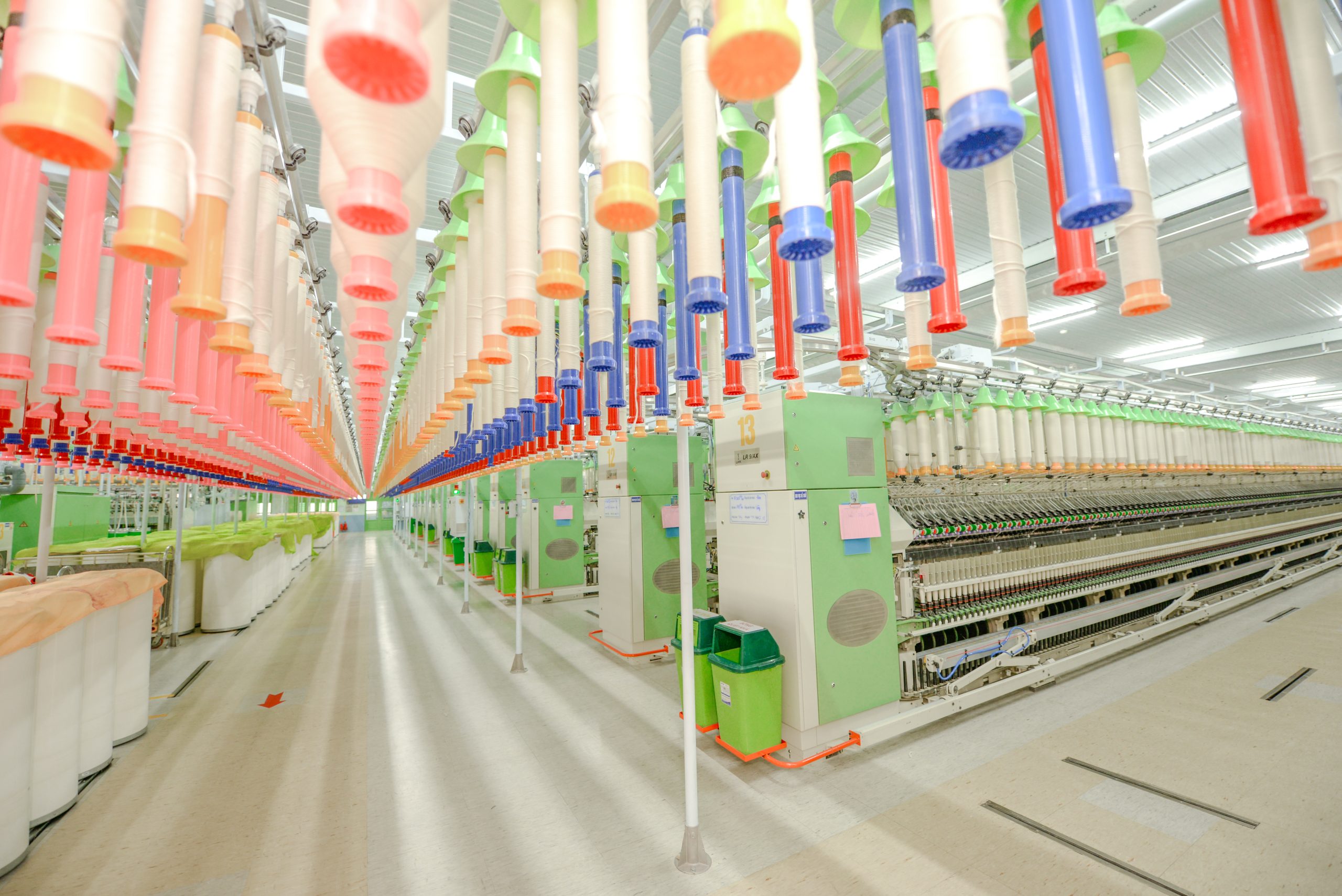
Accordingly, upgrading the value chain in parallel with building flexible supply chains and strengthening linkages among yarn–fabric–dyeing–garment stages helps reduce external dependence, shorten lead times, and improve responsiveness to market fluctuations. On this foundation, high-quality human resources and modern governance models – with a focus on risk management and resilience are becoming decisive factors in forming sustainable growth drivers for the textile and garment industry in the new era.
Shaping Development on the Foundations of Strategy, Resources, and Technology
The above analysis does not imply that traditional growth drivers are obsolete. On the contrary, they remain important foundations for the development of the textile and garment industry and Vinatex. However, in the new context, these drivers must be restructured, upgraded, and renewed to meet increasingly demanding market requirements.
In response, Vinatex has been gradually preparing sustainable growth drivers built upon core capabilities developed over many years. During the 2026–2030 period, the entire system must continue to renew and maximize these drivers to successfully achieve challenging term objectives, including: consolidated revenue growth of over 5% and value-added growth exceeding 8%; average annual profit growth of 12–15%; average employee income growth exceeding actual CPI by 2–3% annually; carbon emission reductions and energy efficiency improvements, reducing energy consumption per unit of revenue by 1–1.5%; investment in solar power at eligible factories, aiming for renewable energy to account for 10% of electricity use; 100% of enterprises meeting environmental standards; and a 9–10% reduction in greenhouse gas emissions.
Accordingly, enterprises within the system should focus on the following new growth drivers:
Enhancing Total Factor Productivity (TFP) – The Central Driver
Multiple solutions are being implemented, with a focus on improving governance systems to enhance operational efficiency, accelerating automation to boost labor productivity, and applying advanced, energy-saving technologies to reduce production costs. In 2026, with the theme “The Year of Efficiency,” Vinatex targets TFP growth of over 5%—double the national average growth rate in 2025.
Innovation and Digital Transformation as Drivers of Competitiveness and Sustainability
Developing differentiated, highly competitive new products is a key task for the Group. The Parent Company and strong units with favorable conditions will take the lead in R&D, then transfer technologies to other units for production, creating breakthroughs across the system. The flame-retardant fabric cooperation project with Coats Group is a flagship initiative that has achieved initial success and is expected to deliver outstanding results as Vinatex gradually masters production technologies.
In recent years, digitalization of production management has been actively pursued. Yarn production management software has been applied at most units; financial and human resource management systems are being developed and deployed at the Parent Company and selected subsidiaries. The core task for 2026 is to establish and effectively operate a centralized Group data center, complete the digital management infrastructure at key units, enhance control, detect risks early, and support fast, accurate decision-making.
Building Full-Package Supply Chains and High-Quality Human Resources – A Dual Value-Creation Driver
This strategic orientation has been clearly defined by Vinatex. In practice, some internal chains have been formed for knitwear and towel products, though their scale remains modest. In 2026, this will be a key task assigned to production and business boards, aiming to increase internal product utilization—from yarn to fabric, fabric to garments—and gradually form internal chains, with the ratio of revenue using in-Group materials to total FOB revenue increasing by at least 20% compared to 2025. This will stabilize and enhance value across the production chain, increase autonomy, reduce risks, and improve responsiveness to market demands—laying the groundwork for transitioning to higher value-added models such as ODM and OBM.
Amid growing pressure to rely on TFP for growth, maximizing human resource effectiveness and building high-quality teams are prerequisites. Vinatex is completing a quantitative, transparent performance evaluation system to identify and train successor cadres early, alongside breakthrough remuneration mechanisms to attract, retain, and develop talent—linked with corporate culture development to strengthen long-term employee engagement.
ESG – A Mandatory Growth Driver
Vinatex has proactively implemented measures to reduce emissions, use renewable energy, enhance material traceability, and fulfill social responsibilities. ESG practices are not only about compliance but also about building long-term competitive advantages, enabling the Group to access higher-quality and more stable orders.
In conclusion, traditional drivers can continue to create value when properly renewed and upgraded. By combining traditional strengths with digital technology, green thinking, and flexible business models, Vietnam’s textile and garment industry can transform challenges into opportunities and strengthen its position in the global supply chain.
With strategies, resources, and technologies prepared in a coordinated manner, Vinatex will enter a new era focused on enhancing efficiency, growth quality, and long-term adaptability—thereby laying a solid foundation for breakthrough development in the coming period. Thus, 2026 is not merely a planning milestone, but a pivotal year for Vinatex and its member units to effectively realize these growth drivers on the foundation of the new era.